
Get all your news in one place.
100’s of premium titles.
One app.
Start reading
Creative Bloq
Creative Bloq
Technology
Ian Dean

How a filmmaker made a zombie epic in his backyard

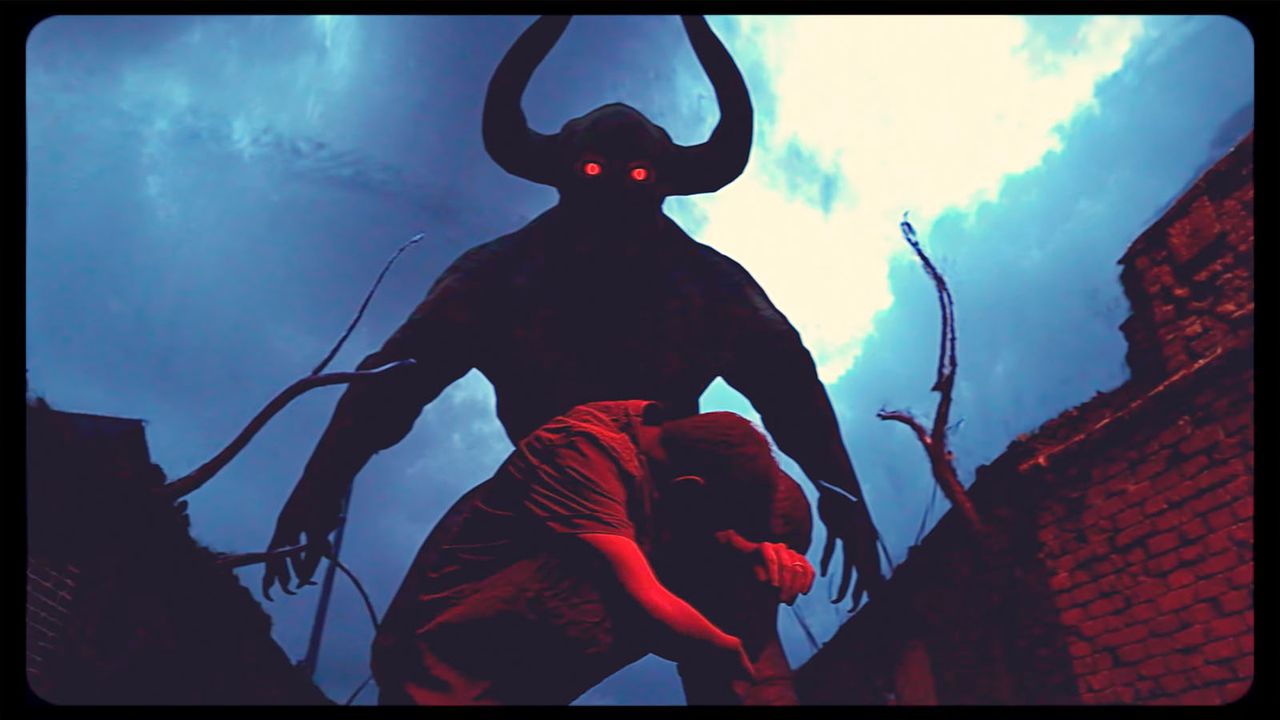
A demon stares down at a person .

I'm no filmmaker, but as a teen in the '90s, I spent hours creating bad kung fu movies with a Super 8 camera I'd found in my parents' garage (I neither knew kung fu nor how to make movies, but if Tarantino could do it, so could I).

Every filmmaker remembers their first movie, like my janky experiments: shaky shots, improvised props, and a whole lot of imagination. For Joshua Kerr, it was the street outside his childhood home, packed with friends playing zombies and, like me, a Super 8 camera capturing every stumble and lunge.

Years later, Kerr did what I never imagined and revisited that early experiment, but this time armed with tools that put cinematic power in the hands of anyone. The result: his quiet Newcastle street transformed into an apocalyptic battlefield, complete with 3D zombies, crumbling buildings, and writhing tentacles, all from the comfort of his iPhone. It's a project that shows how AI filmmaking can work, creatively and in combination with human talent and traditional workflows.

(Image credit: Josh Kerr)

Accessible filmmaking tools

Kerr’s workflow shines a spotlight on the new, accessible virtual production tools, like Unity and Unreal Engine, that are becoming more easily available. Kerr began by capturing 360-degree HDRI photos of his street, giving him a realistic base for lighting and reflections. Next, he turned to AI art and Google Gemini generated apocalyptic AI variations, turning ordinary houses and cars into ruined, zombie-haunted environments. After refining details in Photoshop, the images were loaded into Marble to generate a Gaussian splat, which quickly turned them into a fully layered 3D world.

On set, Kerr used Lightcraft Jetset to see the virtual environment live on his iPhone. Zombies, demons, and explosive effects could be positioned and tested in real time, while Beeble AI handled relighting, seamlessly turning day into night. Everything was rendered in Unreal Engine, and finishing touches, including a nostalgic VHS aesthetic, were added in DaVinci Resolve.

“It’s amazing how much you can do today without a studio or a big crew,” Kerr says. “All the tools are there. You just need an idea and the drive to make it.”

(Image credit: Josh Kerr)

A new DIY movie magic

The project proves that filmmaking doesn’t have to be limited by budget, equipment, or location. With the right workflow, any creator can turn a street, a backyard, or even a living room into a cinematic playground, bringing their imagination to life in once unimaginable ways.

The rise of easily accessible tools, funnelled through something as common now as an iPhone and Photoshop, really made me stop and think about all those filmmaking ambitions I once had.

And yes, there is generative AI being used here, but in thoughtful and practical ways, mixed into a DIY workflow that means a kid living on a street in England can make a fun horror movie and begin a career they may never have thought possible. The modern Super 8 is an iPhone, and a mix of freeium apps, including Jetset and Unreal Engine.

Watch the process of how 'Joshua Makes A Zombie Movie' on YouTube.

Sign up to read this article
Read news from 100’s of titles, curated specifically for you.
Already a member? Sign in here
Related Stories
Top stories on inkl right now
One subscription that gives you access to news from hundreds of sites
Already a member? Sign in here
Our Picks
Fourteen days free
Download the app
One app. One membership.
100+ trusted global sources.