Get all your news in one place.
100's of premium titles.
One app.
Start reading
The Conversation
The Conversation
Ted Olson, Professor of Appalachian Studies and Bluegrass, Old-Time and Roots Music Studies, East Tennessee State University

How a box set from 1964 attempted to capture the sweep of American music from the colonial era to the counterculture

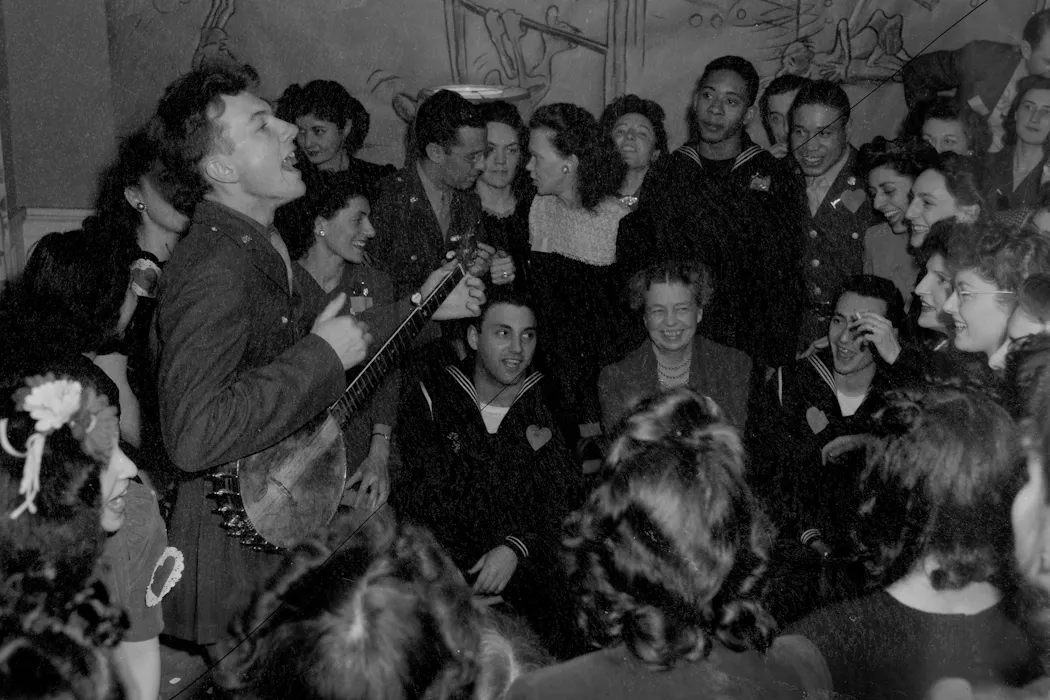
American folk musician Pete Seeger sings and plays banjo for a group of people that includes first lady Eleanor Roosevelt in 1944. Joseph A. Horne

Long before the Revolutionary War, numerous traditions of Indigenous music flourished in places later incorporated into the United States. European music was heard in the New World from the earliest days of exploration and settlement. Disgruntled colonists in taverns and town squares borrowed British melodies to support new lyrics expressive of a developing national consciousness. After the U.S. became a nation in its own right, Francis Scott Key also pulled from British songs to pen the national anthem.

Over the ensuing decades, the young nation incorporated the musical repertoires, instruments and expressions of immigrants from various European and African groups. While the restless spirit of musical reinvention continues today, it is a challenge to comprehend the full scope of how American music has evolved.
Sign up to read this article
Read news from 100's of titles, curated specifically for you.
Already a member? Sign in here
Related Stories
Top stories on inkl right now
One subscription that gives you access to news from hundreds of sites
Already a member? Sign in here
Our Picks
Fourteen days free
Download the app
One app. One membership.
100+ trusted global sources.