
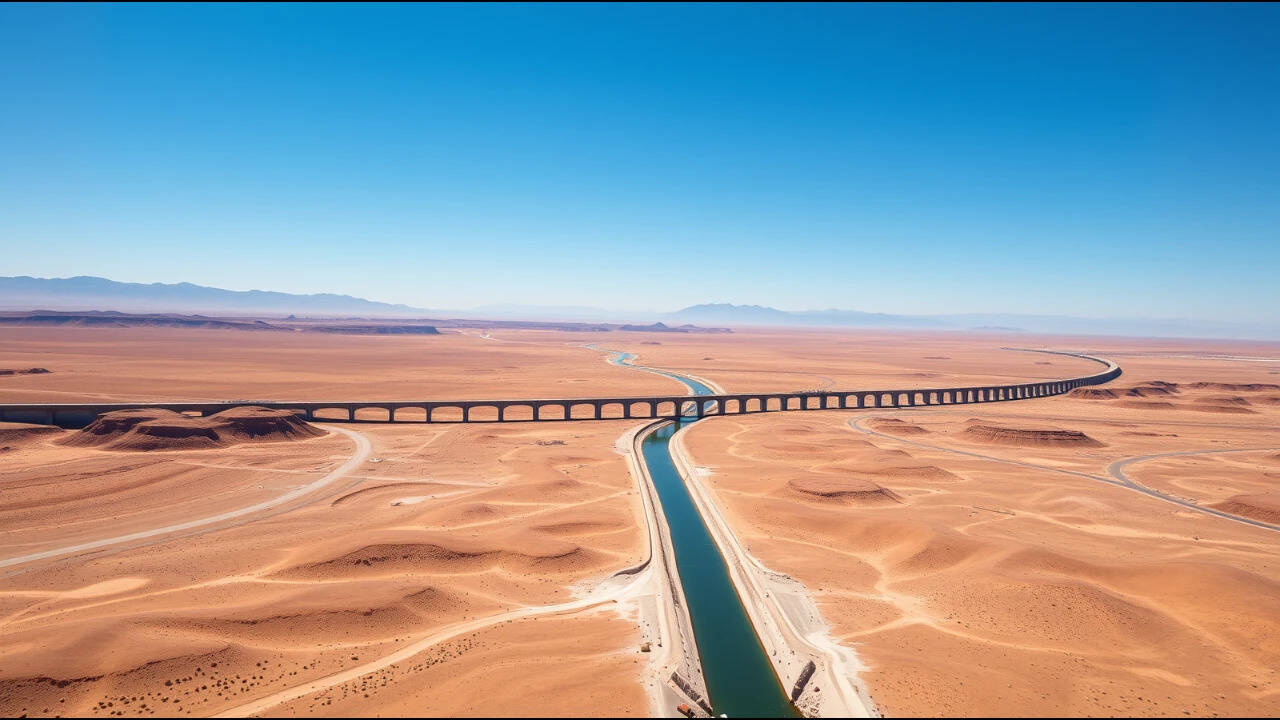
In 1933, construction crews began work on the Colorado River Aqueduct, an engineering project designed to solve a problem that had been building for years: Southern California's rapidly growing coastal cities were running out of local water. The plan called for pulling water from the Colorado River near the California-Arizona border and pumping it uphill a total of 1,617 feet, roughly 493 metres, using a series of pumping stations, before letting gravity carry it the rest of the way across 242 miles, or 389 kilometres, of open desert to a reservoir near Riverside. Financed through a Depression era bond measure and completed in 1941, the aqueduct went on to supply the water that helped fuel decades of explosive urban growth across coastal Southern California. Notably, the project's timing during the Great Depression meant its enormous scale served two purposes at once, quietly securing California's water future while offering desperately needed employment across the drought-stricken region.
Get breaking news anytime, anywhere. Download the TOI app now!














