
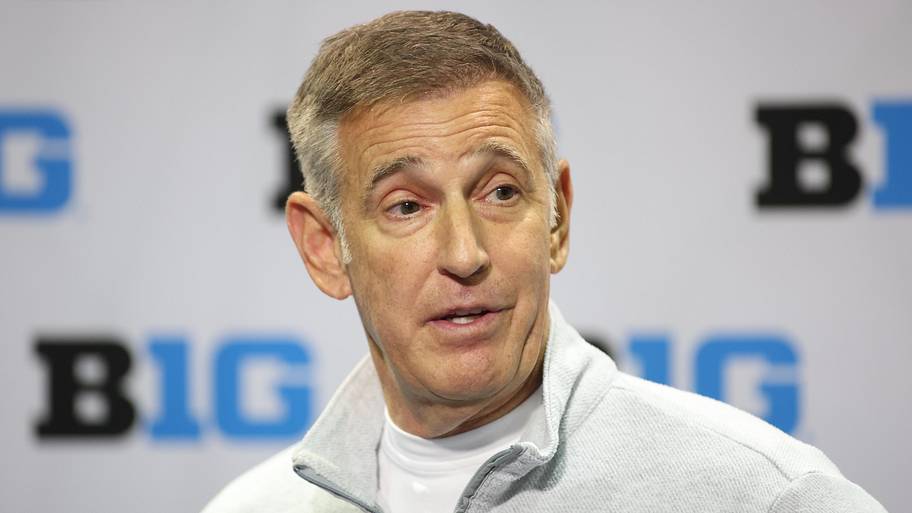
The Big Ten Conference, led by one of the most powerful people in the sport, commissioner Tony Petitti, is championing a 24-team College Football Playoff format that would undoubtedly change the fabric of the sport forever.
The format, which Petitti & Co. insist would give more championship-level access to teams across the sport and would give more meaning to the postseason, is gaining momentum. What initially began as Petitti and the Big Ten sitting on an island of their own with the 24-team playoff has turned into support from other conferences such as the Big 12 and the ACC.

While an expanded playoff is possible in short order, a vote has not formally taken place and it remains to be seen where the postseason championship tournament will go from here.
The SEC, led by college football’s other very powerful voice in commissioner Greg Sankey, is (and always has been) against the 24-team model. Instead, Sankey’s stance is that he’s comfortable with the 12-team playoff, but would favor 16 if it had to expand again. Sankey holds a ton of power over the future of the CFP—after all, his league just began a $3 billion television agreement last season with ESPN/ABC, which holds the television rights to the CFP. And it’s not just Sankey who is opposed to a 24-team format, it’s ESPN, too. Any expanded playoff would lead to the postseason television rights being shared with other networks, which may not be something that ESPN is particularly interested in.
Both the SEC and the Big Ten have to be in agreement on a format in order for it to be adopted, according to a memorandum of understanding signed in March 2024, per Yahoo Sports’s Ross Dellenger. Conference executives must inform ESPN by Dec. 1 of their plans to expand the playoff in order for the changes to take place for the 2027–28 season.
With the 24-team format remaining a distinct possibility, here are more details surrounding the Big Ten’s proposal, along with additional data regarding how the playoff would have looked if it was at 24 teams since its inception in the 2014–15 season.
What would the 24-team format look like?
The 24-team proposal from the Big Ten would undoubtedly lead to significant changes in college football.
Within the proposal, conference championship games would be eliminated to accommodate the extra postseason games. In the 24-team format, 23 at-large teams would be selected, and there would be one automatic qualifying team from the Group of 6.
The top eight seeds in the final CFP rankings of the regular season would earn a first-round bye. The remaining 16 lowest-ranked seeds would play in the first round, with games taking place on the campuses of the highest-ranked seeds in the matchup. In the second round of the playoff, there would be another round of on-campus games, with the top eight seeds all hosting on their home campuses. This is a key change, because in the current 12-team format, the top four seeds all earn a bye into the quarterfinal round which takes place in New Year’s six bowl destinations across the country.
Once the 24-team field is whittled down to eight, the quarterfinals would take place at bowl locations on New Year’s Eve and New Year’s Day, which is consistent with the current 12-team format. The semifinal games would also take place at bowl sites prior to the national championship.
With the elimination of conference title games, the time frame to begin the expanded playoff would be mid-December, which would allow for a mid-January national championship game. In each of the last two seasons since the playoff expanded from four teams to 12, the national championship has not taken place until the third Monday of the month—which has garnered widespread criticism since the expansion to 12.
How many teams would have made a 24-team bracket since 2014–15?
If the 24-team bracket had been in place all along, 80 different teams would have made the field at some point in time, Big Ten chief operating officer Kerry Kenny told reporters at the Big Ten spring meetings earlier this month.
Here’s a comprehensive list of the 80 teams who would have made the field.
Note: Teams listed in alphabetical order by number of appearances.
| School | Number of Appearances |
|---|---|
| Alabama Crimson Tide | 12 |
| Ohio State Buckeyes | 12 |
| Clemson Tigers | 11 |
| Georgia Bulldogs | 10 |
| Notre Dame Fighting Irish | 10 |
| Oklahoma Sooners | 9 |
| LSU Tigers | 8 |
| Michigan Wolverines | 8 |
| Oregon Ducks | 8 |
| Utah Utes | 8 |
| Penn State Nittany Lions | 7 |
| USC Trojans | 7 |
| Iowa Hawkeyes | 6 |
| Oklahoma State Cowboys | 6 |
| Ole Miss Rebels | 6 |
| Texas Longhorns | 6 |
| Florida Gators | 5 |
| Florida State Seminoles | 5 |
| NC State Wolfpack | 5 |
| Tennessee Volunteers | 5 |
| Washington Huskies | 5 |
| Auburn Tigers | 4 |
| Baylor Bears | 4 |
| BYU Cougars | 4 |
| Miami Hurricanes | 4 |
| Michigan State Spartans | 4 |
| Mississippi State Bulldogs | 4 |
| Missouri Tigers | 4 |
| Northwestern Wildcats | 4 |
| TCU Horned Frogs | 4 |
| Wisconsin Badgers | 4 |
| Arizona Wildcats | 3 |
| Boise State Broncos | 3 |
| Cincinnati Bearcats | 3 |
| Houston Cougars | 3 |
| Indiana Hoosiers | 3 |
| Iowa State Cyclones | 3 |
| Louisville Cardinals | 3 |
| Stanford Cardinal | 3 |
| Texas A&M Aggies | 3 |
| Arizona State Sun Devils | 2 |
| Colorado Buffaloes | 2 |
| Georgia Tech Yellow Jackets | 2 |
| Kansas State Wildcats | 2 |
| Kentucky Wildcats | 2 |
| Louisiana Ragin' Cajuns | 2 |
| Memphis Tigers | 2 |
| Navy Midshipmen | 2 |
| North Carolina Tar Heels | 2 |
| Oregon State Beavers | 2 |
| Pittsburgh Panthers | 2 |
| SMU Mustangs | 2 |
| South Carolina Gamecocks | 2 |
| Syracuse Orange | 2 |
| Temple Owls | 2 |
| Tulane Green Wave | 2 |
| UCF Knights | 2 |
| UCLA Bruins | 2 |
| Virginia Cavaliers | 2 |
| Virginia Tech Hokies | 2 |
| Washington State Cougars | 2 |
| West Virginia Mountaineers | 2 |
| Appalachian State Mountaineers | 1 |
| Arkansas Razorbacks | 1 |
| Army Black Knights | 1 |
| Coastal Carolina Chanticleers | 1 |
| Fresno State Bulldogs | 1 |
| Illinois Fighting Illini | 1 |
| James Madison Dukes | 1 |
| Liberty Flames | 1 |
| Minnesota Golden Gophers | 1 |
| San Diego State Aztecs | 1 |
| Texas Tech Red Raiders | 1 |
| Troy Trojans | 1 |
| Tulsa Golden Hurricane | 1 |
| UNLV Rebels | 1 |
| Vanderbilt Commodores | 1 |
| Wake Forest Demon Deacons | 1 |
| Western Michigan Broncos | 1 |
Only two teams would have made all 12 CFPs if the format was at 24 teams from the start
And unsurprisingly, it’s two of the sport’s biggest championship brands.
Only Alabama and Ohio State would have made all 12 CFP brackets since the inception of the postseason tournament. The Crimson Tide, of course, won three titles in the playoff era under Nick Saban, while Ohio State won the inaugural CFP title over Oregon in January 2015 under Urban Meyer, and has since won a second under Ryan Day two seasons ago.
Clemson, who has won two national championships under Dabo Swinney, would have made 11 of the 12 CFPs if the format was always at 24 teams. Last season would have been the first that the Tigers have missed after a disappointing 7–6 season that ended in a Pinstripe Bowl loss.
One Power 4 program has never made the CFP, but would have made it EIGHT times in 12 seasons in a 24-team format
Hello, Utah Utes!
Coach Kyle Whittingham (now with Michigan) had been praised for the consistency of his program at Utah. Of course, that will be something he’ll be looking to replicate in Ann Arbor.
Under Whittingham, the Utes always seemed like they were knocking on the door of the CFP, especially in the first 10 seasons in the four-team format. Utah never quite got over the hump and has still yet to make the playoff.
However, if the playoff was always at 24 teams, the Utes would have made the field eight times in 12 seasons, which is a testament to just how good Utah was under Whittingham, even if the program was never quite as elite as it needed to be.
The 24-team playoff would have featured 18 different Group of 6 teams across 12 seasons, with six making multiple appearances
Boise State would have led the way with three bids, while five different teams would have finished with two bids each: Louisiana, Memphis, Navy, Temple and Tulane.
There would be 12 others from the Group of 6 who would have made at least one appearance: Appalachian State, Army, Coastal Carolina, Fresno State, James Madison, Liberty, San Diego State, San Jose State, Troy, Tulsa, UNLV and Western Michigan.
More College Football From Sports Illustrated
Listen to SI’s college sports podcast, Others Receiving Votes, below or on Apple and Spotify. Watch the show on the SI College YouTube channel.