Get all your news in one place.
100's of premium titles.
One app.
Start reading
The Economic Times
The Economic Times

How 285 reef balls are turning an ocean desert into a thriving ecosystem in Newfoundland and Labrador’s Placentia Bay

An underwater camera in Newfoundland and Labrador’s Placentia Bay is giving researchers and the public a rare look at marine life returning to a newly created artificial reef. Illuminated by an underwater light, the live camera feed captures cunners, crab, lobster and sea urchins moving among swaying kelp and algae-covered reef structures. Every hour, the system takes a two-minute snapshot, with the imagery uploaded to an online visual library that researchers can study for years. The Marine Institute partnered with a major oil company and the government to restore a seafloor zone in Placentia Bay’s Fox Harbour, which is adjacent to a dredging site.

While lobster and crab may be a little camera shy, the Marine Institute of Memorial University’s Reef Ball project in the Fox Harbour area of Placentia Bay hopes to capture marine life at any given moment and track how the ecosystem develops.

ALSO READ: Florida couple bought 3 condos for $360,000 and now collects $4,530 a month in rent

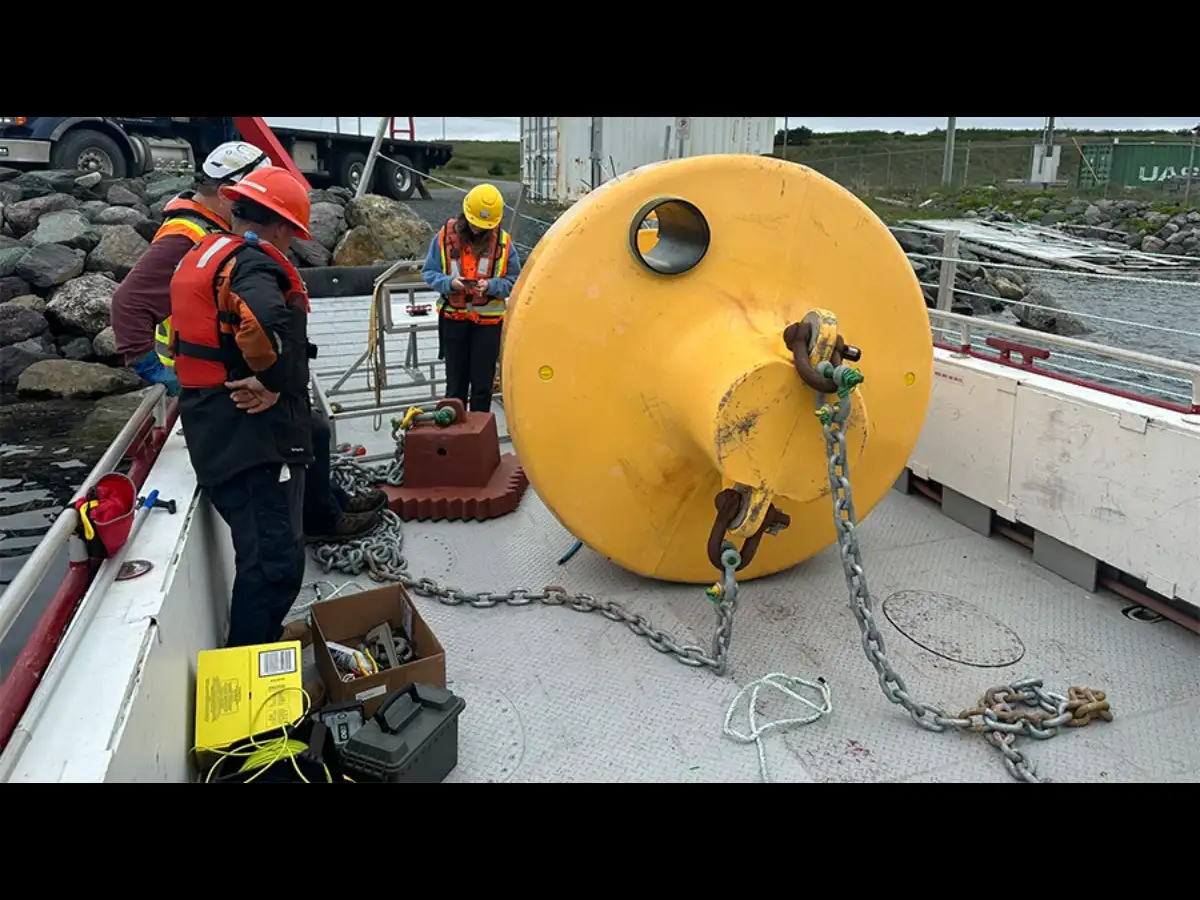
The underwater camera is the latest development in a project that began in summer 2025, when 285 concrete reef balls were installed in the area. Led by the Fisheries and Marine Institute of Memorial University, the project aims to restore and enhance marine habitat affected by vessel activity in the bay. The underwater camera can also be viewed publicly, meaning people can check the reef from anywhere with an internet connection.

How the artificial reef works

Reef balls are specially designed concrete structures that create complex underwater spaces where marine organisms can live, shelter and feed. The structures form an artificial reef and provide new habitat in an area where marine activity has affected the seafloor. The installation forms an artificial reef, providing new habitat in an area where marine activity has affected the seafloor. But installing the reef is only the beginning.

“At the end of the day, healthy oceans benefit everyone,” says Mark Santos, Fisheries Technologist at the Centre for Sustainable Aquatic Resources. “This project is helping us better understand how marine habitats recover, how fish and other species use artificial reefs, and how we can use science to make better decisions that protect our oceans for the future.”

ALSO READ: Prince Harry has made it ‘very clear’ he and Meghan ‘will not be controlled by the palace’

The camera sits about 5 metres below the surface, roughly 10 metres from the reef ball. The system uses a Reach Systems Auk camera from Valor Technologies. The camera and its light turn on for two minutes every hour. The first 30 seconds of each recording are transmitted through the cellular network to Memorial University's Centre for Analytics, Informatics and Research. This allows researchers to build a growing record of what is happening around the reef.

Sign up to read this article
Read news from 100's of titles, curated specifically for you.
Already a member? Sign in here
Related Stories
Top stories on inkl right now
One subscription that gives you access to news from hundreds of sites
Already a member? Sign in here
Our Picks
Fourteen days free
Download the app
One app. One membership.
100+ trusted global sources.