“Why not us?”
The ambitions of U.S. men’s national team head coach Mauricio Pochettino eventually became lofty. Why couldn’t the United States of America, never before World Cup finalists, achieve a feat that would exceed the greatest underdog story in the country’s esteemed sporting history: the “Miracle on Ice”?
It was on home soil in Lake Placid when a group of college kids humiliated a hockey superpower. At the height of the Cold War, the USA team stunned Soviet pros 4–3 to win gold at the 1980 Winter Olympics—a story now the subject of a wonderful Netflix documentary.
Pochettino’s roster of 26 sought to ascend to new heights this summer, with pre-tournament nerves making way for the most emphatic victory of the Argentine‘s reign. A 4–1 win over Paraguay captured the nation, instilling belief that this time, maybe things would be different.
In the end, though, the USMNT, lauded by some as the finest ever, succumbed to an all-too familiar fate. There was no miracle; not even its best World Cup performance. That honor remains with the team of quarterfinalists of 2002.
Here’s how the two runs compare.
USMNT’s 2026 World Cup Run Compared to 2002 Legends
Group Stage
First off, let’s clear something up. We know the U.S. finished third during the inaugural World Cup in 1930, but we’d be doing the current crop a disservice by comparing their campaign to the three-game run from 96 years ago.
It’s impossible to compare the two. 2002 is a much more suitable reference point.
Thirty-two nations competed in South Korea and Japan 24 years ago, while 48 were involved this summer. So, while the USMNT was eliminated a round before the quarterfinalists of ’02, the two teams still played five games.
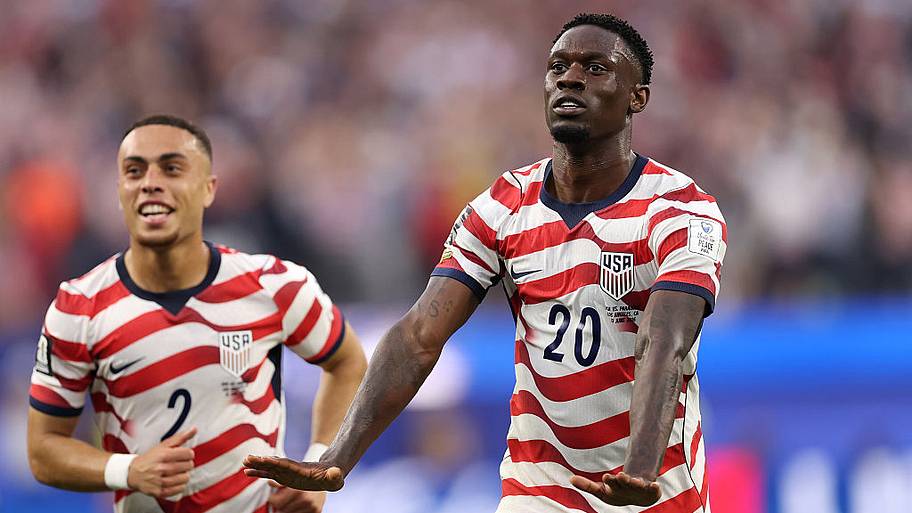
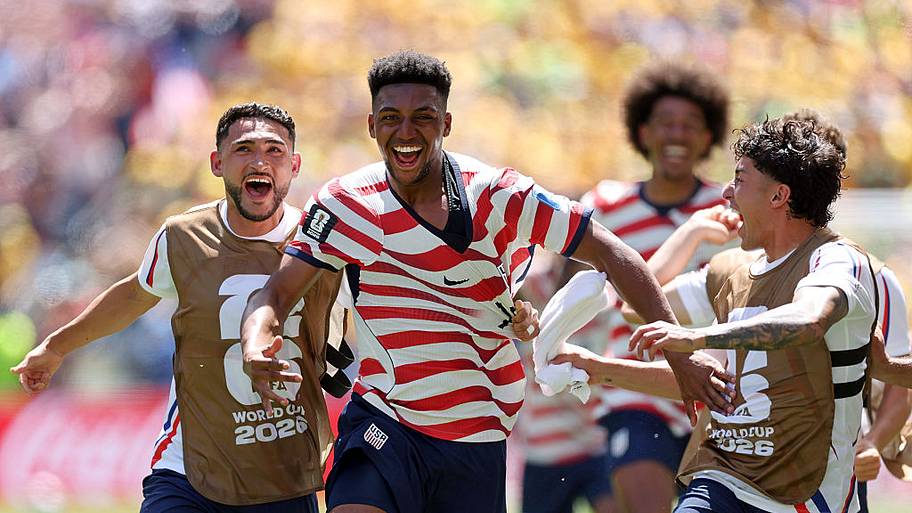
Pochettino’s team started out hot, trouncing Paraguay 4–1 and easing past Australia 2–0. They performed with the cohesion of a European club outfit, with the Argentine’s ideals finally translating after plenty of toil.
Back in 2002, Pochettin was a World Cup player, and England fans long remembered him as the defender who fouled Michael Owen to tee up David Beckham’s redemption from the penalty spot. An Argentina team that entered the tournament as the favorites exited in the group stage.
A memorable run with some of the most notable wins in our history.
— U.S. Soccer Men's National Team (@USMNT) June 1, 2026
This is 26 USMNT Moments: Past to Present.
Ep. 16 - 2002 FIFA World Cup 🎬 https://t.co/ZSD5XPvM0a pic.twitter.com/FmFBF2k9RY
The USMNT was still in its relative infancy 24 years ago. Hosting the World Cup eight years prior helped inspire the development of Major League Soccer (MLS), and there were genuine stars included on Bruce Arena’s roster, from a young Landon Donovan to Brian McBride.
Few expected them to turn over Portugal, semifinalists at Euro 2000, on Matchday 1, though. Its 3–2 win in Suwon ranks among the finest in the USMNT’s World Cup history, even if the Stars and Stripes were eventually forced to cling onto victory after racing into a 3–0 lead. Arena’s side subsequently drew with South Korea, and was grateful for the co-host beating Portugal on Matchday 3, given that they had been beaten 3–1 by Poland.
Pochettino’s USMNT endured no such drama this time around. FIFA’s decision to use head-to-head as the decisive tie-breaker meant the team had already secured top spot in Group D with a match to spare. A heavily rotated team fell 3–2 to Türkiye to round off the first phase.
Unlike 24 years ago, the current team had been expected to progress into the knockouts, and not merely because of the expanded tournament. The USMNT of 2002 entered the World Cup with 300–1 odds of lifting the trophy, while the latest iteration boasted 60–1 odds.
| Group Stage Stat | 2002 | 2026 |
|---|---|---|
| Opponents | Portugal, South Korea, Poland | Paraguay, Australia, Türkiye |
| Finish | 2nd | 1st |
| Record | 1-1-1 | 2-0-1 |
| Goals For | 5 | 8 |
| Goals Against | 6 | 4 |
Knockout Stages
By winning Group D, the USMNT set up a round of 32 tie against one of the eight third-place finishers. Bosnia and Herzegovina represented plucky opposition, albeit one Pochettino’s team was tipped to beat.
Arena’s side, beaten comfortably by Poland just days before, was also content with its draw against familiar foes Mexico, even if El Tri had beaten Italy and Croatia to top spot in Group G and entered the World Cup as the seventh seed. “We knew them,” Eddie Pope, a member of the 2002 team, later commented. “It wasn’t because they were an easy team to beat. It was just that we felt like we could beat them.”
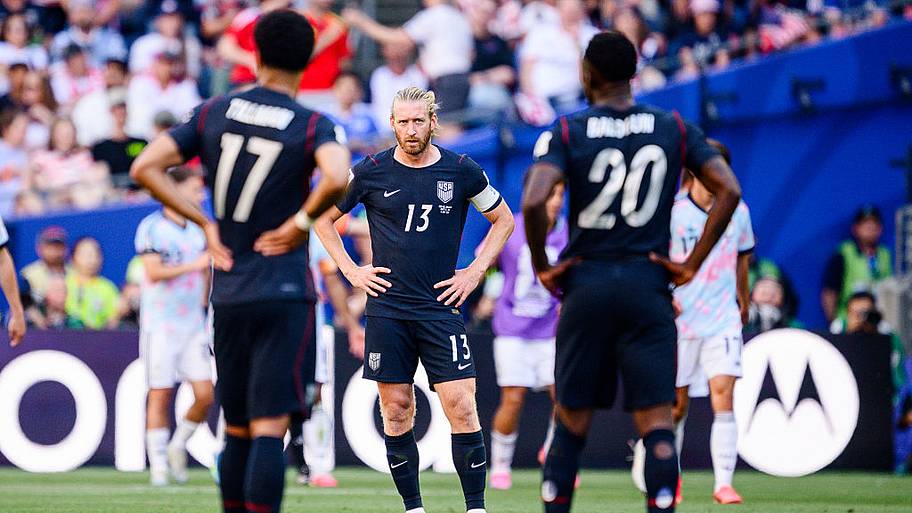
And beat them, they did. Goals from Donovan and McBride sealed a 2–0 victory, a comparatively more impressive triumph than the USMNT’s win over the 61st-ranked Bosnia by the same scoreline, even if Folarin Balogun’s harsh red card meant they played much of the second half with 10 men.
In 2002, the USMNT’s run was compromised by an egregious missed handball call against Germany. Arena’s side were a goal down thanks to Michael Ballack when Torsten Frings inadvertently handled on the goal line following a stellar Oliver Kahn save from future USMNT head coach Gregg Berhalter.
Had Scottish referee Hugh Dallas made the right call, the U.S. likely would’ve been level and boasting a man advantage with much of the second half still to play. Germany went on to reach the final, but it was anything but a vintage German team.
View this post on Instagram