
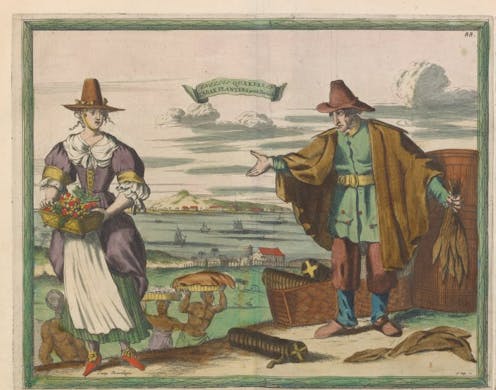
Buying items that are fair trade, organic, locally made or cruelty-free are some of the ways in which consumers today seek to align their economic habits with their spiritual and ethical views. For 18th-century Quakers, it led them to abstain from sugar and other goods produced by enslaved people.
Quaker Benjamin Lay, a former sailor who had settled in Philadelphia in 1731 after living in the British sugar colony of Barbados, is known to have smashed his wife’s china in 1742 during the annual gathering of Quakers in the city. Although Lay’s actions were described by one newspaper as a “publick Testimony against the Vanity of Tea-drinking,” Lay also protested the consumption of slave-grown sugar, which was produced under horrific conditions in sugar colonies like Barbados.















