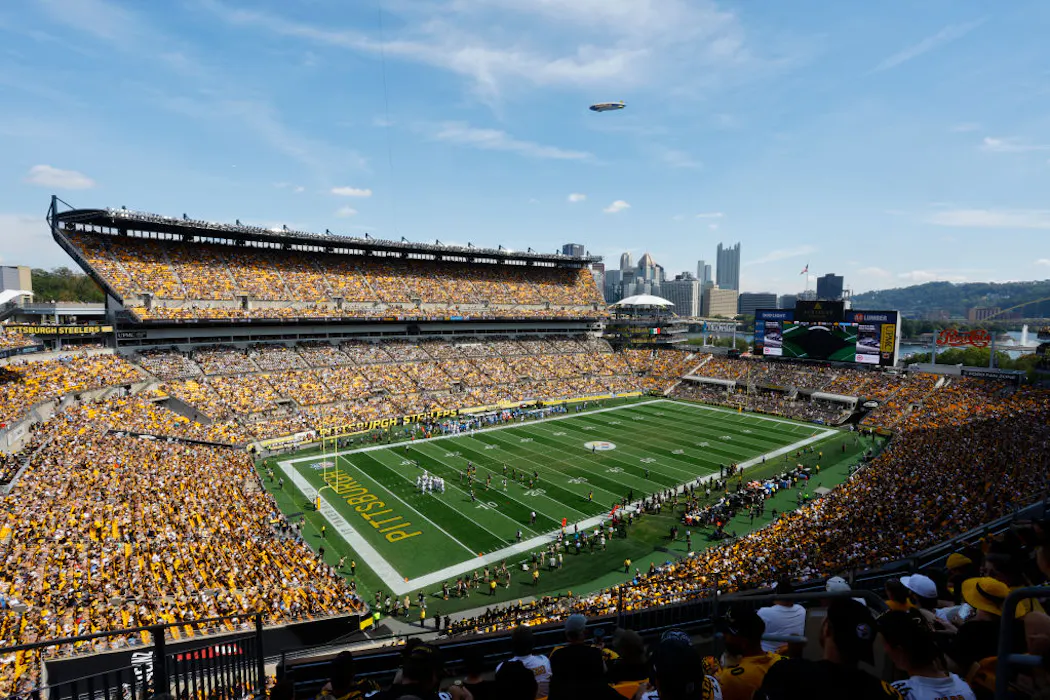
When the NFL draft arrives in Pittsburgh in April 2026, city officials are sure to tout projected economic impact figures. They will likely point to the US$73 million generated by Green Bay, Wisconsin, and the surrounding area in 2025, the $213 million generated by Detroit in 2024, or the $164 million by Kansas City the year prior.
I’m a sports marketing researcher who studies the economics of celebrity endorsements, and I view these short-term, direct economic impact numbers with skepticism.
The reality is that local residents often stay home to avoid the chaos of mega-events. Economists have long understood the “displacement effect” that happens when an influx of fans crowd out regular tourism and local spending, essentially replacing existing economic activity rather than adding to it.
If Pittsburgh measures NFL draft success strictly by hotel bookings and weekend beer sales, it has missed the point. Because the draft moves from city to city each year, the true return on investment isn’t found in a temporary spike in local revenues. It is found in brand equity – the long-term increase in a city’s “market value” and reputation.
The impact of endorsements
For three days, the NFL will act as a massive celebrity endorser for Pittsburgh. Because attention is a scarce and valuable commodity, that institutional endorsement holds a value that can far exceed any immediate cash injection.
In marketing, researchers frequently analyze the signaling power of endorsements. “Signaling” in this context is the shift from Pittsburgh saying, “Trust us, we’re great” to a massive global brand, the NFL, saying, “We trust them, and you should too.”
For example, my research into the golf industry quantified the immense impact Tiger Woods’ endorsement had on the sale of Nike golf balls. When Woods switched from Titleist, Nike sold an additional 119 million golf balls over a 10-year period, adding $105 million to its bottom line.
Woods’ endorsement served as a market-wide signal of quality and legitimacy, elevating the brand’s premium status. This led to an increase in price of 2.5%. The increase in price also sends a signal of product quality.
The NFL draft functions in a similar way for host cities.
By selecting Pittsburgh, the NFL broadcasts a signal that the city is a premier destination capable of managing a global stage. This presents a critical rebranding opportunity. Despite its decades-long transformation into a thriving hub for robotics, health care and higher education, Pittsburgh continually battles to shake off its 20th-century Rust Belt reputation in the national consciousness.
Detroit leveraged the draft in 2024 not just to host a massive party, but to also aggressively counter persistent narratives of urban decay and to highlight investments made in the city.

The broadcast shots of a vibrant, packed downtown did far more to modernize Detroit’s image than any taxpayer-funded ad campaign ever could.
The same thing happened in Kansas City after it hosted the 2023 draft. The city added almost 25,000 residents in the year after the draft – more than in any of the previous four years.
NFL draft could shape local recruiting
Hosting the NFL draft could also prove beneficial to recruitment efforts at Pittsburgh-area colleges.
In recent years, I have analyzed how name, image and likeness policies, commonly referred to as NIL, reshape talent acquisition in college football.
In the NIL era, universities aren’t just selling an education; they are selling a direct pathway to professional success.
I believe hosting the NFL draft will likely generate a “halo effect” for regional football programs like the University of Pittsburgh, Penn State University and West Virginia University. A halo effect occurs when the prestige and glamour of a major endorsement spills over to elevate the perception of other brands that have some association.
For highly touted high school recruits who are watching the NFL draft broadcast, seeing the pathway to the pros physically located in Pittsburgh anchors the idea that this region is a center of the football universe – at least for three days.
Fans will see this play out in real time. When ESPN broadcasts from the North Shore, it won’t just talk about Penn State quarterback Drew Allar’s arm strength; it will show highlights of him developing just two hours east.

The impact on the University of Pittsburgh could be even more direct. The rise of linebacker Kyle Louis and running back Desmond Reid offers continued evidence of a Pitt-to-pro pipeline.
In a hypercompetitive recruiting market where every major college football program offers money, nonmonetary differentiation is key. Being in one of the NFL’s chosen cities signals that you are already in the league’s orbit.
Of course, hosting a mega-event comes with inherent risks. If logistics fail, traffic becomes unmanageable or the fan experience is poor, this high-profile endorsement backfires. The brand signal rapidly flips from “premier destination” to “not ready for prime time.”
In landing the NFL draft, Pittsburgh essentially scored a three-day commercial that will be viewed by tens of millions of Americans across the country. Now, it just has to make sure the set looks good.

Tim Derdenger does not work for, consult, own shares in or receive funding from any company or organization that would benefit from this article, and has disclosed no relevant affiliations beyond their academic appointment.
This article was originally published on The Conversation. Read the original article.