Hospitals are “nowhere near out of the woods yet” as flu cases remain at record levels for this time of year, health officials have said.
The figures were revealed as resident doctors in England have entered the second day of strike action due to a bitter dispute with the Government over jobs and pay.
Officials said that the combination of strikes and rising flu levels mean hospitals remain on “high alert”.
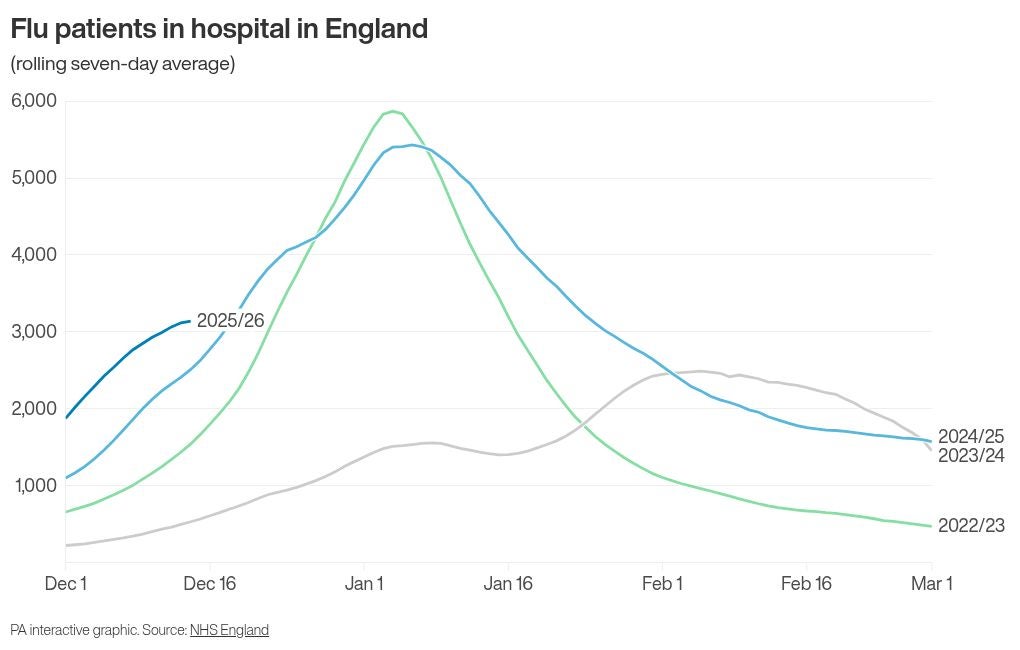
New figures from the NHS show that the number of people in hospital in England with flu continues to rise and remains at a record level for this time of year, though the rate of growth has slowed.
An average of 3,140 flu patients were in hospital each day last week, up 18% from 2,660 the previous week.
At this point last year, the number stood at 2,629 patients while in 2023 it was just 648.
This week, some NHS services will be affected because of resident doctor strike action.
— NHS (@NHSuk) December 18, 2025
If you need urgent medical help, use 111, and if it is a serious or life-threatening emergency, please call 999. pic.twitter.com/AFDgKHXTCO
NHS England said that there are “welcome signs” that the rise in flu cases in hospital is slowing in some parts of the country – pointing out a fall in flu cases in hospitals in the North West over the past week.
The figures show the number of flu patients in hospital in north-west England has fallen week on week, but has risen in all other regions.
An average of 386 patients with flu were in hospital in the North West last week, down 4% from 403 the previous week.
The biggest percentage increases were in south-west England (up 40% from 139 to 195) and eastern England (up 39% from 207 to 287).
In south-east England flu patients were up 33% (from 202 to 269); in north-east England and Yorkshire they were up 21% (from 673 to 813); in London they rose 18% (from 408 to 484); and in the Midlands they increased by 13% (from 627 to 706).
Some 128 flu patients were in critical care beds across England last week, up from 106 the previous week and slightly higher than the number at this point last year (125).
Separately, an average of 427 hospital beds were filled each day last week by patients with diarrhoea and vomiting or norovirus-like symptoms, up 21% from 354 the previous week.
Today 10,000s of doctors will go out on strike, as they're willing to stand up for their profession against a totally avoidable jobs and pay crisis.
— The BMA (@TheBMA) December 17, 2025
Resident doctors need jobs, and when they find those jobs, they need to be paid fairly for it.
Striking is a last resort, we… pic.twitter.com/x7nMfwMNpq
Professor Meghana Pandit, NHS England’s national medical director, said: “While some parts of the country will be breathing a sigh of relief with flu cases not rising as quickly as feared, we are nowhere near out of the woods yet.
“Combined with the impact of strikes, a stream of winter viruses means many hospitals will be on high alert in the days ahead.
“But it remains vital that people continue to come forward for NHS care as normal.”
Officials have also reminded people to get their flu jab to protect themselves going into the new year.
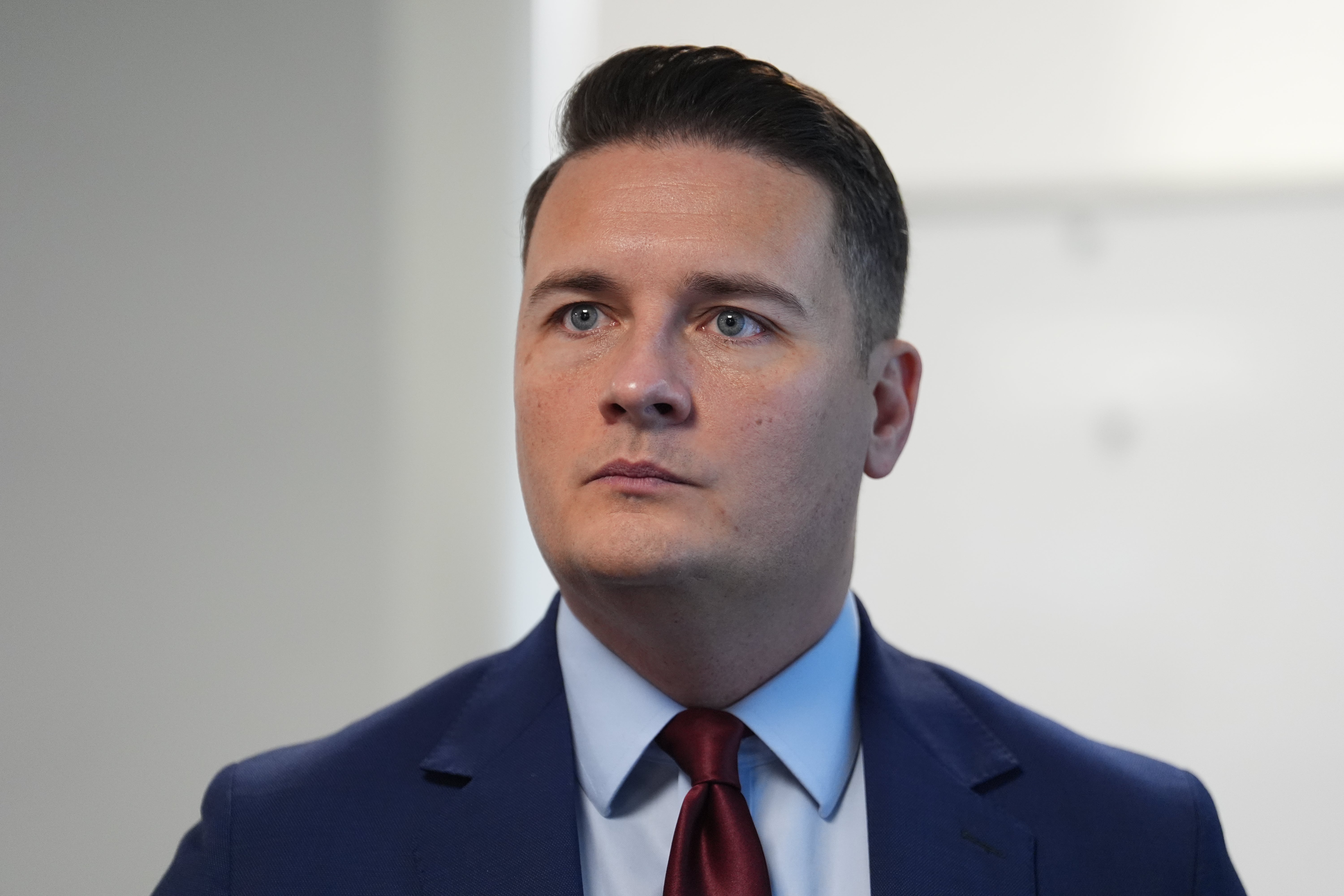
Health and Social Care Secretary Wes Streeting said: “Flu continues to put significant strain on the NHS, with record numbers of patients in hospital, and frontline services remaining under enormous pressure.
“The BMA’s regrettable decision to pursue strike action at this critical moment is piling on the pressure, but the NHS team has responded brilliantly to keep the show on the road.
“Our entire focus is on keeping patients safe through the strikes and this peak period for the NHS.”
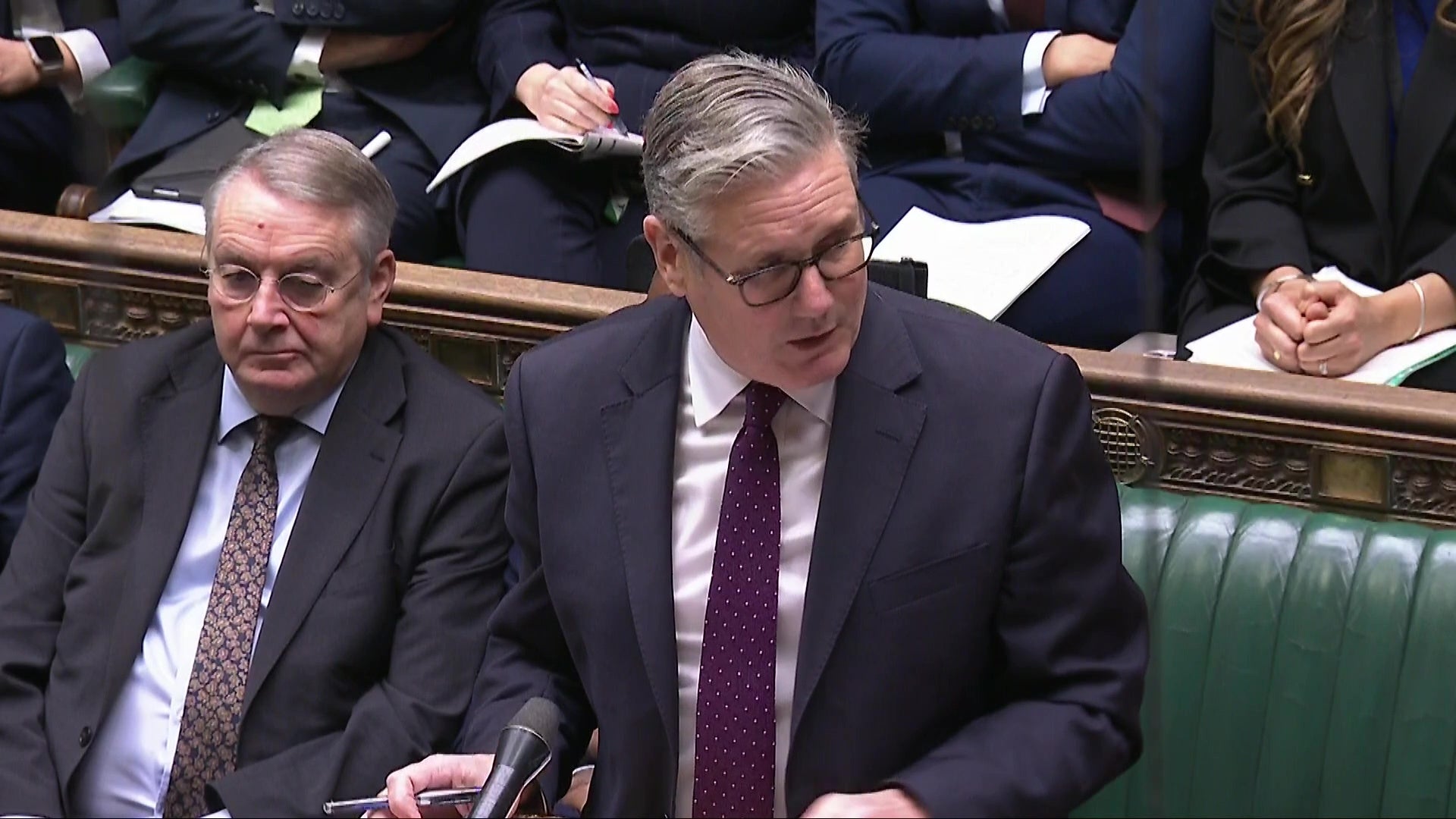
On Wednesday, Prime Minister Sir Keir Starmer said that the resident doctor strikes were “dangerous and utterly irresponsible”.
The British Medical Association and the Government have been urged by healthcare leaders to enter external mediation in a bid to end the ongoing dispute.
Conciliation service Acas said that it is “well prepared and ready to help with the dispute”.
It is the 14th round of strikes by resident doctors in England, formerly known as junior doctors, since 2023.
Commenting on the figures, Sarah Woolnough, chief executive of The King’s Fund, said: “This situation must be similar to what NHS leaders had on their ‘worst case scenarios’ list when they made their plans for winter.”
Rory Deighton, acute and community care director at the NHS Confederation, said: “We are only in the early stages of what NHS leaders know is going to be a long and difficult winter.
“We do not yet know when or at what level flu will peak, and the impact of the current round of strikes on services could continue into the new year as appointments are rebooked and staff covering industrial action take time off.”
Caroline Abrahams, charity director at Age UK, said: “The best Christmas present for many older people this year would be for the long-running dispute between the resident doctors and the Government to be finally over.
“We hope that everyone involved will redouble their efforts to reach a settlement, before any more damage is done to staff morale and camaraderie, NHS finances and, last but definitely not least, the quality and consistency of patient care.”
Liberal Democrats leader Sir Ed Davey said the flu figures were a “national emergency” and called for the Government to hold an emergency Cobra meeting.
UK police arrest pro-Palestinian protesters as authorities toughen hate speech law enforcement
Child intensive care cases rise as superflu cases flood hospitals
‘Doctors are not self-indulgent’: Readers on NHS strike action
Starmer orders King’s Speech for week after May local elections
Live: Family members of prisoners on hunger strike hold press conference
Woman tells of ‘absolutely terrifying’ bid to escape gunfire on Bondi Beach