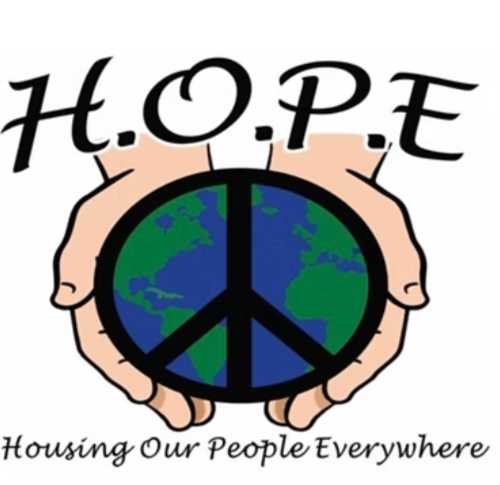
Chris Collins speaks often about the power of possibility, but his ambitions are grounded in practical goals. Through a growing initiative he calls Hope, he is working to build communities that can feed themselves, house people safely, and create long-term pathways for learning and purpose. It is an expansive humanitarian effort shaped by a belief that people are capable of more than they realize when given the opportunity.
Collins describes Hope as a worldwide movement focused on ending hunger and supporting people without stable housing. He prefers the term houselessness, noting that it avoids placing a label on the individual and instead highlights a circumstance that can be addressed. His interest lies in long-lasting solutions that combine housing, education, food production, and sustainable funding into a single ecosystem. "Hope begins with understanding your own creative power," he says. "No one can think for you, and once you realize how strong a single thought can be, everything becomes possible."
That approach reflects two decades of experience. In the aftermath of Hurricane Katrina, Collins and a small team constructed a home using materials salvaged from storm-damaged cars. Built with cordless tools and no prior building experience among the crew, the house earned recognition for its strength and resilience. It resisted fire, water, termites, and mold, and even offered considerable insurance savings compared with conventional wooden homes. Collins sees that project as proof that durable, sustainable housing can be created almost anywhere with the right design.
His current focus is on steel-based construction supported by robotic factories. The method is intended to reduce costs, minimize delays, and create safe structures that can be deployed rapidly. Collins believes these systems can help cities close the gap between available housing and the number of people who need it.
Housing alone does not define the Hope model. Collins speaks frequently about building an ecosystem that adapts to each community. Local leaders are given a menu of options, from schooling and training programs to food production and green energy. Communities can select what they need and leave aside what they do not. The intent is to support local priorities rather than impose a universal template.
"We are building more than houses," he says. "We are building ecosystems that give people the tools to grow food, create energy, learn, and live with dignity. Every community deserves the chance to shape its own future."
Food security is a major part of the plan. Collins and his partners are developing vertical growing systems that combine fish, vegetables, and mushrooms in aquaponic environments. These systems can operate year-round and produce frequent harvests from compact spaces. In Los Angeles, he envisions transforming vacant towers into a vertical growing site capable of serving large numbers of residents each day. By bringing production closer to the communities that need it, he hopes to reduce costs and increase access to fresh food.
Education and personal development also hold central roles. A curriculum called Womb to Legacy is being developed to introduce social impact learning from early childhood onward. Collins believes that children should be encouraged to see themselves as potential problem solvers rather than passive inheritors of global challenges. He often speaks in a simple, approachable language for this reason, aiming to connect with both younger audiences and the adults who guide them.
Collins's work is influenced by a personal philosophy centered on self-awareness and improvement. He encourages individuals to identify a single word that defines them at their core. His own word is refuge, reflecting both the people who come to him for help and his commitment to turning overlooked materials and ideas into sources of stability and opportunity. He often reminds others that progress begins with individual actions and the willingness to see potential in everyday choices.
The Hope movement, as Collins describes it, is not limited by geography. He believes these ecosystems can be established anywhere in the world once communities understand what is possible and choose to participate. His goal is to offer tools that help people build safe homes, produce reliable food, create sustainable funding, and foster learning environments that last from early childhood to future generations.
Collins concludes: "My purpose is to ignite a fire in the human heart that water cannot put out. When people see their value and work together, there is no limit to what we can create. You are created by creators, to create."