Get all your news in one place.
100's of premium titles.
One app.
Start reading
Latin Times
Latin Times
Politics
Miguel Paiva

Honduras Weighs Major Electoral Reform Before 2029 After One Councilor Stalled Nation's 2025 Count

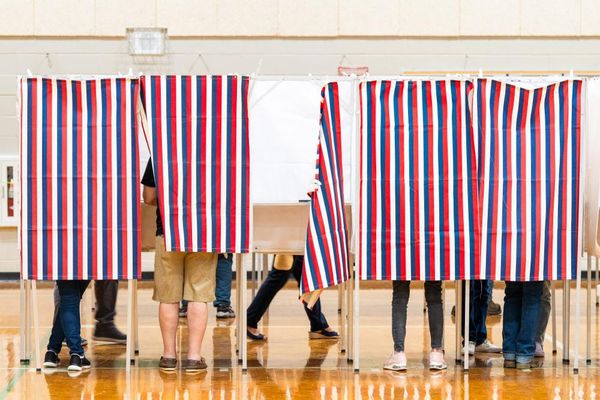
A voter deposits her ballot into a National Electoral Council (CNE) box during an election day. The debate over the new reforms aims to guarantee transparency, representation, and public trust in the country's upcoming electoral processes. (Credit: AI-generated image by Miguel Paiva / Latin Times)

Key Takeaways

  • Honduras' Congress now holds at least three major electoral-reform packages, the newest a set of 87 civil-society proposals filed Sept. 21, and plans to merge them into a single bill.
  • The central fix would end the unanimity rule that let one absent councilor stall the National Electoral Council (CNE), replacing it with simple-majority quorum and decisions.
  • Any change needs 86 of 128 votes, which no party controls alone, while the CNE itself runs on stopgap members whose work has been largely administrative since Sept. 11.

Honduras wants its next presidential count to end in hours, not weeks. To get there, lawmakers in Tegucigalpa are trying to rewrite the rule that allowed a single member of the three-seat National Electoral Council (CNE) to stall decisions during the 2025 crisis, and they want the fix on the books well before the 2029 general election.

The latest push landed on Sept. 21, when ten civil-society organizations handed Congress 87 proposals. That filing joins a package from former electoral officials delivered in July and a bill from Congress President Tomás Zambrano introduced in August. For Honduran families in the U.S. who followed a 24-day presidential count from afar, the stakes are simple: whether the next result arrives fast enough, and clean enough, to be believed.

How the 2025 Count Broke Down

Hondurans voted on Nov. 30, 2025. The CNE did not proclaim National Party candidate Nasry Asfura the winner until Dec. 24, and it was reported that councilors Ana Paola Hall and Cossette López put his edge over Liberal Salvador Nasralla at 0.74 percentage points.

The council's formal declaration, later printed in the official gazette La Gaceta, credited Asfura with 1,479,822 votes (40.27%) and Nasralla with 1,452,796 (39.53%), a gap of about 27,000 ballots. Libre's Rixi Moncada finished a distant third with roughly 19%. The same document set Jan. 27, 2026, as the start of Asfura's four-year term.

Getting there was chaotic. Vote counting was suspended more than once as the tabulation platform failed, according to Al Jazeera, and close to 2,800 tally sheets flagged for inconsistencies were sent to a special recount staffed by hundreds of election workers and party delegates, according to this report.

That recount crawled. In its declaration, the CNE said reviewing each presidential tally sheet should have taken about 40 minutes, based on experience from the 2025 primaries, yet some took as long as 12 hours. The council blamed deliberate stalling by party-appointed members of the special verification panels.

The Unanimity Trap

The deeper failure was legal rather than logistical. Libre-nominated councilor Marlon Ochoa refused to sign the presidential declaration, so Hall and López certified the result with alternate councilor Carlos Cardona completing the third signature.

On April 16, 2026, Congress removed Ochoa through impeachment with 88 votes after a special committee concluded he had helped obstruct the 2025 electoral calendar, Contra Corriente reported. Electoral Court magistrate Mario Morazán and two alternate judges were ousted in the same proceeding. Ochoa, who left the country citing security concerns, dismissed the process on social media as "persecution and revenge".

Interim councilor Eduardo Fuentes now argues that lawmakers must urgently "shield" the council's plenary so unanimity requirements can no longer paralyze it. As he explained to Infobae, if a sitting councilor opts out of a decision and the alternates follow suit, the body is left unable to approve anything the law says must be unanimous.

Three Blueprints, One Bill

Zambrano's package, introduced in late August, amends more than 20 articles of the Electoral Law. He framed it around one target for 2029, saying Hondurans cannot "wait a month" for presidential results. Liberal deputies shouted during the bill's presentation because it omits a presidential runoff, and Zambrano responded that the idea could still be added during debate.

According to Proceso Digital, the bill drops unanimity in favor of simple-majority quorum and votes, gives alternate councilors a voice and a vote, and has the CNE build its own preliminary results system, known as TREP. Electoral Affairs Committee chair Antonio Rivera Callejas has said the plan would also set administrative and criminal penalties for councilors who boycott sessions and would stop relying on a foreign company to run TREP.

The most sweeping draft came from a multiparty group of former electoral magistrates and councilors. Filed on July 22 by Christian Democratic alternate deputy Flavio Nájera, it rewrites 70 articles and adds more than ten new ones, including a move toward citizen-staffed polling tables.

The third package, delivered Sept. 21, groups 87 proposals into five blocks. Its authors include the National Anti-Corruption Council, the Association for a More Just Society and the think tank CESPAD, which worked with backing from the UN Development Programme and UN Women. Before delivery, El Heraldo described the same effort as organized into nine thematic blocks; the final filing uses five.

A Council on Borrowed Time

The CNE's current lineup is itself a byproduct of the crisis. In June, Congress granted Hall and López one-year leaves to serve as ambassadors, López to the Organization of American States and Hall to Spain, and approved Fuentes and Aixa Zelaya as interim replacements with 93 votes. When the pair were sworn in on July 1, Libre lawmakers shouted that the substitutions were illegal.

Ochoa's vacant seat posed a separate problem. In May, Congress passed a temporary quorum decree, over Libre's objections, that let the council sit with two principal members and one alternate, bringing Cardona onto the plenary. The decree governing the current lineup lapsed on Sept. 11. A continuity clause keeps Zelaya, Fuentes and Cardona in place until lawmakers act, but National Party deputy Merary Díaz told Infobae that, for now, their work is mostly limited to administrative matters rather than electoral decisions.

The 86-Vote Wall

Arithmetic is the real hurdle. Electoral reforms require a qualified majority of 86 votes in the 128-seat Congress, and the same threshold applies to naming permanent councilors. Zambrano has conceded that his National Party cannot reach it on its own and will need allies, chiefly from the Liberal bench, he told reporters in May.

The calendar is tight. Congressional leaders want the package approved this year, and a multiparty technical panel is set to begin merging the proposals on Oct. 21. Ordinary changes to the Electoral Law would take effect once published, while constitutional ones, such as a runoff, would need ratification in the following legislative session.

Why the Diaspora Is Watching

About 1.1 million people of Honduran origin lived in the U.S. in 2021, Pew Research Center estimates. Among Central American immigrants overall, the largest county-level communities are in Los Angeles, Harris (Houston), Miami-Dade, Dallas and Prince George's, Maryland, according to the Migration Policy Institute.

Many of those families carry their own uncertainty. Honduras' Temporary Protected Status designation ended Sept. 8, 2025. A federal judge vacated the termination on Dec. 31, 2025, but the Ninth Circuit put that ruling on hold on Feb. 9, 2026, keeping the end of TPS in force while the appeal continues, USCIS says.

For those households, whether Honduras can deliver a quick, trusted count in 2029 is a practical question, not an abstract one.

What to Watch Next

Three signals will show whether the reform is real: whether Liberal deputies supply the votes the National Party lacks, whether Libre, which has rejected the council's recent reshuffles, signs on to a final deal, and whether a merged bill clears the floor before the year ends.

Sign up to read this article
Read news from 100's of titles, curated specifically for you.
Already a member? Sign in here
Related Stories
Top stories on inkl right now
One subscription that gives you access to news from hundreds of sites
Already a member? Sign in here
Our Picks
Fourteen days free
Download the app
One app. One membership.
100+ trusted global sources.