Get all your news in one place.
100’s of premium titles.
One app.
Start reading
Homes & Gardens
Homes & Gardens
Chiana Dickson

Homeowners Urged to Secure These 3 Spots Before This Weekend’s Storm Hits – It's Set to be The Worst of The Season

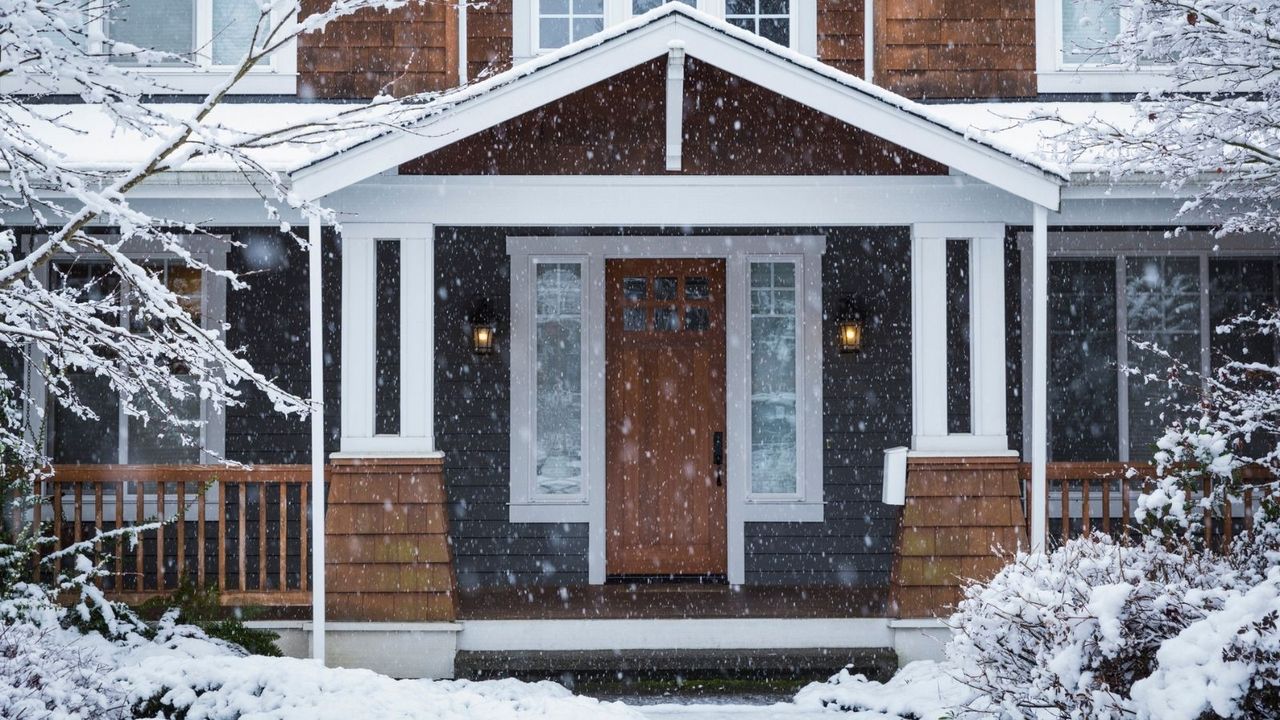
Exterior shot of a large home in the winter, with snow on peaked porch, front yard, path and falling. The front door is wooden as are the porch guard rails.

With the threat of the worst storm of the season rolling into nearly half of the US this weekend, there has never been more of a need for last-minute home winterizing.

Expected to hit more than two dozen states from the Plains, across the South, and into the Northeast, freezing weather and the risk of power outages will be hard to avoid.

That's why the experts are urging homeowners to check these three vital spots before the worst of the weather hits, with some quick winterizing tips you can follow last-minute before hunkering down to ride out the storm

Where You Need to Check Before The Storm

While it is usually best to get your home emergency ready in good time before bad weather, it's always better late than never.

According to CNN, this 'extensive' incoming storm could possibly leave people without power for days, and make travel nigh on impossible. Meaning prepping ahead to prepare your home for a snowstorm is a must.

Beyond securing access to extra power and heating, be it as small as portable solar-charge power banks crossed with emergency radios, from Amazon (with next day delivery), or a Mr Heater Buddy indoor propane heater, also from Amazon, for the best odds and to prepare a house for extreme weather this weekend, the experts are urging you to check these three spots and secure them now to keep your family safe.

1. Your Furnace Instake and Exhaust Lines

Maintaining your heating is a must in a winter storm. (Image credit: Nkuku)

Russ Teaca, director and lead technician at Reliable Heating and Air, urges, 'Find and clear your furnace's outside intake and exhaust lines. That's the one thing I would tell people to do before the snow starts.'

While working on the internal components and cleaning HVAC filters is also essential, this is a furnace maintenance check that people often forget.

Russ continues, 'Many new, high-efficiency heaters and heat pumps don't use chimneys to vent. Instead, they "breathe" through white PVC lines that stick out of the side of your house, usually only a foot or two above the ground. One pipe pulls in fresh air to fuel the fire, and the other pipe blows out the waste fumes. During a big storm, the pipes are most likely to break when falling snow or ice piles up against the side of the house and buries them.'

Left to block up, sensitive sensors in your furnace can switch the system off, he warns, forcing you to find ways to keep warm without heating in the middle of a serious storm.

'And it gets even worse,' he adds. 'If the exhaust pipe gets partly clogged, Carbon Monoxide (CO) could back up into the house because it can't get out. It's a huge problem for life safety.' This is why it is so important to have a battery-powered CO detector from Target in your home.

Russ urges, 'Before the storm, go outside and find those white lines. A three-foot area needs to be cleared around them. Shovel the snow away to the ground [this heavy-duty snow shovel from Lowe's is great for this]. If heavy rains are in the forecast, you should plan to go out every so often during the storm to keep the area clear. You shouldn't stack snow from your driveway against that wall. A house that can "exhale" is the only way to keep the heat on safely when you need it the most.'

2. Protect your Pipework

Identify your mains water valve to stop leaks should they occur. (Image credit: Future / Ruth Maria Murphy)

Frozen pipes are more than just a nuisance. Kevin Vander Hyde, VP of Vander Hyde Services, says, 'Frozen pipes are the most common and costly home emergencies in the winter, as they can burst quickly and cause extensive water damage during a time when weather conditions make emergency repairs extremely difficult to address.

'A single broken pipe can release hundreds of gallons of water in a short period of time, leading to flooding, structural damage, mold growth, and costly repairs. So, taking a few minutes to protect any exposed or vulnerable plumbing to stop pipes freezing, before a severe winter storm, can significantly reduce the likelihood of a major emergency situation that could cause lasting damage to a home.'

The quickest way to insulate pipes is to use foam pipe covers from Amazon, which are available with next-day delivery, slotting over the exposed sections. Maintaining the perfect temperature to avoid frozen pipes is also essential. If you have time, heating cables, also from Amazon, are great for this, offering longer-lasting protection.

Kevin adds, 'It’s also important to disconnect outdoor hoses and shut off and drain exterior water lines. Opening cabinet doors under sinks can also help warm air circulate around pipes located on exterior walls. Knowing where to find your main water valve is also essential to stop water in the event of a burst.

3. Sump Pump Discharge Lines

Protect your basement from flooding with a little maintenance. (Image credit: Future )

Your basement drainage solutions will be tested by the weight of snow and rain after the storm.

Rodrigo Duenas, contractor and CEO of FCS Foundation Repair and Concrete Services, warns, 'One thing you absolutely need to check now is your discharge line on your sump pump or the grading of your foundation. Most people think winter is all about the cold, but when the storm arrives, it's all about the massive freeze/thaw cycle. If your discharge line on your sump pump is sitting in your yard or covered with snow, it will freeze solid.

'Then, with the melting snow on your warm foundation, your sump pump is going to kick on. If it's frozen, it won’t have anything but water flowing through it. The motor will seize, and your basement is going to be flooded while you are trying to stay warm upstairs.'

To counter this, Rodrigo says a bit of DIY is essential. 'Go outside to where your pipe is leaving your house. If your pipe goes straight into the ground or a buried pipe, you have to. disconnect it. You then connect a temporary flexible corrugated hose [from Lowe's] to your exit pipe. The hose must be positioned at least ten feet away from your house, slanted downward. The reason why you have to do this is to ensure that, if your hose freezes, your water can flow out of your house through your connection point.

'A burst pipe is a mess, but a malfunctioning sump pump is an absolute disaster,' he presses. 'When you have flooding in your basement during a freeze, you can’t just open up the house to improve ventilation. Water sits in there, freezes, and will even break your foundation walls because it expands. Replacing a pump and drying out a basement is an expensive proposition, thousands of dollars, and takes months.

'Spending ten minutes checking to make sure you can breathe is the lowest-cost insurance you can buy before the sky falls.'

What to Shop

Meet the Experts

No matter where you live, it pays to have a hurricane preparedness kit in your home. These survivial essentials are perfect for any extreme weather to keep you and your family safe.

Sign up to read this article
Read news from 100’s of titles, curated specifically for you.
Already a member? Sign in here
Related Stories
Top stories on inkl right now
One subscription that gives you access to news from hundreds of sites
Already a member? Sign in here
Our Picks
Fourteen days free
Download the app
One app. One membership.
100+ trusted global sources.