
Get all your news in one place.
100’s of premium titles.
One app.
Start reading
Tom’s Hardware
Tom’s Hardware
Technology
Mark Tyson

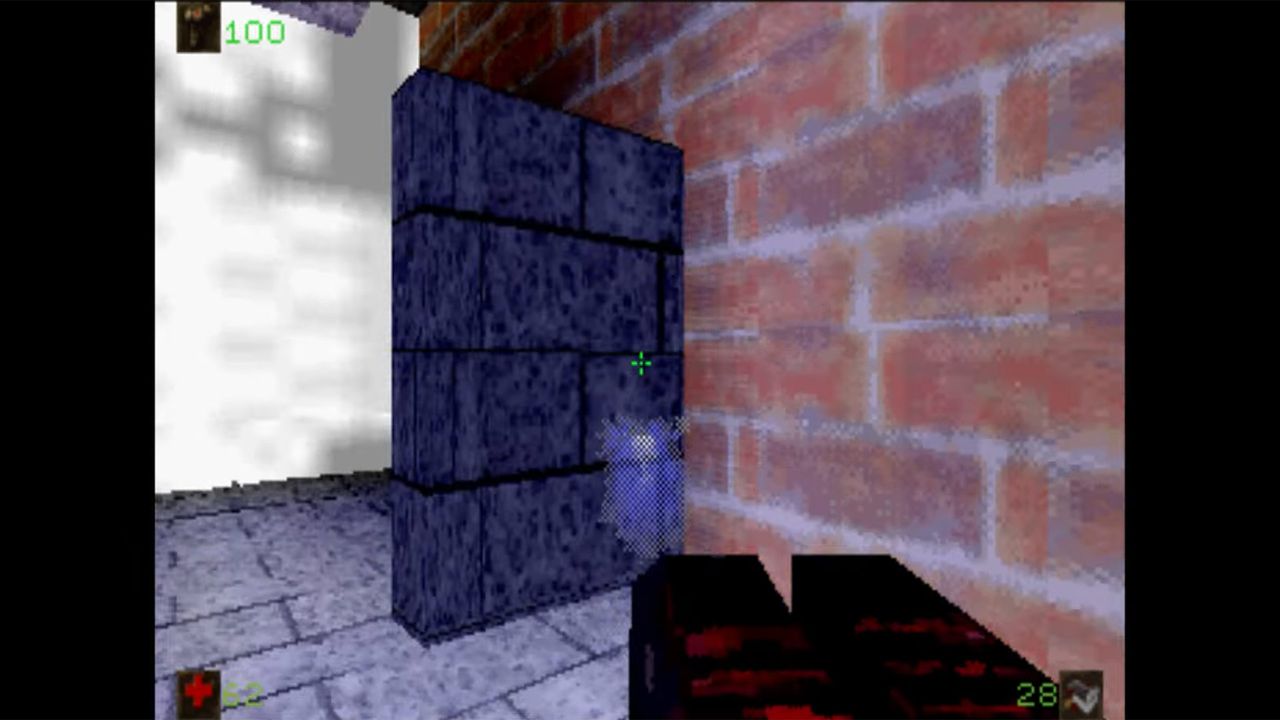
Homebrew developer runs real-time ray tracing test on 1994 Sega Saturn — ancient hardware's untapped power revealed, more refinements to come

Saturn raytracing demo.

A recently published video shows real-time raytraced shadows in a game environment running within the improbable confines of a mid-1990s console. The Sega Saturn was notoriously complex and difficult to optimize games for when it was introduced. However, this video shows that there are still surprises being wrung out of Sega’s dual-CPU and dual-video-processor system, which debuted in late 1994. Match that PSX!

Real-time raytracing began to become a mainstream feature of gaming graphics on PCs with the launch of Nvidia’s first RTX 20-series graphics cards based on Turing GPUs (late 2018). Some would argue it took another generation and the wide adoption of modern upscaling tech to actually see mainstream raytraced games' momentum. Thus, seeing any kind of real-time raytracing in action on a 1994-vintage console is fascinating.

XL2 introduces their real-time raytracing on the Saturn video clip by saying, “Here is a raytracing test in a small room. The function is pretty simple and could be optimized further: I simply test all the vertices using the BSP [Binary Space Partitioning].” Moreover, it is explained that several other optimizations are in place: the engine only tests the vertices of 3D objects, with only a quarter of them updated per frame, and light sources are kept to a minimum.

The Saturn homebrew dev hints that the demo we see may be improved in due course. They indicate that a number of paths to refinement are available, some of which would be “super easy,” while others may need “a bit more maths.” So stay tuned to XL2’s channel if you like what you see.

(Image credit: Evan-Amos)

Some Sega Saturn history

Sega’s Saturn was the iconic game company’s first 32-bit console from the ground up, designed to excel at 2D arcade ports, yet still capable of running emerging 3D-centric titles.

Launched in Nov 1994 in Japan / May 1995 in the U.S., it would become available at roughly the same time as the original Sony PlayStation (PSX, PS1) in both these key territories. In general, the PSX was weaker at 2D, but offered more balanced, dev-friendly 3D capabilities. Both the Saturn and PSX pre-dated the Nintendo 64, still cartridge-based but a strong 3D performer, by a year to a year and a half.

Sega followed up the Saturn with its awesome Dreamcast, which would be its final console hardware release, giving way to the Sony / Nintendo / Microsoft era.

Follow Tom's Hardware on Google News, or add us as a preferred source, to get our latest news, analysis, & reviews in your feeds.

Sign up to read this article
Read news from 100’s of titles, curated specifically for you.
Already a member? Sign in here
Related Stories
Top stories on inkl right now
One subscription that gives you access to news from hundreds of sites
Already a member? Sign in here
Our Picks
Fourteen days free
Download the app
One app. One membership.
100+ trusted global sources.