Get all your news in one place.
100's of premium titles.
One app.
Start reading
The Conversation
The Conversation
Politics
Avinoam Patt, Director, Center for Judaic Studies, University of Connecticut

Holocaust comparisons are overused -- but in the case of Hamas' Oct. 7 attack on Israel they may reflect more than just the emotional response of a traumatized people

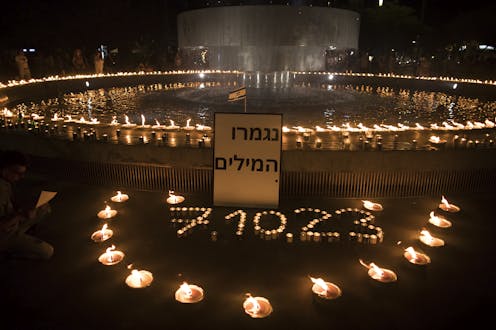
On Oct. 12, a sign in Tel Aviv says in Hebrew, 'No more words,' near candles lit both in memory of those killed in the Hamas massacres and for the hostages taken to the Gaza Strip. Amir Levy/Getty Images

Many observers have referred to the massacre of Israelis by Hamas on Oct. 7, 2023, as the deadliest attack against the Jewish people in a single day “since the Holocaust.”

As scholars who have spent decades studying the history of Israel’s relationship with the Holocaust, we have argued that the Holocaust should remain unique and not be compared with other atrocities. We have written against simplistic Holocaust analogies, like comparing mask and vaccine mandates during the COVID-19 pandemic to the Nazi persecution of the Jews, or the practice of labeling political opponents “Nazis.” Both seem to trivialize the memory of what is known as the Shoah, the Hebrew word for “catastrophe.”
Sign up to read this article
Read news from 100's of titles, curated specifically for you.
Already a member? Sign in here
Related Stories
Top stories on inkl right now
One subscription that gives you access to news from hundreds of sites
Already a member? Sign in here
Our Picks
Fourteen days free
Download the app
One app. One membership.
100+ trusted global sources.