Get all your news in one place.
100's of premium titles.
One app.
Start reading
The Economic Times
The Economic Times

Hollywood to Bollywood no more: US makes a move in India's backyard

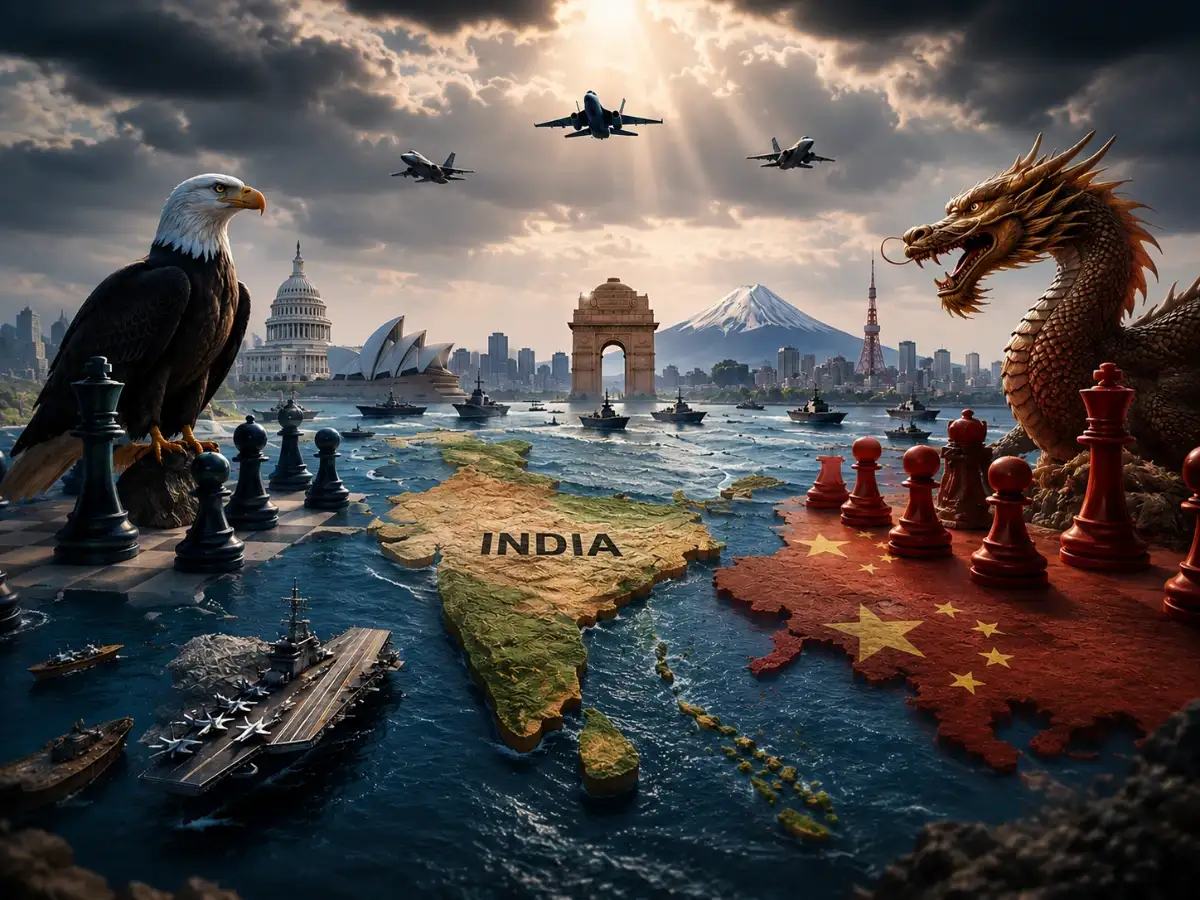
The US decision announced today to restore the name of its Indo-Pacific Command back to US Pacific Command looks cosmetic on paper but carries heavy geopolitical symbolism. The command itself insists nothing has changed in mission, geography or partnerships.

The name reversion comes at a moment when US alliances in Asia are already wobbling under trade friction, tariff wars and shifting priorities in Washington. It also comes after a visible change in America's China engagement under President Donald Trump’s second term. For India and its Indo-Pacific partners, the optics matter as much as the operational reality. The move raises questions about whether the Indo-Pacific construct still anchors US strategy or if Washington is slowly retreating into a narrower Pacific frame.

A name that once signalled a strategic turn

When the command was renamed Indo-Pacific Command in 2018, it was widely read as a decisive pivot. Then US Defense Secretary Jim Mattis framed the theater in sweeping civilisational terms, stretching “from Hollywood to Bollywood, from polar bears to penguins.” The message was that the US was formally fusing the Indian Ocean and Pacific theaters into a single strategic arc to counter China’s rise and recognise India’s growing importance.

The 2026 reversion strips away that linguistic fusion. The Pentagon statement is careful, almost bureaucratic, stressing continuity in area of responsibility from the US West Coast to the western border of India. But symbolism is unmistakable. Restoring the Pacific label suggests a conceptual narrowing at a time when China is still the primary challenge but the US approach is less coalition-driven than before.

Also Read | Trump backs India-US defence ties; says ‘if they’re attacked, we’ll help them’

From Indo-Pacific coalitions to transactional bilateralism

A key explanation for the shift lies in the broader strategic style of Trump’s second term. The early Indo-Pacific framework was built on coalition logic, strengthening the Quad, deepening interoperability with allies and institutionalising multilateral deterrence against China. That phase peaked under both Trump 1.0 and the Biden administration, when the Quad expanded into economic and technology coordination.

But the current trajectory looks different. Trump has increasingly preferred bilateral bargaining over alliance-building, a shift visible in tariff disputes and trade pressure across partners. Australia has faced tariffs despite free trade arrangements, India has confronted friction over energy and trade ties with Russia, and Japan has been uneasy over investment and trade demands.

Sana Hashmi, foreign policy expert at Taiwan Asia Exchange Foundation, captured this shift sharply, arguing on X: "This name change isn't about India, but rather a broader shift in US priorities in the Indo-Pacific. Trump 1.0 pushed the Quad, closer ties with India, & a stronger Indo-Pacific framework to balance China. This is driven more by Trump's changing views of China than anything/anyone else. It's worth remembering that the Indo-Pacific framework itself emerged when China was at the centre of US strategic thinking in the IP region. Instead of linking this with India, this should raise concerns about Trump's China policy."

Hashmi's assessment underlines that the Indo-Pacific construct itself was always China-centric. The removal of “Indo” does not erase that reality but suggests Washington may no longer be willing to sustain the same coalition architecture around it.

Also Read | Are the EU and China heading for a trade war?

The Quad question and Shashi Tharoor’s warning

The Quad, once revived in 2017 and later institutionalised into regular leaders’ summits, is now facing renewed uncertainty. It was built on the assumption that India, Japan, Australia and the US would steadily converge around a shared China balancing strategy. That assumption is now under strain.

Congress MP Shashi Tharoor reacted to the development by asking, “One more nail in the coffin of the Quad?” His remark reflects a growing anxiety in sections of Indian strategic circles that US policy volatility could weaken multilateral coordination in the Indo-Pacific at precisely the moment when China’s maritime assertiveness remains high.

Even if the Quad is not formally dismantled (though it has been adrift ever since Trump assumed power the second time), its strategic momentum depends heavily on US consistency. A shift back to a Pacific framing risks reinforcing perceptions that Washington is deprioritising the broader Indo-Pacific idea in favour of narrower regional management.

Hegseth’s speech: Alliances as burden sharing, not dependency

The US itself has been signalling a redefinition of alliances for some time. US Secretary of War Pete Hegseth articulated this shift at the recent Shangri La Dialogue, making it clear that future partnerships would be conditional and transactional. Now it appears Hegseth hinted at the soon-to-come name reversion. He warned, “Allies who refuse to step up and carry their own weight for our collective defense will face a clear shift in how we do business. President Trump believes in helping countries that help themselves, and the United States Department of War feels the exact same way.” His most direct formulation was even starker: “The era of the United States subsidizing the defense of wealthy nations is over. We need partners, not protectorates.” But he underlined India's strategic role in the Indian Ocean region: “And in South Asia, India is a critical anchor to hold the line. A powerful India, acting in its own self-interest, advances our shared goal of maintaining a balance of power across the region.”

This doctrine voiced by Hegseth aligns with the command’s renaming. The US is not exiting the Pacific but it is clearly changing its expectations. The emphasis is shifting from leadership of a collective security architecture to conditional engagement with regional partners.

What it means for India

Lt Gen DP Pandey (retd. ) argued in a post on X that the change reflects “limits of American power” and suggested that India must expand its own regional security role. He said India should “invest in overall securitisation of region” and develop strategic island infrastructure such as the Andaman and Lakshadweep chains as self-sustaining hubs that can support future basing structures.

His broader argument reflects a growing strand in Indian strategic thought: that regional security cannot indefinitely rely on US umbrella guarantees. At the same time, India’s own diplomacy reflects hedging rather than alignment. After prolonged tensions following Galwan, New Delhi has cautiously stabilised ties with China while deepening selective cooperation in the Indo-Pacific region. Defence exports such as BrahMos missile sales to Vietnam and the Philippines and potential deals with Indonesia reflect India’s expanding strategic footprint in the Indo-Pacific as the US retreats. The reversion of the US Pacific Command name could be a blessing in disguise for India which can now assume a greater strategic role in the region as major weapons sales and defence partnerships in the region already indicate.

China, the G2 shadow and alliance uncertainty

One of the most sensitive undercurrents in this shift is Washington’s evolving posture toward Beijing. Analysts have noted softer rhetoric and more transactional summitry under Trump’s second term, including references to a possible US China “G2” understanding. This has unsettled regional allies, such as South Korea and Japan, which had grown accustomed to a sharper US-led balancing framework. The Indo-Pacific partners who rely on US predictability are now considering anchoring their own hedging strategies.

Australia, Japan and India are all adjusting in different ways. Australia continues to depend heavily on China as a trading partner while maintaining security ties with the US. Japan remains firmly allied to Washington but is increasingly cautious about overdependence on unpredictable US policy cycles as indicated in its recent tilt towards deeper emphasis on defence. India is simultaneously deepening maritime cooperation in Southeast Asia while maintaining functional engagement with China.

The restoration of the Pacific Command name does not change deployments or operational maps. But it does suggest a subtle change in strategic context. The Indo-Pacific concept was built on the idea of coalition-led balancing against China across two oceans. The name reversion, by contrast, feels geographically narrower and politically more bilateral. However, whether this becomes a lasting doctrinal shift or a temporary rhetorical adjustment under Trump remains unclear. But the message received by Asian allies will be unmistakable.

Sign up to read this article
Read news from 100's of titles, curated specifically for you.
Already a member? Sign in here
Related Stories
Top stories on inkl right now
One subscription that gives you access to news from hundreds of sites
Already a member? Sign in here
Our Picks
Fourteen days free
Download the app
One app. One membership.
100+ trusted global sources.