Get all your news in one place.
100’s of premium titles.
One app.
Start reading
Tom’s Guide
Tom’s Guide
Technology
Josh Render

Higher resolution, better power consumption and more — here's why Apple's reported iPhone display upgrade could be a game changer

IPhone 17 Pro Max.

Apple is reportedly developing a new display technology that could bring significant changes to what future iPhones can offer.

iPhones have used Low-Temperature Polycrystalline Oxide (LTPO) displays for the last few generations. However, ET News recently reported that the company is looking into High Mobility Oxide (HMO) displays for its future products.

While HMO displays are still only a concept for modern smartphones, the theory is that they could offer several benefits over LTPO screens. The reason is down to how the technology utilizes advanced oxide materials to create thin-film transistors. This allows for much higher electron mobility compared to what we see on LTPO displays.

Why does electron mobility matter?

(Image credit: Future)

In concept, this increased mobility should mean improved screen performance and the potential to display higher resolutions. Not only that, the more efficient current flow means that HMO displays would offer lower power consumption when in use.

However, how big the difference this will make likely depends on what batteries future iPhones feature. We'd expect to see a bigger impact if Apple continues to use lithium-ion cells. However, if future iPhones follow the OnePlus 15 and move to silicone-carbon batteries, it might not have as noticeable an effect.

Finally, it's stated in the report that HMO displays should be cheaper to produce than LTPO displays. If accurate, then it could help Apple mitigate some of the rising costs of other components.

Will this be a major change across the smartphone world?

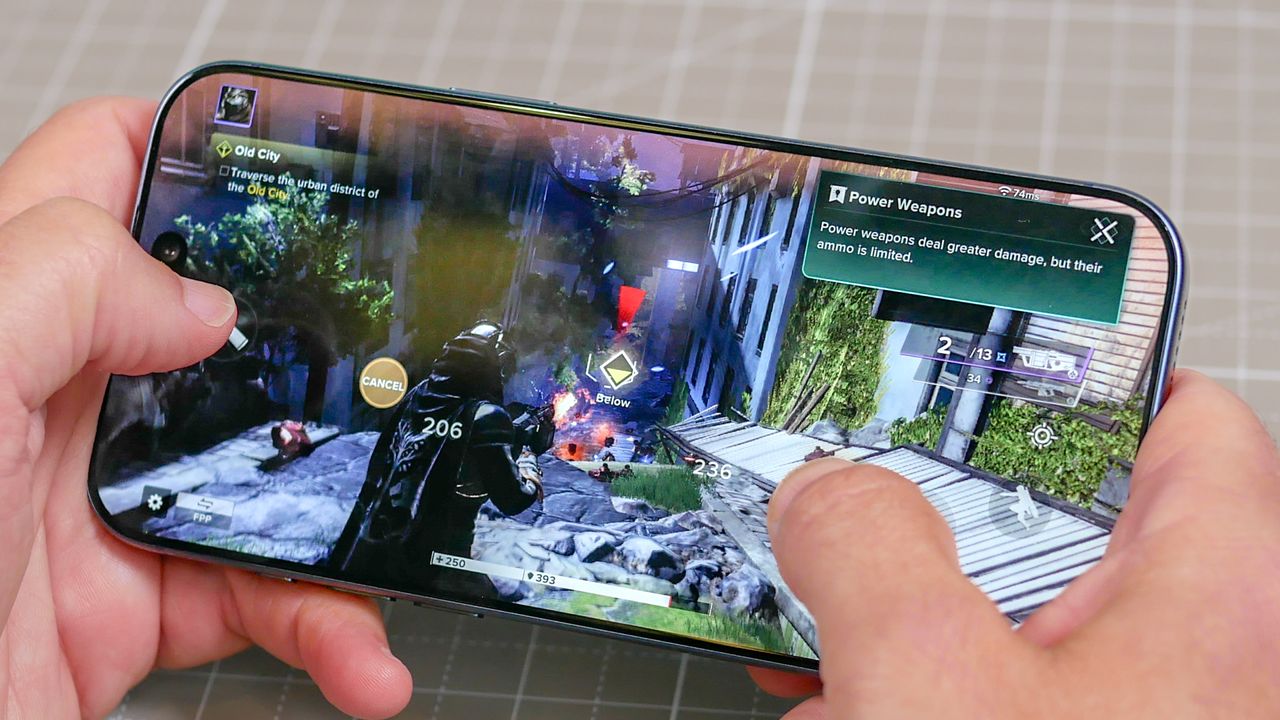
(Image credit: Tom's Guide / John Velasco)

Predicting how hardware changes will affect future smartphone models is always a challenge. However, the growth of HMO displays could have a significant impact, especially given the lower production costs.

With that being said, I doubt that we'll see LTPO displays disappear completely, at least at first. The issue is that the benefits of HMO displays to smartphones are all on paper at this point, without any real-world comparisons. Meanwhile, LTPO displays have proven strengths and weaknesses, making it a safer bet initially.

Not to mention, we don't know which model of iPhone will actually see the hardware change. According to the report, we could be waiting several years before any iPhone with an HMO display hits the shelves, and a lot can happen in that time.

As such, all we can do is wait, but as soon as a phone with the technology appears, we will be on the case to see just how much of an improvement it is.

Follow Tom's Guide on Google News and add us as a preferred source to get our up-to-date news, analysis, and reviews in your feeds.

More from Tom's Guide

Sign up to read this article
Read news from 100’s of titles, curated specifically for you.
Already a member? Sign in here
Related Stories
Top stories on inkl right now
One subscription that gives you access to news from hundreds of sites
Already a member? Sign in here
Our Picks
Fourteen days free
Download the app
One app. One membership.
100+ trusted global sources.