Get all your news in one place.
100's of premium titles.
One app.
Start reading
Cycling News
Cycling News
Sport
Matilda Price

'High trees catch a lot of wind' – From intense media scrutiny to social media abuse, the Classics bring out the pressure of expectation in Belgium

A side shot of Wout van Aert (Visma-Lease a Bike) riding up a cobbled climb during In Flanders Fields, with excited fans cheering behind a barrier.

A middle finger to the winner. A beer thrown at a rider. A hateful comment on social media. The Belgian Classics attract some of the most impassioned fans in the world, but sometimes, that fervour bubbles over into something more hostile.

Belgium is probably the only nation in Europe where cycling is the second most important sport behind football. Even in France, home of the Tour, cycling isn't in the blood of every town like it is in Flanders.
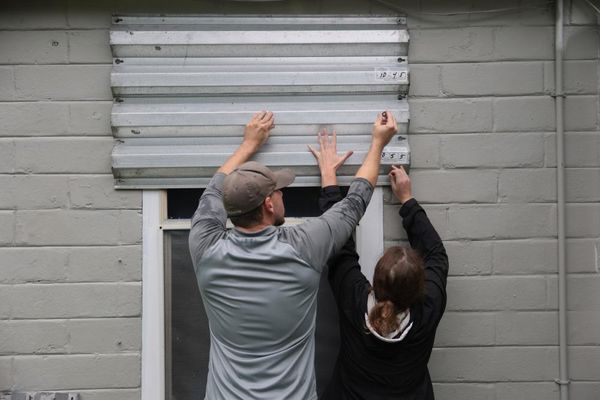
As a result, the coverage and attention on the sport is immense. There are multiple cycling reporters at the biggest newspapers with the sport always featuring on the back pages, and national TV broadcasters and radio stations are at every major race.

On one hand, this means cyclists are huge stars in Belgium, with Wout van Aert, Lotte Kopecky and Remco Evenepoel some of the most well-known and beloved sportspeople in the country. The media wants their riders to succeed, especially in these big home Classics.

But the breadth and depth of coverage also means that a rider's every move is scrutinised. It's a lot to put on an athlete, and the recent discussions and debates around the nature of Remco Evenepoel's decision to ride the Tour of Flanders have drawn into sharp focus how big stars are treated by and interact with the media.

On one hand, these riders are lifted up, often at a very young age, but the criticism can come equally quickly.

"High trees catch a lot of wind," is how Belgian veteran Tom Van Asbroeck puts it to Cyclingnews. "The media have to do something, and whether it's bad or good, it doesn't really matter for them. Belgium has a tendency to make guys very big, very fast, and then sadly also crack them when they show little cracks in their armour."

Whether the newspapers are saying good or bad things about you, there is absolutely a feeling that the media attention equals some sort of pressure or expectation that can weigh a rider down. Most riders quickly learn to deal with it, but that doesn't mean it's easy.

After her success at In Flanders Fields, for example, Lidl-Trek were cautious to not pile media commitments onto Fleur Moors. It would have all been positive, celebrations of her talent and potential, but the time and attention was clearly deemed a risk to her focus and calmness.

"You have to be grown up enough to realise and relativise these things," Van Asbroeck said. "It's part of the job, it's part of the cycling lifestyle in Belgium, I would say, and it's normal. We grew up with it."

Van Asbroeck fairly pointed out, "For me it's quite OK, but for these other guys, the big guns, for sure it's not that fun" – and it is true that much focus and scrutiny is on the biggest riders.

This week in Belgium, Evenepoel has been at the centre of the home media's attention, but Wout van Aert has long been in the crosshairs. As a Belgian Classics rider with no Tour of Flanders or Paris-Roubaix win to his name at age 31, he often receives a lot of stick when he gets beaten – which, unfortunately, has been quite often in recent years.

"It's not easy being Wout van Aert in Belgium," Grischa Niermann told Cyclingnews earlier this week. "But he copes with it in a good way. That's just how it is. He's a big star.

"He of course also likes it, but sometimes it's also a bit too much attention. But we help him there as much as possible. And what he wants is winning bike races, and that's what we are going for."

As well as Van Aert himself, Visma-Lease a Bike are often on the receiving end of criticism, especially when they seemingly get it wrong, like with their three-against-one loss at Dwars door Vlaanderen in 2025.

Niermann is always the first person to face up to the media, and will field questions for ages after a race, so he clearly doesn't have a problem with the scrutiny. But he underscored that it isn't really something that affects the team on anything more than a superficial level.

"We always stick to our plan. For me, personally, I don't care what the media says," he said. "But on the other hand, of course I know that this team exists – and cycling exists – to entertain people, so it's part of the job.

'Fan' behaviour

Outside of the media, whose job it is to – fairly – analyse and scrutinise races and performances, the more acute negativity often comes from roadside supporters, whose behaviour has sometimes crossed the line from excitement to abuse.

This is often against the rivals of Belgian riders, but can absolutely be targeted at the home stars too, especially if they're deemed to not be getting the results.

The vast majority of fans are there to have a great time and support the best riders in the world, but on occasion we've seen things thrown at riders, booing, jeering. Just this week, the finish line photos of Dwars door Vlaanderen highlighted a spectator giving the middle finger to Filippo Ganna beating Wout van Aert.

Look to the right to see the offending spectator (Image credit: Zac Williams/SWpix.com)

After the race, Florian Vermeersch also spoke about receiving hateful messages on social media, berating him for contributing to the chase behind his compatriot Van Aert. This time last year, Tadej Pogačar called social media "a cancer of society".

Many riders have stopped talking about these kinds of comments, and many try to protect themselves from social media abuse, but it definitely still happens.

"Unfortunately, I would almost say this is the world we're living in now," Wout van Aert said about online abuse in his pre-Flanders press conference.

"It's so easy to put comments online and to say things that are really rude, because you always feel safe behind your computer screens. It should not be like that. Obviously, I also know what it's like and would advise Florian to not open his social media too much."

We've also seen much worse physical incidents, like the cap thrown at Mathieu van der Poel's wheel during Paris-Roubaix last year. In fact, the Dutch rider has had everything from bidons and beer to vape smoke and spit hurled in his direction, often in Belgium.

This kind of thing is unpleasant to see, and is a byproduct of cycling's proximity to its fans – they're not in far-away stands, or stadiums you could be banned from – but is the cause just normal sporting tribalism?

"It's sort of similar to soccer I would say," Van Asbroeck said. "Everyone has the guys that they support and teams that they support, and automatically there will then be dislike for other teams.

"Sometimes it's sad that it has to happen, but on the other hand it's just the passion that drives these supporters for their specific riders or specific teams or whatever. That's just life, you cannot change it. As long as they try their best and stay behaved, we are happy. If there's a couple of incidents like this a year, it is what it is. You cannot change anything about that or control people."

Contrary to Van Asbroeck's point, many people in cycling are trying to do something to change this behaviour. In January, the UCI announced they would be working with Signify Group and their "artificial intelligence service Threat Matrix" which aims to find and report abusive online content targeted at cyclists. It doesn't necessarily stop the root cause, but would help these messages not reach riders.

As for roadside behaviour, many big races run safety and respect campaigns, and some certainly have drafted in additional security out on the roads to try to prevent issues where riders have been even physically abused.

Thankfully in Belgium this week, those physical incidents have been few and far between. But there have been middle fingers, boos, hate messages, as well as the normal media scrutiny.

Even if the pros see it as part of the job, or something they've grown a thick skin to, it's an element that will always underline this part of the cycling season, and doesn't look to be going away any time soon.

Get unlimited access to our unrivalled 2026 Spring Classics coverage with a Cyclingnews subscription. We'll bring you breaking news, reports, and analysis from some of the biggest races on the calendar, including Milan-San Remo, Paris-Roubaix and the Tour of Flanders. Find out more.

Sign up to read this article
Read news from 100's of titles, curated specifically for you.
Already a member? Sign in here
Related Stories
Top stories on inkl right now
One subscription that gives you access to news from hundreds of sites
Already a member? Sign in here
Our Picks
Fourteen days free
Download the app
One app. One membership.
100+ trusted global sources.