
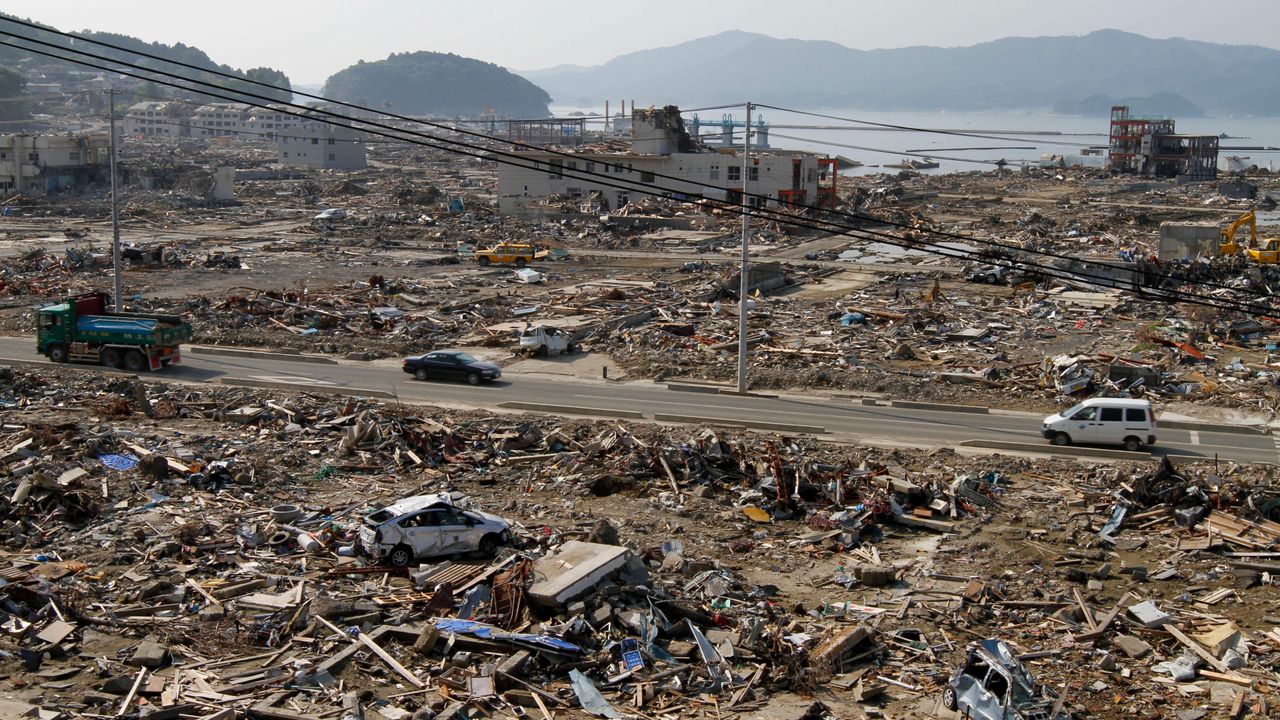
The 2011 Tohoku earthquake that triggered a devastating tsunami in eastern Japan was worsened by a thick layer of slippery clay, new research finds.
The clay layer, which was up to 98 feet (30 meters) thick on the ocean floor, created a weak spot that enabled the magnitude 9.1 quake's movement to travel all the way to the seafloor. That motion thrust the seafloor upward by 164 to 230 feet (50 to 70 m) over about 310 miles (500 kilometers). And the motion of the seafloor thrusting into the overlying ocean is what created the tsunami wave that inundated 217 square miles (561 square kilometers) of Japan.