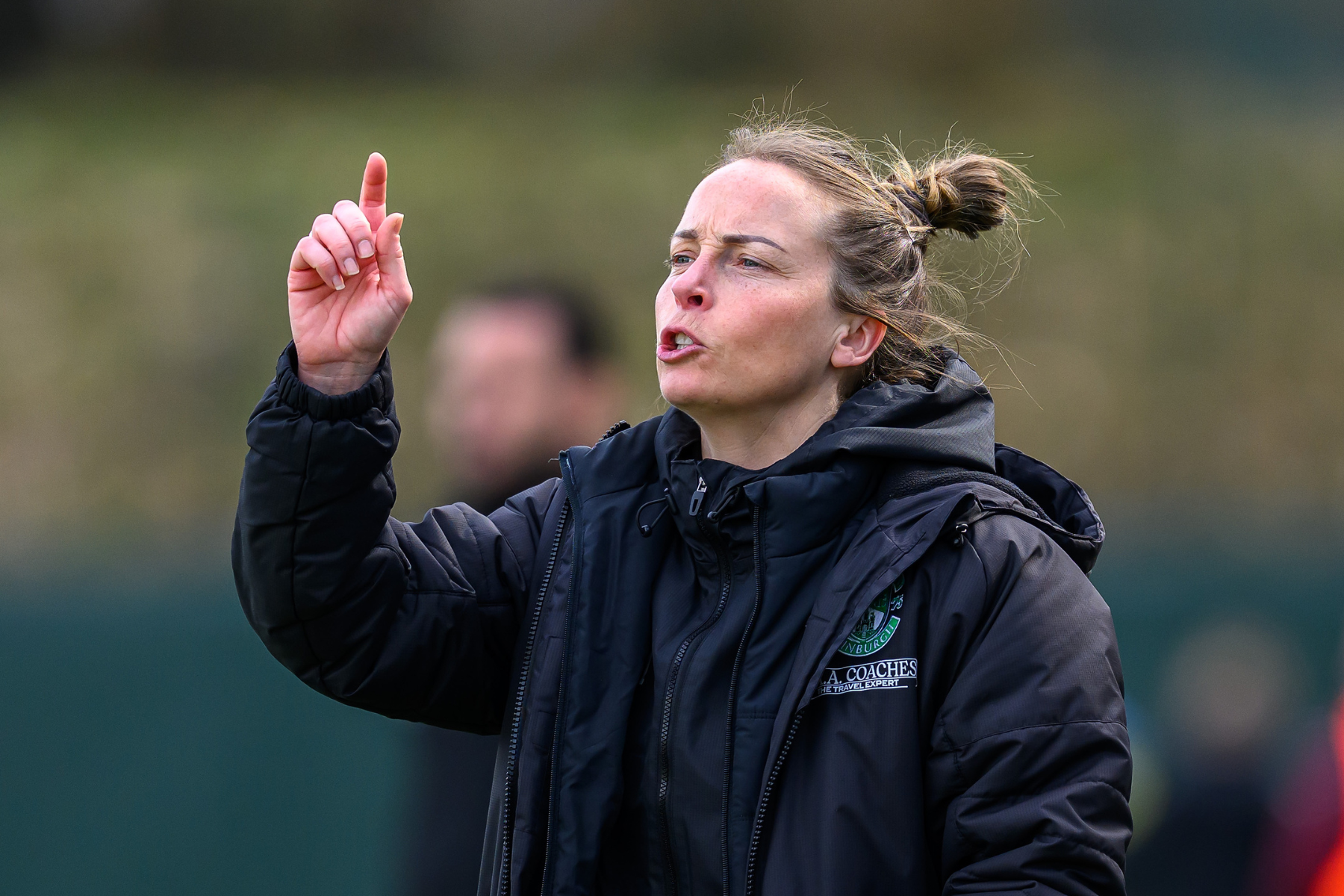
Joelle Murray, the former Scotland internationalist and current Hibernian manager, has expressed hope that more players from refugee, asylum seeker, displaced and ethnic minority backgrounds can get involved in the women’s game in this country in the years ahead.
Murray attended the Refugee World Cup Scotland at Toryglen Regional Football Centre on the South Side of Glasgow last month and was delighted to see four all-female sides competing for the first time in the tournament’s 14 year existence.
The 39-year-old knows from personal experience that taking part in sport can teach women and girls invaluable life skills which help them to integrate into and contribute to mainstream society.
However, the 48-times capped defender, who won two SWPL titles, seven Scottish Cups and five League Cups during the 20 years that she played for Hibs between 2004 and 2024, also feels players from migrant backgrounds can potentially reach the elite level of the game here in future.
“It was an honour and a privilege to be asked to be part of the Refugee World Cup Scotland,” she said. “It's an event that has grown year upon year and to see a women's section for the first time ever was evidence of that.
Read more:
- How football can help tackle rise in anti-immigration misinformation
- UN XI shows Scottish football needs to address its migrant problem
“Football, as cliched as it sounds, is more than a game. Football gives you so many skills that you can transfer into life. It is not just about winning, there is the unity with other people that it creates and the social aspect of things. So it was great to see four women’s teams take part.
“But it was really interesting listening to Abdul [event organiser Bostani] talk about the impact that players from refugee backgrounds have had on football in other major football nations like Germany. It was quite powerful.
“Hopefully some of the players who took part can follow the same journey and enjoy the same trajectory. Maybe some of them might find themselves in the national team, the men’s team or the women’s team, at some point in the years to come. It is exciting to think what they could offer.
“I think the refugee community is integral to everything that we want to be as a country in Scotland. Football can provide a platform for these players to thrive on, an environment they can utilise. The value that the sport brings is unbelievable.”