US Defence Secretary Pete Hegseth has declared that 'the real battle is spiritual' as he launches a new Pentagon Office of Religious Affairs that will report directly to him.
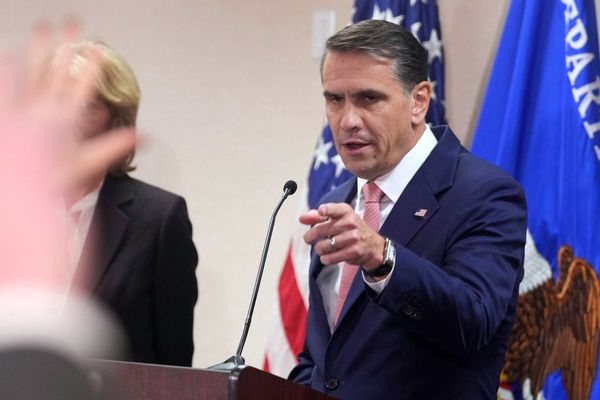
During his State of the Force address at Marine Corps Base Quantico in Virginia on Wednesday, September 30, Hegseth said the Pentagon was 'putting on the full armor of God' as he unveiled the office, the latest in a series of religious and chaplaincy changes at the Department of Defense.

Hegseth also told military chaplains: 'Live your calling. Stand firm. Preach truth. Minister to the flock.' He then quoted the Bible, saying: 'The Lord is on my side; I will not fear. What can man do unto me?'
Hegseth Gives Religion Direct Access
The new Office of Religious Affairs, or ORA, will advocate for military chaplains and religious support at the highest levels of the Department of Defense.
Under a September 30 memorandum, the office will report directly to Hegseth, while its director, who has not yet been named, will advise the defence secretary and deputy secretary on religious affairs across the department.
Hegseth: We’re placing spiritual health at the same level as physical health. Our department is, you might say, putting on the full armor of God. Because while we wage physical war, we all know the real battle is spiritual. God is good. Evil is not. And America's military must…
— Open Source Intel (@Osint613) September 30, 2026
The office is also tasked with helping secure funding and resources for chaplain-led programmes and faith-based initiatives, while developing research and analytical tools to assess 'spiritual fitness', 'spiritual readiness' and 'spiritual resilience' across the military.
The Pentagon says the ORA will not compel religious participation, favour one faith or diminish the rights of personnel of any faith or no faith.
'The Real Battle Is Spiritual'
Hegseth's language went far beyond an administrative announcement. 'Our department is, you might say, putting on the full armor of God, because while we wage physical war, we all know the real battle is spiritual,' he told the audience.
Hegseth has also said he wants spiritual health treated alongside physical health, while arguing that chaplains should have a stronger role in supporting troops.
The speech fits into a broader religious push at the Pentagon. Hegseth has hosted Christian worship services for employees and has frequently spoken about the United States in explicitly Christian terms.
A Broader Pentagon Religious Overhaul
The new office comes alongside several other changes involving military religion. The Defense Department has reduced the number of religious-affiliation codes used by the military from more than 200 to 31. The revised list no longer includes atheists, Unitarian Universalists, pagans, and Wiccans.
Hegseth has also ordered military chaplains, who are commissioned officers, to stop displaying their military rank on their uniforms and instead wear religious insignia. He has said chaplains should focus more on God and less on therapeutic concepts such as 'self-help and self-care'.
Faith Reaches Military Families
The new office's remit also extends beyond worship and chaplain support. A Pentagon memorandum says the religious affairs director will coordinate spiritual resources, including 'faith-based homeschool support for military families'. It also refers to 'faith-based initiatives supporting Department-wide suicide reduction'.
The ORA is expected to submit an initial fiscal 2027 budget baseline within 60 days of the September 30 memorandum, with the Pentagon then working to establish its permanent organisational structure.
Critics Challenge Hegseth's Direction
The announcement quickly drew criticism from religious-freedom advocates.
Rachel Laser, president and CEO of Americans United for Separation of Church and State, said the Pentagon has a duty to defend religious freedom and argued that Hegseth's initiative gives Christianity a greater role in shaping military policy. Her organisation has sued the Pentagon over its worship services.
The Pentagon maintains that the ORA will support voluntary religious practice without favouring one faith. The new office also differs from some earlier federal religious initiatives.
Shaun Casey, who led the State Department's Office of Religion and Global Affairs during the Obama administration, said that office focused on understanding the political implications of religion in global trouble spots rather than promoting spiritual well-being.
For Hegseth, however, the message at Quantico was unmistakable. 'The real battle is spiritual', he told the military, as a new office giving religious affairs a direct line to the Pentagon chief moves from speech to policy.