Get all your news in one place.
100's of premium titles.
One app.
Start reading
The Conversation
The Conversation
Environment
Rebecca McGirr, Postdoctoral research fellow, Australian National University

Heavy water: how melting ice sheets and pumped groundwater can lower local sea levels – and boost them elsewhere

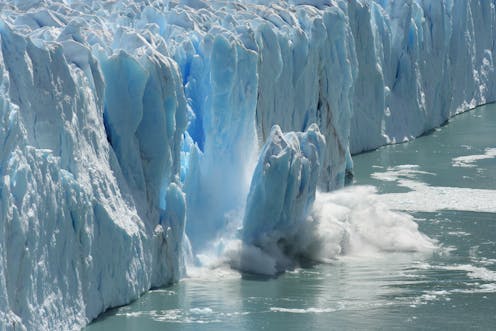
Bernhard Staehli/Shutterstock

Imagine you’re standing near the edge of the Antarctic Ice Sheet, gazing out over the ocean, when the ice near you starts to melt very rapidly. A surge of meltwater flows into the ocean. Surprisingly, you watch the sea level fall – not rise.

But why? When we think of sea level rise, we picture oceans rising uniformly. But the sea is not like a bucket of water. It is bumpy and uneven. Gravity plays a vital role. Water is heavy. And unlike rocks, this enormous mass moves easily. Ice melts, snow and rain falls, rivers run, water evaporates and forms clouds. When ice melts, its weight shifts from land to sea and back again.

Sign up to read this article
Read news from 100's of titles, curated specifically for you.
Already a member? Sign in here
Related Stories
Top stories on inkl right now
One subscription that gives you access to news from hundreds of sites
Already a member? Sign in here
Our Picks
Fourteen days free
Download the app
One app. One membership.
100+ trusted global sources.