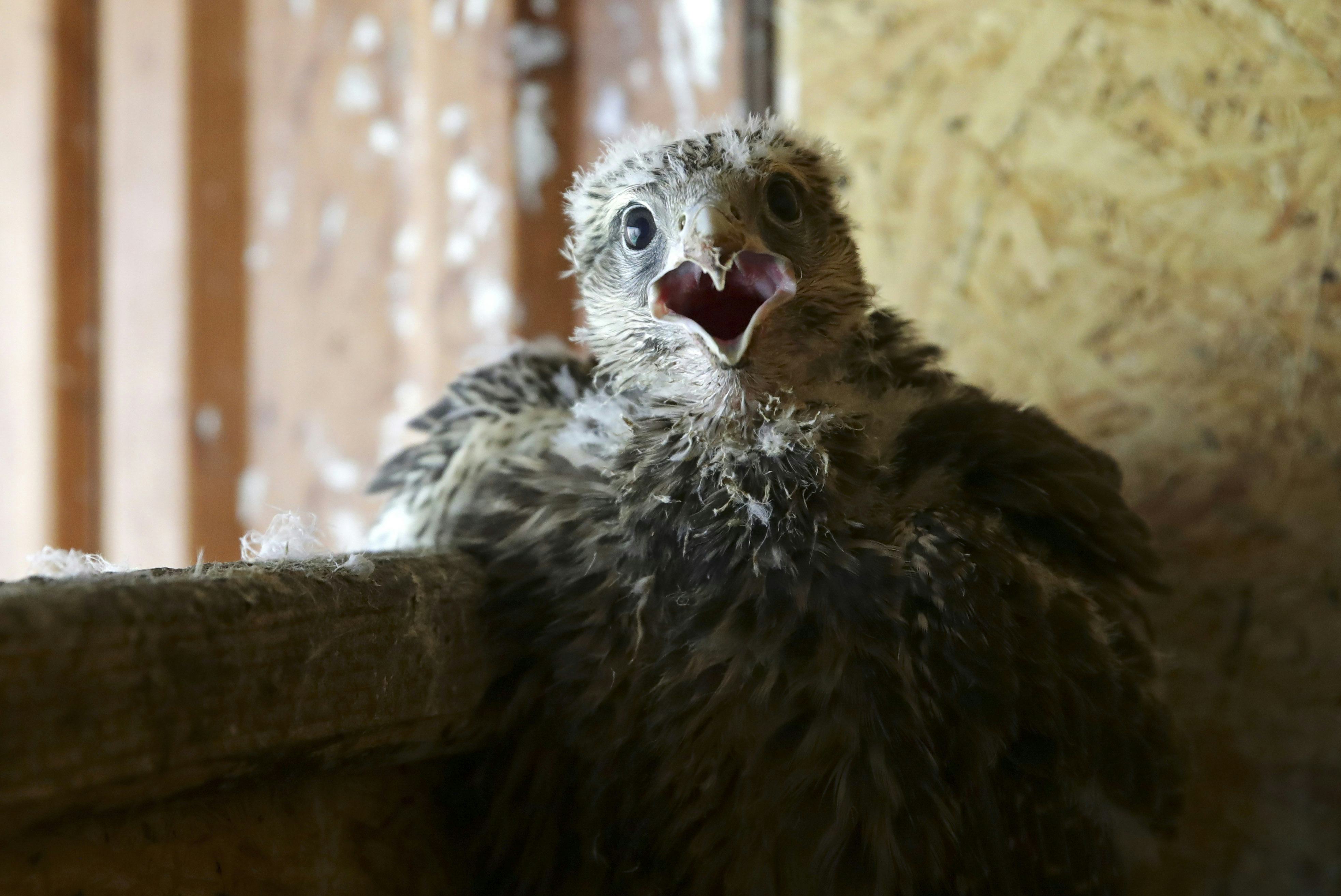
In the early 1900s, coal miners would bring canaries with them into the mines to serve as warning signals: If the tiny birds perished, it was an indicator that toxic gases like carbon monoxide were leaking in the tunnels. A century later, we have a new bird-based harbinger of danger. According to a report from The Washington Post, birds of prey in the Pacific Northwest are fleeing their nests before they are fully capable of flying, all in an effort to escape that devastating heat that has been pounding the region for weeks.
As record-breaking temperatures continue to plague Oregon, Washington, California, and other states out west, wildlife is struggling to find ways to escape the heat. Birds of prey often set up nests in tree tops, often in areas with direct sunlight and minimal shade. This normally isn't an issue — temperatures during June and July stay manageable enough for most birds, and by the time the year's hottest weather arrives in August, the babies are mature enough to fly and find shade. But as the heat waves have rolled in, the direct sunlight has simply become too much for these babies to take. In order to survive, they seek shelter and shade outside of the nest — but are too young to fly and thus sometimes fall helplessly to the ground.