Get all your news in one place.
100's of premium titles.
One app.
Start reading
The Conversation
The Conversation
Alicia Davis, Lecturer in Global Health, Institute of Health and Wellbeing/School of Social and Political Sciences, University of Glasgow

Health system inequalities in East Africa drive antimicrobial resistance

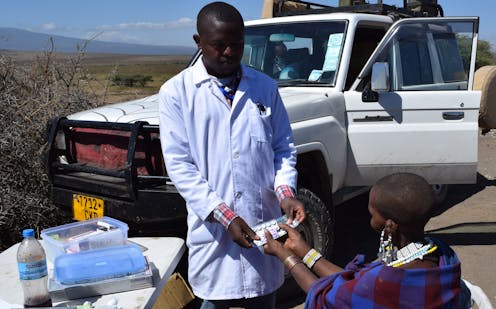
Clinical officer, Christopher Kiboya, treating a patient in Tanzania. Tiziana Lembo, CC BY

The COVID pandemic has exposed long-standing structural fault lines in societies – especially in health systems. These same inequalities also drive another major global health concern: antimicrobial resistance.

The World Health Organization defines antimicrobial resistance as the process by which microbes change over time and no longer respond to medicines. This makes infections harder to treat. It also increases the risk of disease spread, severe illness and death. Resistance of bacteria to antibiotics is especially worrying.

Sign up to read this article
Read news from 100's of titles, curated specifically for you.
Already a member? Sign in here
Related Stories
Top stories on inkl right now
One subscription that gives you access to news from hundreds of sites
Already a member? Sign in here
Our Picks
Fourteen days free
Download the app
One app. One membership.
100+ trusted global sources.