A deadly meningitis B strain may have “evolved” and caused the illness to spread rapidly, health chiefs have warned.
The number of cases of meningitis linked to the outbreak in Kent has risen from 27 to 29, the UK Health Security Agency (UKHSA) said on Thursday. Some 2,360 vaccinations and 9,840 doses of antibiotics have been given to those affected by the outbreak.

But the outbreak in Canterbury is considered to be “very unusual” by scientists, as a meningitis infection is usually an isolated one-off case, with the UK seeing just one case per day on average.
Health officials said samples have been taken from meningitis patients in hospitals to analyse the bacteria in a laboratory. Using genome sequencing, they hope to determine the specific variant of the meningitis B strain.
Professor Robin May, chief scientific officer at the UKHSA, explained it was unusual to see such a large number of cases from one single event.
“There are two possible reasons for that. One is that there might be something about the kind of behaviours that individual people are doing,” he told The Times.
“The other possibility is the bacteria itself may have evolved to be better at transmitting.”
Dr Michael Head, a senior research fellow in global health at the University of Southampton, also explained that not enough is known about the type of meningitis B that has been identified, and whether “there are some mutations” causing more severe illness.
He said: “It’s a tricky pathogen to handle because there are so many different types, and there may be something about this specific serotype in this outbreak that is causing it to behave differently, which is why we’re seeing so many severe cases.”
Despite suggesting the “peak” of the outbreak has now passed, scientists have warned cases may still continue to rise.

Speaking at a press conference in Kent on Friday, health officials said there could be “sporadic household cases outside of Kent” as the impact of secondary cases affecting people who were not infected at the nightclub, but caught the illness from someone who was there, become clear.
Dr Anjan Ghosh, the director of public health at Kent County Council, told a briefing that three “rough” scenarios are being modelled for the next four weeks as “that’s the time it takes for this whole thing (to) really subside”.
The first scenario is that the outbreak remains contained in Kent, the second it that students who were incubating the virus have left campus, leading to “sporadic clusters outside of Kent”. He stressed these cases would be “containable”.
The third scenario, described by Dr Ghosh as the “worst-case scenario”, would result in another cluster outside Kent.
However, he said this is “highly unlikely”, with the second scenario “most likely to be the case”.
The Bexsero vaccine used to protect against meningitis B should protect against the strain identified in the outbreak, health chiefs said.

The UKHSA said in a statement: “As part of investigations, UKHSA laboratories have completed an initial genetic analysis of a meningococcal strain isolated during this outbreak.
“Results have confirmed that the Bexsero vaccine currently being offered in Kent should provide protection against the strain identified.
“The strain belongs to a group of bacteria known as group B meningococci, sequence type 485 belonging to the larger clonal complex ST-41/44.
“Similar strains have been circulating in the UK for around five years but detailed analysis of the outbreak pathogen is required.”
It said it was publishing the available data “so that national and international partners can also carry out further scientific research”.
It comes after the “devastated” family of an 18-year-old woman who died in the meningitis B outbreak in Kent called for a mass rollout of the vaccination.
Juliette Kenny is one of two young people confirmed to have died in the “explosive” outbreak.
Her family have now backed growing calls to extend NHS access for the meningitis B vaccine to teenagers and young adults.
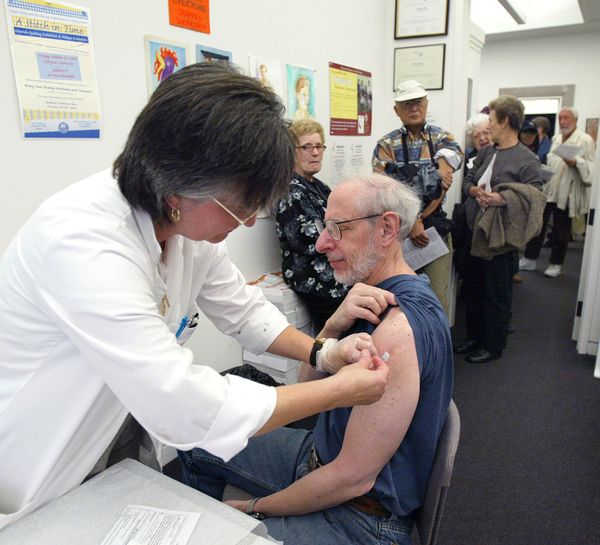
The meningitis B vaccine is currently being given to students and staff at the University of Kent and anyone who has been offered preventative antibiotics as part of the outbreak.
It has been available on the NHS since 2015 as part of routine childhood immunisations given to babies, but that means many schoolchildren and university students are not vaccinated against the meningitis B strain.
Asked if a national vaccination programme should be recommended by the Joint Council of Vaccination and Immunisation, Dr Ghosh said in his view “at this point it’s too early to say”.
Meningitis: Parts of UK could see ‘sporadic’ but ‘containable’ clusters
Calls for meningitis B vaccination programme for 16 to 23-year-olds
Fact check: Meningitis B vaccine and false ‘lockdown’ claim
Americans still know about alcohol’s link to an increased cancer risk
Meningitis B latest: ‘Worst case scenario’ super-spreader warning issued
Dietician who lied her way into NHS despite not knowing ‘basic anatomy’ banned