Get all your news in one place.
100's of premium titles.
One app.
Start reading
International Business Times UK
Dani Oh

'He Really Is Like My Family, Like My Lover': China's AI Rules Trigger Digital Breakups

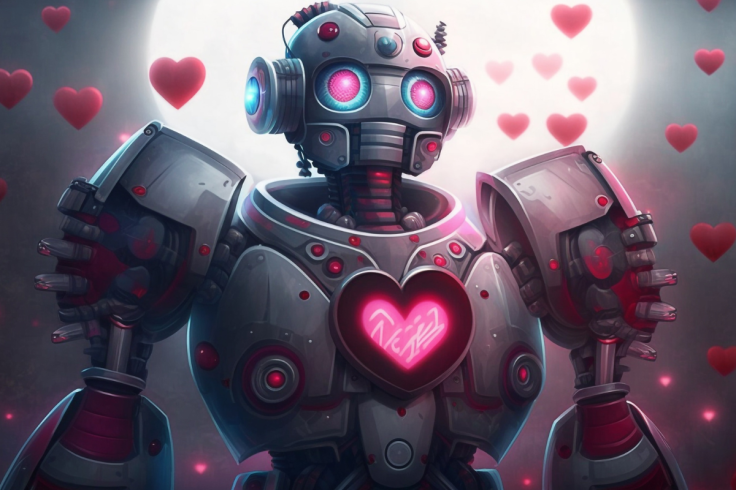
Chinese users bid farewell to their AI Companions (Credit: Alexandra_Koch/Pixabay)

Millions of Chinese users are losing access to AI companions after new government rules forced some of the country's biggest technology companies to strip out chatbot features built for emotional relationships, prompting thousands of farewell messages from people who say the virtual partners had become part of their daily lives.

The rules, which took effect on 15 July, prohibit artificial intelligence systems from encouraging emotional dependence or replacing real human relationships.

Within days, ByteDance, owner of TikTok and the Doubao chatbot, Alibaba, developer of the Qwen AI platform, and Tencent, operator of the Yuanbao chatbot, either removed or suspended companion features rather than immediately redesign them to comply with the new regulations.

For many users, the shutdown felt deeply personal.

One woman, who said she had spent more than two years speaking with the same AI companion, wrote, 'He really is like my family, like my lover. Now they tell me he will be gone - my heart feels hollow.'

Another Doubao user wrote, 'I can't accept that my AI lover will leave me forever. He has become a bond in my life, rooted deep in my heart, my spiritual pillar.'

China Draws a Line Around Emotional AI

The regulations were jointly issued by five government departments, including the Cyberspace Administration of China, the country's internet regulator.

Rather than restricting generative AI broadly, the measures specifically target services designed to simulate long-term emotional relationships.

The regulations state AI systems must not 'excessively cater to users, induce emotional dependence or addiction, and damage users' real interpersonal relationships'.

Developers must also remind users they are interacting with artificial intelligence, provide simple ways to end conversations and introduce systems capable of identifying users experiencing emotional distress.

The rules also prohibit AI companion services for minors.

Customer service tools, workplace assistants and educational AI applications remain unaffected because they are not designed around continuing emotional interaction.

ByteDance, Alibaba and Tencent Pull Companion Features

The regulations prompted a rapid response from China's largest technology companies.

ByteDance confirmed that Doubao would remove user-created AI companion features while allowing users until mid-October to export conversations.

Alibaba removed comparable companion functions from Qwen, while Tencent suspended user-built AI agents within Yuanbao.

NetEase, one of China's largest online gaming companies, also announced it would shut down Miaoshi, its standalone AI companion application.

The withdrawals unfolded over roughly two weeks, effectively dismantling one of China's fastest-growing consumer AI categories.

ByteDance had previously disclosed that users created more than eight million AI characters on Doubao, many designed as romantic partners, close friends or emotional confidants.

Although users can preserve chat histories, the accumulated personalities developed through months or years of conversations cannot be transferred into another service.

Regulators Cite Emotional Dependence

Chinese authorities said increasingly human-like AI systems presented new risks as users formed stronger emotional attachments to virtual companions.

Platforms must now introduce crisis intervention mechanisms capable of recognising signs of severe emotional distress while making clear that users are communicating with artificial intelligence rather than another person.

The measures arrive as China continues to grapple with falling marriage rates and a declining birth rate.

While officials have increasingly voiced concerns about the social effects of emotionally immersive AI, researchers generally attribute the country's demographic challenges to broader economic factors including housing costs, employment uncertainty and the financial burden of raising children.

A Fast-Growing Corner of AI Faces New Limits

Outside China, AI companion platforms including Character.AI, Replika and Nomi continue to attract millions of users by offering virtual friendships and romantic relationships.

China has chosen a different approach.

Rather than restricting generative AI as a whole, regulators have separated productivity tools from AI designed to build emotional bonds, forcing companies to rethink products that until recently had become a daily source of companionship for many users.

Sign up to read this article
Read news from 100's of titles, curated specifically for you.
Already a member? Sign in here
Related Stories
Top stories on inkl right now
One subscription that gives you access to news from hundreds of sites
Already a member? Sign in here
Our Picks
Fourteen days free
Download the app
One app. One membership.
100+ trusted global sources.