Get all your news in one place.
100's of premium titles.
One app.
Start reading
The Economic Times
The Economic Times
Trending Desk

He earned $3.10 an hour as a valet parker. Now he’s worth $11.1 billion and runs a trillion-dollar firm

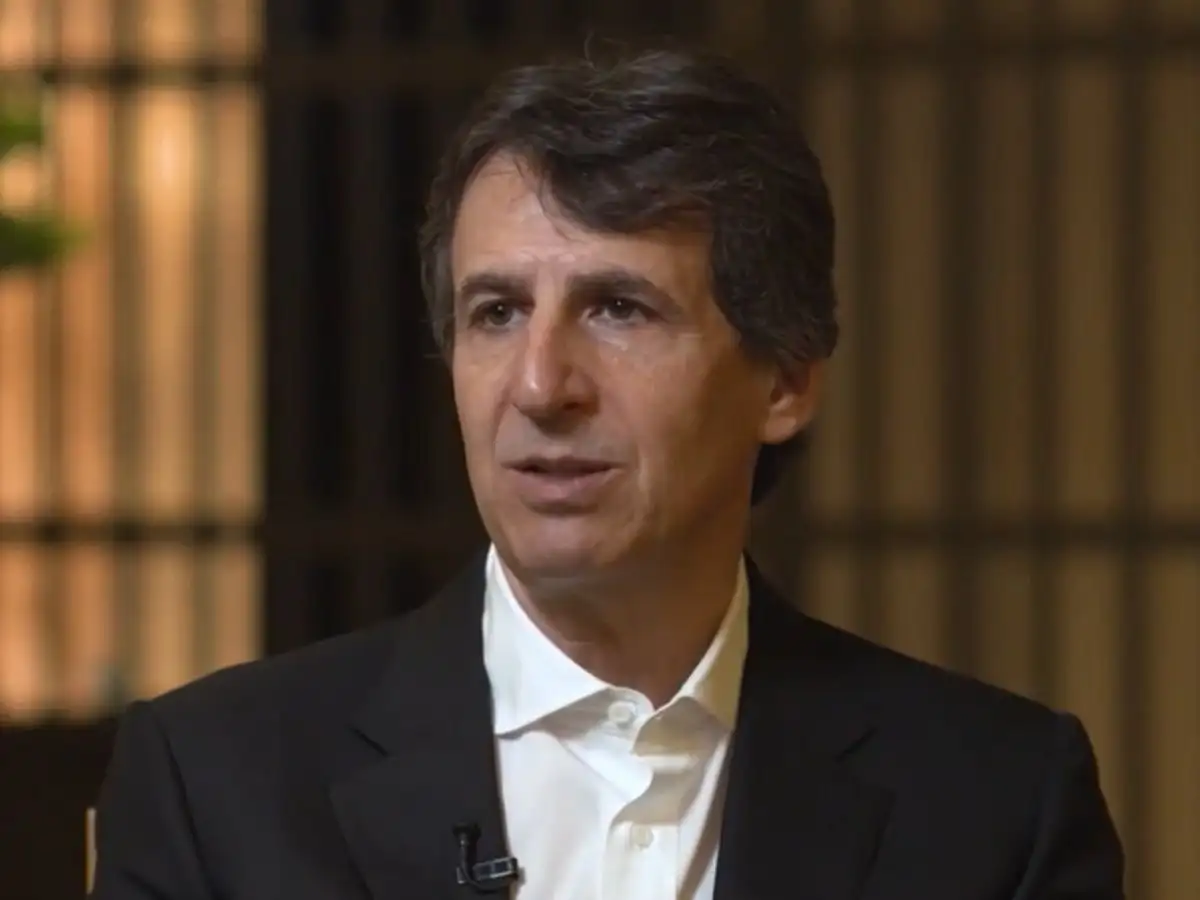
Marc Rowan once spent his working days parking cars, driving vehicles between New York and Florida and working at a party goods store. He was earning the kind of wages associated with ordinary service jobs. Today, Rowan has an estimated net worth of $11.1 billion and leads Apollo, one of the world’s biggest alternative asset management firms, whose assets crossed $1 trillion earlier this year.

“I’ve had a lot of different jobs,” Rowan recently told iCapital CEO Lawrence Calcano during a podcast. “I was a valet parker at the Diplomat Hotel, now, the Shell Bay Golf Club. I would drive cars between New York and Florida for snowbirds, transporting their cars for the winter.”

Also Read: A £430 million power cable was heading for Dobby’s ‘grave’. Harry Potter fans forced the company to change its plan

The journey from those early jobs to the top of Wall Street took more than four decades. Along the way, Rowan moved from service work to the New York Stock Exchange, joined investment bank Drexel Burnham Lambert and eventually co-founded Apollo after Drexel collapsed.

Rowan started working long before Wall Street

Rowan grew up between Florida and New York and attended high school in Hollywood, Florida.His early working life had little resemblance to the world of billion-dollar financial deals.

He parked cars at the Diplomat Hotel and drove vehicles between New York and Florida for snowbirds heading south for the winter. He also worked at a party goods store and at a South Florida kosher catering business that he remembers as “the best kosher caterer.”

Rowan graduated from high school in 1980. The federal minimum wage was $3.10 an hour at the time. More than four decades later, the difference is striking. Rowan has accumulated an estimated $11.1 billion fortune and become one of the most prominent figures in the alternative investment industry.

But he has not forgotten those first jobs. “Every one of those jobs, you have to take something away from,” the Apollo CEO said.

He found his calling at Wharton

Rowan came from a family of lawyers and initially considered following a similar path. That plan changed after he became unimpressed with the coursework in his pre-law program. He then contacted the University of Pennsylvania’s Wharton School of Business and asked whether he could attend.

At Wharton, finance began to make sense to him. While studying, Rowan spent a summer working in financial consulting at Booz Allen. He also got a close-up view of Wall Street by working as a runner on the floor of the New York Stock Exchange, which was then known as the Blue Room.

“When I started getting a little bit of education, I worked at Booz Allen for a summer in financial consulting,” Rowan continued in the podcast. “I worked on the floor of the New York Stock Exchange, it was then the Blue Room, as a runner.”

That experience eventually led Rowan toward a career that would take him far beyond his early hourly jobs.

His first major finance job ended in a collapse

After earning his bachelor’s degree and MBA, Rowan joined Drexel Burnham Lambert in late 1984. He entered the investment bank's mergers and acquisitions department, but his career there was cut short.

Drexel collapsed in 1990 following the junk bond crisis. Instead of ending Rowan’s Wall Street ambitions, however, the failure helped set the stage for the next chapter of his career.

Rowan joined forces with two former Drexel colleagues, Leon Black and Josh Harris. Together, they founded Apollo in 1990.

Apollo grew into a trillion-dollar business

Apollo expanded dramatically over the following decades, becoming one of the world’s largest alternative asset managers. Rowan eventually became the company’s CEO in 2021.

Earlier this year, Apollo’s assets surpassed $1 trillion, putting Rowan at the helm of a financial giant vastly removed from the world of his first jobs.

His career has also kept him connected to Wharton. Rowan served as chair of the school’s board of advisors and helped fund the Penn Wharton Budget Model, a nonpartisan research initiative focused on analysing the fiscal impact of public policy.

From parking cars to running a firm managing more than $1 trillion in assets, Rowan’s career has taken an unusually long route to the top of Wall Street.

Rowan is not the only CEO who started with an ordinary job

The billionaire’s early working life is not unique among major US business leaders.

Lowe’s CEO Marvin Ellison started his career at Target, where he worked part-time while studying at the University of Memphis. He earned $4.35 an hour.

Ellison eventually rose to become president, CEO and chairman of the home-improvement company. He has said that accepting jobs and assignments others avoided helped him stand out.

Also Read:‘The Walking Dead’s Merle Dixon was almost real: 1,400 years ago, an Italian man lost his hand and replaced it with a knife

Former PepsiCo CEO Indra Nooyi also worked while studying. At Yale University, Nooyi took overnight shifts as a dormitory receptionist, working from midnight until 5 a.m. She later said those experiences helped shape how people viewed her determination and work ethic.

Tim Cook also had ordinary jobs

Apple CEO Tim Cook also worked regular jobs before reaching the top of the technology industry.As a child in Robertsdale, Alabama, Cook delivered newspapers to homes around his neighbourhood.

By the age of 14, he was “flipping burgers” at a local restaurant and also worked serving ice cream at Tastee Freeze. Cook once recalled how some of his classmates would visit him at work and “make fun of him” while he wore his hat and apron and earned $1.10 an hour.

Years later, while pursuing his MBA at Duke University, Cook worked during the day and attended classes at night to help pay his tuition.

He would eventually become CEO of Apple and build a personal fortune estimated at around $3 billion.

Rowan’s story follows a similar path, although his numbers stand out. The man who once earned $3.10 an hour parking cars now has an $11.1 billion fortune and sits at the top of a company with more than $1 trillion in assets.

Sign up to read this article
Read news from 100's of titles, curated specifically for you.
Already a member? Sign in here
Related Stories
Top stories on inkl right now
One subscription that gives you access to news from hundreds of sites
Already a member? Sign in here
Our Picks
Fourteen days free
Download the app
One app. One membership.
100+ trusted global sources.