The Jewish community has issued a warning that proposed exemptions to strengthened hate speech laws risk undermining their effectiveness.
Legislation to be debated in parliament next week would give the federal government the powers to prescribe hate groups that currently fall below terrorist listing thresholds.

Organisers, supporters and recruiters face 15 years in prison while members face seven.
The beefed-up hate laws create offences for publicly promoting or inciting racial hatred as the government vows to crack down on hate preachers.
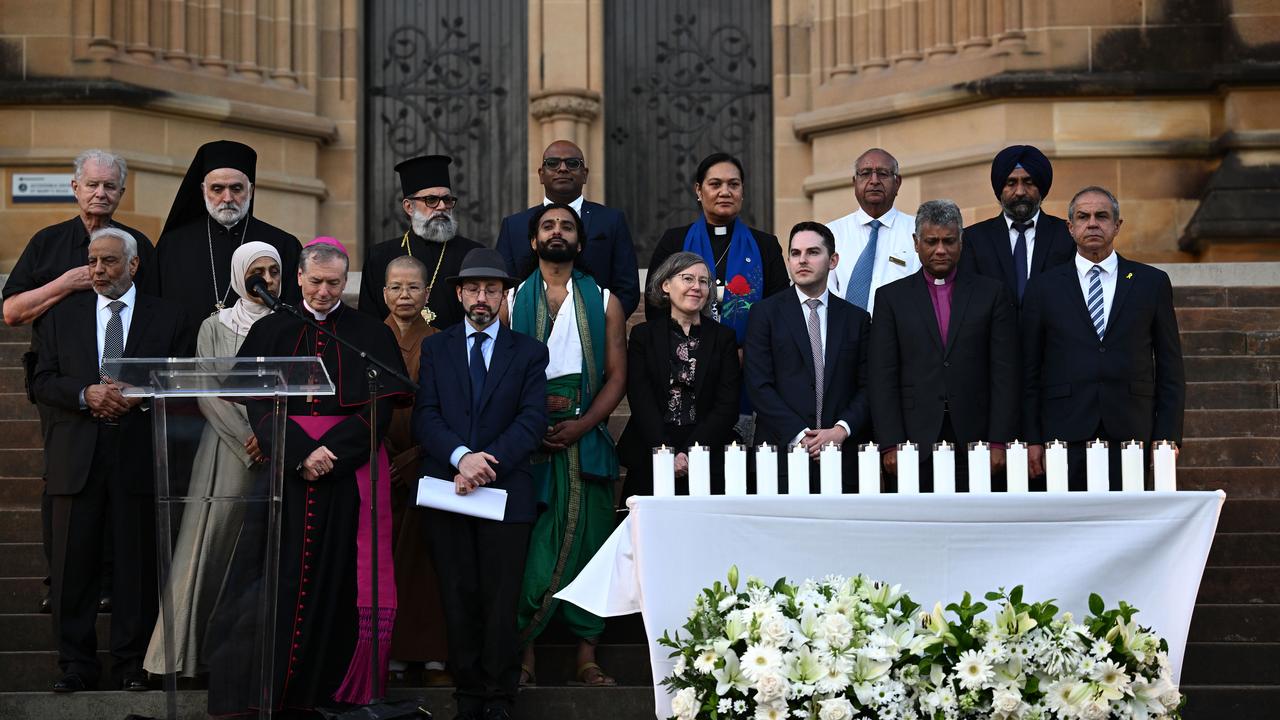
It comes after an Islamic State-inspired father-son duo gunned down 15 people at a Hanukkah celebration at Bondi Beach on December 14.
A day of mourning will take place on January 22, with flags flown at half-mast.
People face five years behind bars if they promote or incite hatred against another person or group because of race, colour or national or ethnic origin.
Aggravated offences include if a religious preacher is involved or if it targets children, as the government vows to tackle youth radicalisation.
But a proposed exemption for "directly quoting from or otherwise referencing a religious text for the purpose of religious teaching or discussion" has drawn criticism from the Executive Council of Australian Jewry.
"The entire concept of a religious exemption for racial hatred is a relic of outdated thinking," co-CEO Peter Wertheim said.
There is also apprehension within the coalition, with a belief that the exemption may fail to tackle some radical Islamic preachers.
The opposition hasn't announced whether it will support the bill, with gun reform provisions also putting the Nationals offside as the junior coalition partner opposes tightened firearm restrictions.
Quoting a religious text and sharing an interpretation of that text to encourage listeners to act with hostility towards a racial group isn't covered by the defence, the bill's explanatory memorandum states.
"The quoting, or interpretation of the text, needs to be sufficiently connected to the religious text to ensure the defence cannot be misused to excuse conduct which goes beyond genuine religious teaching or discussion and is instead intentionally used to cause harm," it states.
Attorney-General's Department deputy secretary Sarah Chidgey said the exemption was narrow and "designed to recognise that some historical religious texts may contain archaic language".
"The defence purely applies to a simple direct quote from a religious text for the particular purpose of religious teaching or discussion," she told a parliamentary inquiry into the bill on Tuesday.
"So if anyone was quoting for other purposes, the incitement of hatred and their surrounding conduct indicated that the defence wouldn't be available."
The person's intent would be considered, the department's assistant secretary Luke Muffett said.
Prime Minister Anthony Albanese defended the religious text carve out, saying the government had to be careful about unintended consequences.
"I encourage you to read the Old Testament and see what's there and see if you outlaw that, what would occur," he told reporters in Canberra on Tuesday.
Mr Wertheim also joined calls from crossbenchers and Equality Australia to include sexuality, gender and disability in hate speech provisions.
"People who are targeted for hatred on the basis of these other attributes are equally entitled to protection," he said.
The executive council further recommended adding provisions for recklessly promoting racial hatred, saying requiring proof of an intention beyond reasonable doubt may set the bar too high.
"We also commend the government for taking action to constrain hate groups ... however, the legislation still has some way to go," Mr Wertheim said.
Muslim communities have expressed concern the legislation does not adequately cover Islamophobia.
Asked why the bill did not provide specific protections against religious discrimination, Attorney-General Michelle Rowland said, "our focus is on combating anti-Semitism, and that's what this package of reforms seek to do".
Jewish people, like Sikhs, are considered an ethno-religious group, meaning they're protected under the race provision.