Get all your news in one place.
100’s of premium titles.
One app.
Start reading
Digital Camera World
James Artaius

Canon EOS R6 Mark III review: Does this 7K camera REALLY have no weaknesses?

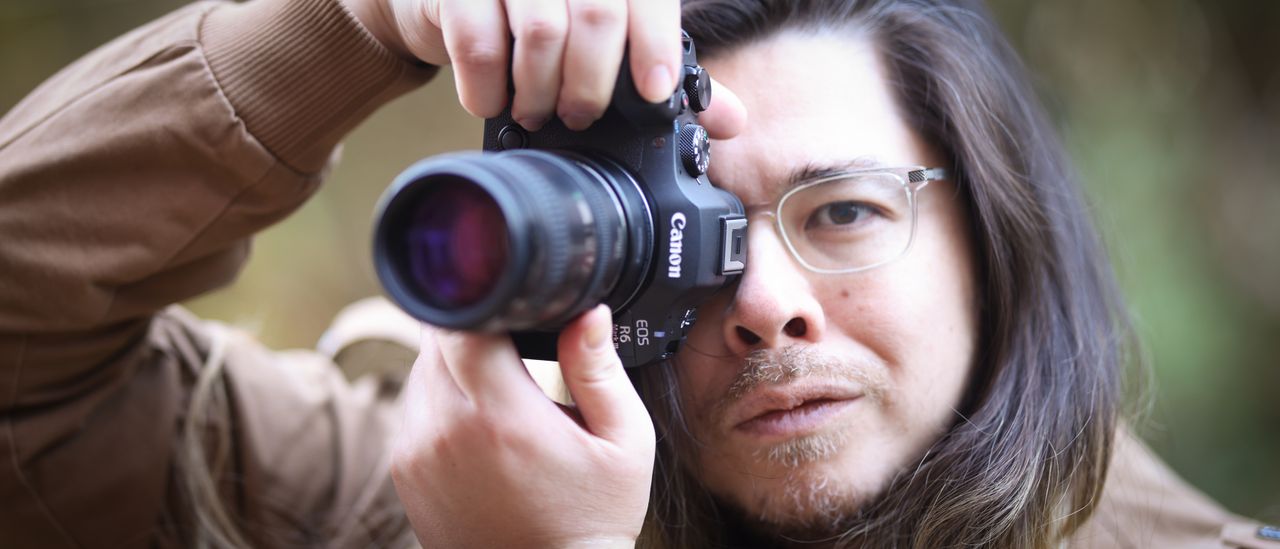
Photographer James Artaius holding the Canon EOS R6 Mark III outdoors.

I think the Canon EOS R6 Mark III might actually be the best Canon camera on the market right now. I’m the biggest cheerleader you’ll find for the R5 Mark II but, where that camera is all about brute strength, this camera packs a knockout punch and a high IQ.

Historically, the 6-series has been a 20-something megapixel proposition. But the Canon EOS R6 Mark III seriously ups the ante with its new 32.5MP full-frame sensor, capable of 40fps bursts and half a second of pre-capture.

And the video credentials of this hybrid are the envy of most other manufacturers’ dedicated video cameras, with monstrous 7K 60p internal RAW capability along with 7K open gate capture.

The core architecture is the same as the Canon EOS C50, but they each present a different side of the hybrid camera coin; the C50 is the video-first hybrid, while the Canon EOS R6 Mark III is a hybrid for photo-first shooters. So what are the differences and how does it perform?

Check out my 60-second guided tour video below:

Canon EOS R6 Mark III: Price and availability

The Canon EOS R6 Mark III launched in November 2025 priced at $2,799 / £2,799.99 / AU$4199.95.

For context, that is the same price at which the Canon EOS R6 Mark II launched (in November 2022). The Mark II will remain on sale through at least 2026, and is currently available for $1,979 / £1,918 / AU$3,099.

The Canon EOS R6 Mark III is also available in a kit with either the Canon RF 24-105mm f/4L IS USM for $4,049 / £3,899.99 / AU$5,999.95 or the Canon RF 24-105mm f/4-7.1 IS STM for $3,149 / £3,149.99.

(Image credit: James Artaius)

Canon EOS R6 Mark III: Specifications

Sensor

32.5MP full frame CMOS

Lens mount

Canon RF

Autofocus

Dual Pixel CMOS Autofocus II, subject detection (Auto, People, Animals, Vehicles)

Image stabilization

Up to 8.5 stops

Weather sealing

Yes

ISO range

100 to 64,000 (exp to 102,400)

Max video resolution

Open gate 7K 30p; 7K 60p RAW (internal), 4K 60p (oversampled), 4K 120p, FullHD 180p; UVC up to 4K 60p

Max burst

40fps electronic (150 RAWs), 12fps mechanical • Pre-capture (1/2 second / 20 images)

Viewfinder

3.69m dot OLED, 0.5 inch, 100% coverage, 120fps refresh

Rear screen

3-inch, 1.62m dot, vari-angle touchscreen

Memory

1x CFexpress Type B, 1x SD UHS-II

Connectivity

WiFi, Bluetooth, USB-C, HDMI, headphone jack, microphone jack, BG-R20 grip, BG-R20EP (no ethernet support)

Battery

LP-E6P, 620 shots

Dimensions

138.4 x 98.4 x 88.4mm

Weight

699g (with memory card and battery)

Canon EOS R6 Mark III: Design and handling

Rather than fixing what ain’t broke, the body of the Canon EOS R6 Mark III is pretty much identical to its predecessor – other than being ever so slightly heavier (by 29g).

In short, the ergonomics are familiar and fantastic to anyone who has ever held a Canon camera. The grip is satisfyingly substantial, the body has the perfect amount of heft, all the buttons and dials are where your finger and thumb would expect to find them, and there’s a joystick to make moving focus points and navigating menus a breeze.

There’s a photo / video switch sitting on the left shoulder, enabling you to quickly and clearly toggle between stills and video, but it’s obvious that this is Canon’s photo-first hybrid.

The body is traditionally SLR-styled with photography features placed front and center – from the mode dial featuring just one video option (the new S&F option, “Slow & Fast”) to the Record button being the teeny tiny “nipple” kind positioned in the no-man’s land middle of the camera’s top-right. Again, if video is your priority, the Canon EOS C50 is the best bet for you.

The Canon EOS R6 Mark III (right) is identical in size and only 29g heavier in weight to the R6 Mark II (left) (Image credit: Chris George / Digital Camera World)

There are two key physical changes from the R6 Mark II, the first being to the storage media. The Canon EOS R6 Mark III adopts the R5 series’ dual CFexpress Type B and UHS-II SD card setup.

(I didn’t check all the options during my initial hands-on, but bear in mind that shooting SD-only typically limits your options – so you’re probably going to need a CFexpress card for full-fat 7K 60p RAW and uncapped 40fps bursts.)

In addition, the R6 Mark III also earns its wings as a hybrid camera by upgrading to a full-size HDMI port – which will be music to the ears of serious videographers!

Canon is always coy about the extent of the sealing on its cameras, but you can shoot safe in the knowledge that the R6 Mark III is a weather-sealed body – just not quite as sealed as the R5 or R1.

The Canon EOS R6 Mark III inherits the split CFexpress B / SD card setup from the R5 series (Image credit: Chris George / Digital Camera World)

Canon EOS R6 Mark III: Performance

I tested the Canon EOS R6 Mark III extensively alongside its sibling, the C50 cinema camera – which, again, features the same core architecture and feature set, just geared towards videography. Unsurprisingly, the R6 Mark III is the stronger performer in the photographic stakes while the C50 takes the cake for video.

Given that its hybrid specs make it a real general purpose camera, I used it to shoot everything from macro and wildlife (including birds in flight) to portraits and street photography.

The first thing I noticed is that there is a significant improvement in the autofocus over the previous model. While it has the same subject detection algorithms as the Mark II, there are big boosts to the overall performance – namely when it comes to tracking.

Its predecessor was no slouch, but the Mark III feels noticeably stickier when it comes to following subjects – particularly flying birds.

Even when my feathered friends were very small in the frame at full zoom on my 70-200mm, the AF was absolutely honest in both spotting and sticking to it from the moment they entered frame.

The same was true of the human tracking; the Canon EOS R6 Mark III has no problem detecting faces and eyes, and knows to focus on the head as a whole when features are obscured or the subject is facing the other way.

The R6 Mark III also inherits one of my favorite features from Canon’s professional bodies: Registered People Priority. This enables you to program in up to ten faces, then place them in order of priority, so that your camera knows on whom it should focus during group situations.

Registered People Priority enables you to add up to ten faces, in order of priority, so the camera always knows who to focus on during a shoot (Image credit: Canon)

I absolutely love this feature when shooting basketball, where the camera can effectively be told to always keep the star player in focus – regardless of who he’s playing against, who he’s sitting next to on the bench, whose face might be bigger in the frame or who is sitting in the crowd.

It’s also brilliant for events, especially when it comes to weddings where you can make sure that the bride, groom and family are always the priority.

The 40fps burst shooting is still absolutely overkill for 90% of situations (20fps is as much as you need for almost anything), but it’s brilliant to have it if you really do need it – plus you also get 20 frames of pre-continuous shooting, so you never miss a moment even if you were slow off the mark pressing the shutter.

And the buffer is now double that of the R6 Mark II, at an impressive 150 RAWs, meaning you can blast away to your heart’s content even at maximum burst.

You also get the benefit of pre-capture when it comes to video, where the R6 Mark III can buffer up to five seconds of footage before the Record button is depressed. But this is obviously just the tip of the iceberg when it comes to this camera’s video tricks.

Top of the bill is 7K 30p open gate RAW capture, complete with a 2K proxy if you want one. If you’re asking what is open gate, long story short it means that the camera can record the entire sensor area (in this case 3:2) rather than defaulting to a much narrower 16:9 ratio.

This means you get a larger, taller, squarer video – so you can then output it at whatever aspect ratio you want, whether it’s 16:9 horizontal for YouTube or 9:16 vertical for TikTok or 1:1 square or anything else.

And on the R6 Mark III you can display 2 sets of aspect markers simultaneously to help you frame your shots, such as 16:9 and 9:16 so you can be sure that your compositions will look as good on Instagram as they do on YouTube.

Open gate records the entire 3:2 sensor area, enabling you to crop it down to your preferred size during outputting. The Canon EOS R6 Mark III enables you to display 2 aspect markers to frame your shots, such as 16:9 horizontal and 9:16 vertical, to ensure that your composition works for multiple deliverables (Image credit: Canon)

A feature that's similar to open gate is Simultaneous Shooting, which enables you to capture a 16:9 file to the CFexpress card and a 9:16 to the SD – effectively giving you the results of open gate without having to do any post-production, which is great for fast client or social media turnaround.

There is, however, a caveat, in that this mode does not capture the dual ratios from an open gate readout; rather, it is taken from a 17:9 readout, so your 9:16 file won't have the same height as it would had it been created in open gate. Honestly, though, I think Simultaneous Shooting is intended for speed rather than quality, so the compromise feels fine to me.

The camera can also capture 7K internal RAW video up to 60p, in addition to external ProRes RAW output to your Atomos. You’ve also got 4K up to 120p and FullHD (1080p) up to 180p, again with proxy, or you can capture 4K 60p oversampled from 7K. And if you want to shoot in Super35 mode (with a 1.6x crop, the same as APS-C), you can record at up to 4.3K 60p.

As you might expect, there are caveats here as well. You will encounter recording limits for the higher resolution formats because, unlike the C50, the R6 Mark III doesn't have a built-in fan. I found 4K 30p essentially unlimited and I was able to record high-res video for up to 29 minutes, which again feels like an acceptable compromise given that this is a photo-first hybrid camera.

For longer sustained shooting and extended RAW capture, the C50 is going to be the better option as it prioritizes video – not only by virtue of its active cooling system, but other features such as shutter angle, ergonomics, XLR ports and so on.

However, the R6 Mark III possesses many of the C50’s other video must-haves, such as 4-channel audio, full-size HDMI, false color and waveforms, C-Log 2 and C-Log 3, and it's also Canon’s first full-frame camera to offer UVC (USB Video Class) at up to 4K 60p for webcams and other USB connections. (The only other EOS body to offer this is the Canon EOS R50 V).

(Image credit: Chris George / Digital Camera World)

In use, the R6 Mark III is one heck of a camera. I'm an R5 user and in many ways the cameras are pretty on par when it comes to performance – though I do find the ergonomics of the R5 preferable.

It could be argued that the 32.5MP resolution is a better sweet spot than the R5's pixel-greedy 45MP – and it certainly makes workflow a lot more convenient when you blitz through 40fps bursts (itself double the speed of the OG R5 and 10fps faster than the R5 Mark II).

I know a lot of people are weighing up whether to opt for the R6 Mark III over the R5, as well as the R6 Mark II. Certainly, in the former case, unless you really need 45MP / 8K resolution, I think the R6 III is a better buy – and you don't really miss that resolution in real-world use.

When it comes to the R6 Mark II, again – ask yourself whether you actually need 7K 60p video or open gate capture. Because yes, the extra resolution is nice, but you can save a lot of money buying the Mark II – even though there's no question that the Mark III is a far superior camera.

My one concern is the sensitivity, as the Mark II had a native ceiling of ISO102,400 that was expandable to ISO204,800; the Mark III, meanwhile, tops out at ISO64,000 and has to be expanded to hit the previous ISO102,400 native top end.

Compromises have had to be made to accommodate the extra resolution in this sensor, which has taken the form of less dynamic range and greater noise if you push the sensitivity. So if you're someone who likes or needs to shoot at agonized ISOs, that's definitely worth bearing in mind – check out our lab tests below for more information.

Canon EOS R6 Mark III: Sample images

Canon EOS R6 Mark III + Canon RF 35mm f/1.8 Macro IS STM (1/40 sec, f/1.8, ISO500) (Image credit: James Artaius)
Canon EOS R6 Mark III + RF 50mm f/1.8 STM (1/2000 sec, f/4, ISO100) (Image credit: James Artaius)
Canon EOS R6 Mark III + RF 35mm f/1.8 IS STM Macro (1/20 sec, f/1.8, ISO4000) (Image credit: James Artaius)
Canon EOS R6 Mark III + RF 50mm f/1.8 STM (1/2000 sec, f/1.8, ISO100) (Image credit: James Artaius)
Canon EOS R6 Mark III + Canon RF 70-200mm f/2.8L IS USM (1/200 sec, f/2.8, ISO100) (Image credit: James Artaius)
Canon EOS R6 Mark III + RF 24mm f/1.4L VCM (1/200 sec, f/2, ISO100) (Image credit: James Artaius)
Canon EOS R6 Mark III + Canon RF 70-200mm f/2.8L IS USM (1/1000 sec, f/2.8, ISO100) (Image credit: James Artaius)
Canon EOS R6 Mark III + RF 24mm f/1.4L VCM (1/125 sec, f/8, ISO100) (Image credit: James Artaius)
Canon EOS R6 Mark III + Canon RF 70-200mm f/2.8L IS USM (1/200 sec, f/2.8, ISO100) (Image credit: James Artaius)
Canon EOS R6 Mark III + EF 135mm f/2.8 Softfocus (1/200 sec, f/2.8, ISO100) (Image credit: James Artaius)
Canon EOS R6 Mark III + Canon RF 35mm f/1.8 Macro IS STM (1/8 sec, f/5.0, ISO800) (Image credit: James Artaius)
Canon EOS R6 Mark III + Canon RF 70-200mm f/2.8L IS USM (1/200 sec, f/2.8, ISO100) (Image credit: James Artaius)
Canon EOS R6 Mark III + RF 50mm f/1.8 STM (1/250 sec, f/1.8, ISO100) (Image credit: James Artaius)
Canon EOS R6 Mark III + Canon RF 35mm f/1.8 Macro IS STM (1/13 sec, f/1.8, ISO200) (Image credit: James Artaius)
Canon EOS R6 Mark III + RF 50mm f/1.8 STM (1/160 sec, f/1.8, ISO100) (Image credit: James Artaius)
Canon EOS R6 Mark III + RF 50mm f/1.8 STM (1/80 sec, f/1.8, ISO100) (Image credit: James Artaius)
Canon EOS R6 Mark III + EF 135mm f/2.8 Softfocus (1/800 sec, f/2.8, ISO100) (Image credit: James Artaius)
Canon EOS R6 Mark III + RF 50mm f/1.8 STM (1/160 sec, f/1.8, ISO100) (Image credit: James Artaius)

Canon EOS R6 Mark III: Lab results

We're comparing the EOS R6 III to its bigger brother, the EOS R5 II, as well as the rival Nikon Z6 III and Panasonic Lumix S1 II.

We test resolution using Imatest charts and software, and dynamic range and signal-to-noise ratio with DxO Analyzer.

Resolution (line widths/picture height):

(Image credit: Future)

The 32.5MP R6 III is able to resolve noticeably more fine detail than the ~24MP Nikon and Panasonic cameras, though naturally the 45MP R5 Mark II was always going to be the winner of this test.

Dynamic range (EV):

(Image credit: Future)

The R6 Mark III captures excellent dynamic range at lower sensitivities, but it's above ISO800 where its higher megapixel count works against it. The larger individual pixels on the Nikon and Panasonic sensors are able to gather more light, and consequently a greater range of highlight and shadow information.

Signal to noise ratio (decibels):

(Image credit: Future)

This test compares the amount of random noise generated by the camera at different ISO settings as a proportion of the actual image information (the 'signal'). Higher values are better and we expect to see the signal to ratio fall as the ISO is increased.

As in the dynamic range test, the R6 Mark III's smaller, less light-sensitive pixels cause it to generate more image noise than the Nikon and Panasonic cameras. The R5 Mark II is worse still, but we'd expect that from its more pixel-packed sensor.

Canon EOS R6 Mark III: Early verdict

The hybrid camera segment is incredibly competitive, between the Sony A7 V, the Nikon Z6 III and the Panasonic Lumix S1II – all of which are great cameras and you can't go wrong with any of them.

However, I think the Canon EOS R6 Mark III smokes them all. It's got the best autofocus, for starters, which for me is the most important consideration. All the clever features in the world don't mean much if the AF isn't able to keep up.

It's also the only one that offers 7K 60p RAW (internally, to boot) as well as open gate video at up to 7K 30p. I'll temper this enthusiasm for video slightly because, when shooting RAW or at high resolutions, you're going to encounter recording limits – so the R6 Mark III is definitely a camera where video is a Brucie bonus that complements stills shooting.

And the stills performance is phenomenal. I still don't think anyone needs 40fps bursts, but it's cool to have for super niche work like competitive diving – especially with pre-capture, which makes the Canon EOS R6 Mark III a formidable tool for sports, wildlife and fast action.

The 32.5MP sensor offers a great resolution sweet spot – and despite this not being a stacked (or even partially stacked) sensor, its readout and rolling shutter are pretty indistinguishable from the likes of the A7 V. The only compromise is extreme ISO performance – though it's still certainly capable of high-sensitivity shooting, such as indoor sports or events.

As a stills camera, I would honestly be happy taking the Canon EOS R6 Mark III instead of the R5 Mark II on a professional job. It isn’t just a home run for Canon, it’s a shot directly across the bow of both Sony and Panasonic.

(Image credit: James Artaius)
Sign up to read this article
Read news from 100’s of titles, curated specifically for you.
Already a member? Sign in here
Related Stories
Top stories on inkl right now
One subscription that gives you access to news from hundreds of sites
Already a member? Sign in here
Our Picks
Fourteen days free
Download the app
One app. One membership.
100+ trusted global sources.