France’s wildlife is in crisis, but the few species that receive real protection show that long-term, well-funded action can reverse the trend, says the World Wildlife Fund France's annual biodiversity report. The challenge is not a lack of solutions, but a lack of commitment.
The report warns of a collapse in biodiversity in the country due to the degradation of natural habitats, yet it says the outcome “is not inevitable”, as protective measures have been shown to be effective in restoring wildlife in remarkable and measurable ways.

Across France, from farmland to coastlines, habitat destruction, the use of pesticides, pollution and over-fishing have driven the decline of many species.
Intensive agriculture
More than 70 percent of hedges around the country have been removed as part of an expansion of intensive agriculture, and half of wetlands – some of the most biodiverse ecosystems – have vanished. Nearly 80 percent of the country’s forests are less than 100 years old, and coastal and marine environments are heavily overexploited.
Many birds and marine animals once though abundant have nearly disappeared.
WWF found that the Eurasian tree sparrow, once widespread in rural areas, has declined by 91 per cent in the last two decades, while populations of kitefin shark in the Mediterranean and the Bay of Biscay is down 99 percent. Even the seemingly plentiful common dolphin has declined by about 20 percent.
Back from the brink, the bearded vulture makes a cautious return to French Alps
But protection works, the report insists. Among 248 protected species it analysed, WWF found that populations have increased by an average of 120 percent since 1990.
The most impressive gains have been among species protected by a National action plan (PNA), a targeted strategy that coordinates research, habitat management and regulations to protect specific species.
Those species have seen a six-fold rise in their populations.
“Populations of protected species can recover when action is concrete, long-term, and properly funded,” WWF said.
Fragile comebacks
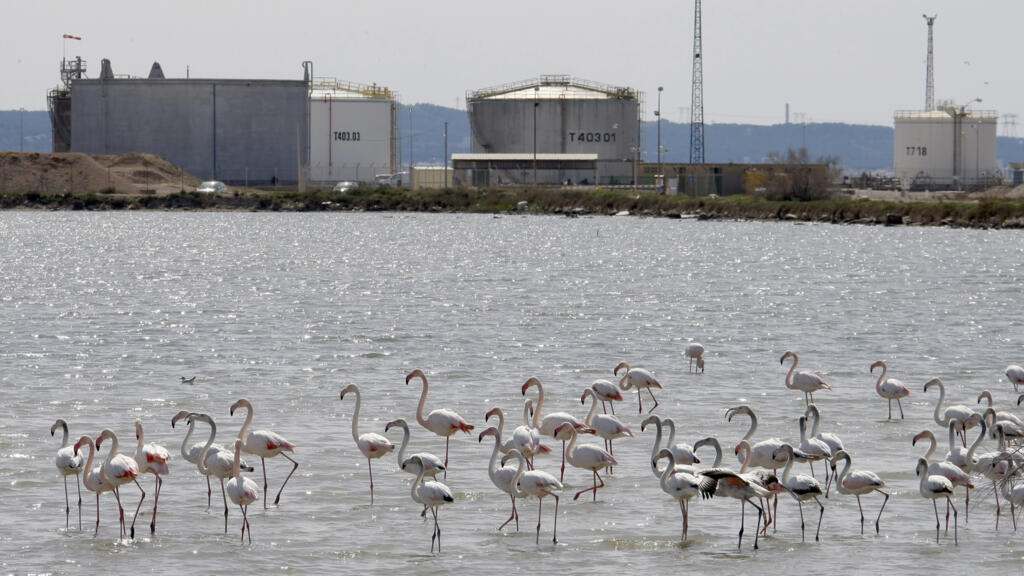
The revival of the flamingo in the Camargue, in southern France, is a prime example: virtually extinct in the 1960s, today more than 70,000 flamingos gather each spring across the Mediterranean coastline, thanks to the restoration of wetlands.
But WWF warns that these achievements are precarious. The Eurasian lynx, which was reintroduced in the 1980s and 1990s from Switzerland after it was wiped out from France, remains fragile.
While it is considered a conservation victory, the current population of 150 to 200 animals continues to face threats from vehicles and a fragmented habitat.
Lucky bustards: rare birds' habitat saved as French judges block mega-basins
Addressing the biodiversity crisis requires more than individual success stories. Conservation rules are under threat, weakened by political or economic pressure.
“Under the pretext of simplification, environmental rollbacks are multiplying. It has now become easier to obtain exemptions to destroy protected species or their habitats, particularly for industrial, energy or agricultural projects,” warns the NGO.
The wolf, which returned naturally to France, has seen its protection downgraded at the European level because of cohabitation challenges with farmers, and marine mammals suffer from collisions with ships and trawling fishing techniques.
WWF calls for a halt in the erosion of environmental protections, particularly those concerning large carnivores. It is also advocating for an ambitious national nature restoration plan, aligned with European environmental objectives.
Finally, there is money. The group has identified €37 billion in subsidies that harm biodiversity that should be redirected towards funding restoration projects and measures to support coexistence between humans and wildlife.