Get all your news in one place.
100’s of premium titles.
One app.
Start reading
GOBankingRates
GOBankingRates
Heather Altamirano

Grocery Prices Are Up 2.4% — How Much More RFK Jr.’s Food Pyramid Will Cost You

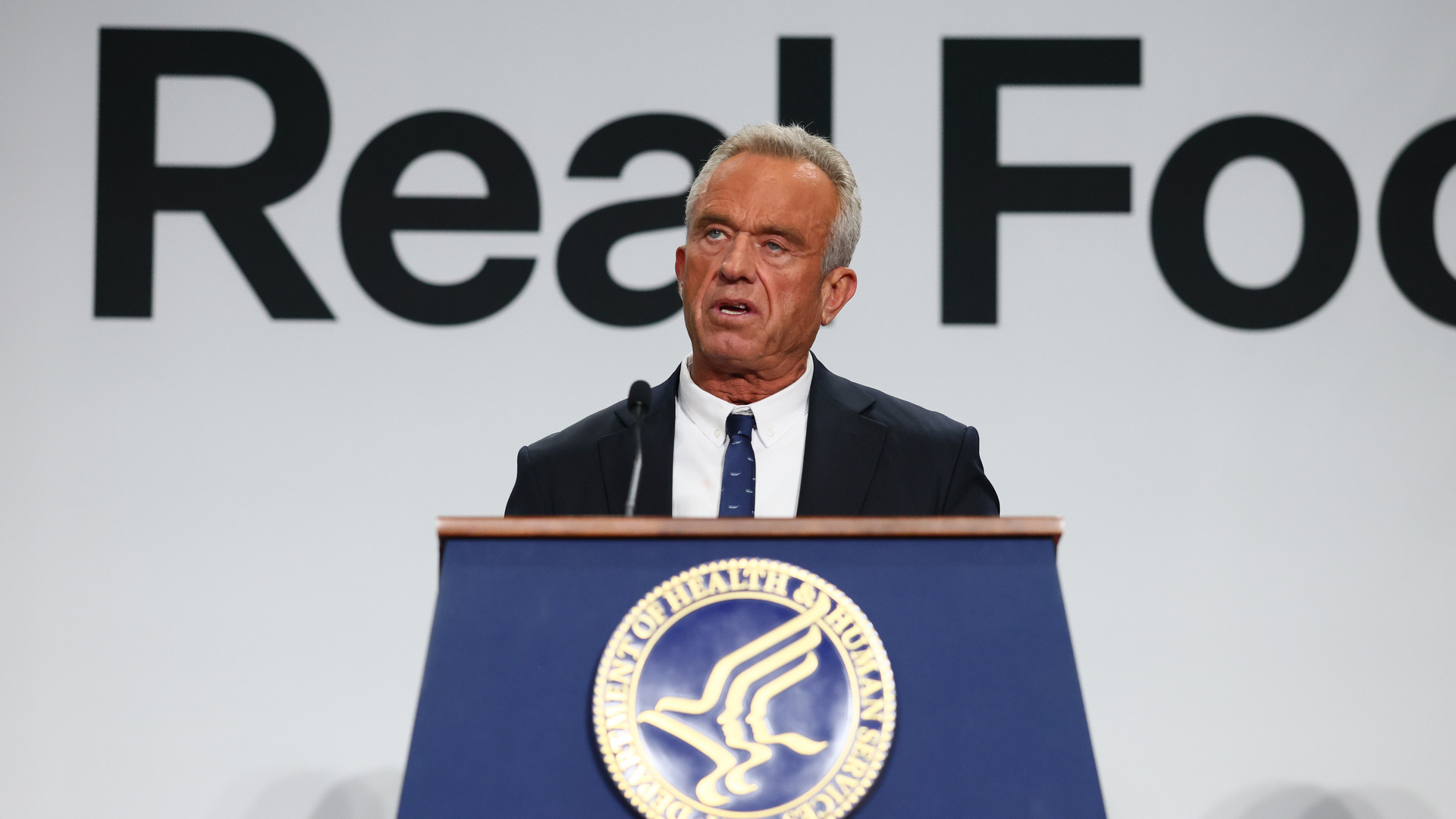
Michael M. Santiago / Getty Images

In January 2026, Health Secretary Robert F. Kennedy Jr. announced new dietary guidelines for Americans that focus on eating whole foods, proteins and healthy fats. While Kennedy is promoting real foods and encouraging healthier eating, it could cost you. Here’s how it might impact your wallet.

What the New Food Pyramid Looks Like

Kennedy wants to make “America healthy again” by reducing processed foods that contain refined carbohydrates, added sugars, high sodium, unhealthy fats and chemical additives. To emphasize eating whole foods, he moved red meat, cheese, vegetables and fruits to the top of the pyramid. According to a press release, the 2025-2030 guidelines include the following:

  • Prioritize protein at every meal
  • Full-fat dairy with no added sugars
  • Consume whole forms of fruits and vegetables daily
  • Include healthy fats from whole foods such as meats, seafood, eggs, nuts, seeds, olives and avocados
  • Eat whole grains and limit refined carbohydrates
  • Scale back on highly processed foods, added sugars and artificial additives
  • Choose water and unsweetened beverages over sugary drinks and soda

Food Prices Are Rising

Adding items to your grocery list that align with Kennedy’s new food pyramid could cause sticker shock at the checkout line because grocery prices are on the rise. According to the U.S. Bureau of Labor Statistics Consumer Price Index report for January 2026, the overall CPI increased 2.4% year-over-year, and the food-at-home index — which tracks grocery prices specifically — rose 2.1% over the last 12 months.

Additionally, five of the six major grocery store food group indexes increased in January, including cereals and bakery products, which rose 1.2% over the month, while meats, poultry, and fish increased 0.2% over the month, per the BLS.

How Much More You’ll Pay

Every shopper’s grocery cart looks different, but if a family of four spends around $200 per week on groceries, they might see roughly $4 to $5 more per week from the 2.1% grocery price rise alone. Adding more protein and whole foods in line with the new food pyramid could drive that total higher, potentially adding $15 to $25 per week or more, depending on consumer choices.

Where You Can Save Money

Last year, it was challenging to find eggs on the shelf because of an outbreak of Highly Pathogenic Avian Influenza (HPAI) that wiped out flocks, causing a shortage. Now, there’s an oversupply of eggs, USA Today reported, resulting in a major price drop.

According to data from the Federal Reserve Bank of St. Louis’ FRED, the average cost of a dozen Grade A large eggs was $2.58 in January 2026, less than half of the $6.23 recorded at their peak in March 2025. 

To help save while adopting the new dietary guidelines, savvy shoppers can buy in bulk, track sales, and meal-plan to avoid waste and impulse buys.

More From GOBankingRates

This article originally appeared on GOBankingRates.com: Grocery Prices Are Up 2.4% — How Much More RFK Jr.’s Food Pyramid Will Cost You

Sign up to read this article
Read news from 100’s of titles, curated specifically for you.
Already a member? Sign in here
Related Stories
Top stories on inkl right now
One subscription that gives you access to news from hundreds of sites
Already a member? Sign in here
Our Picks
Fourteen days free
Download the app
One app. One membership.
100+ trusted global sources.