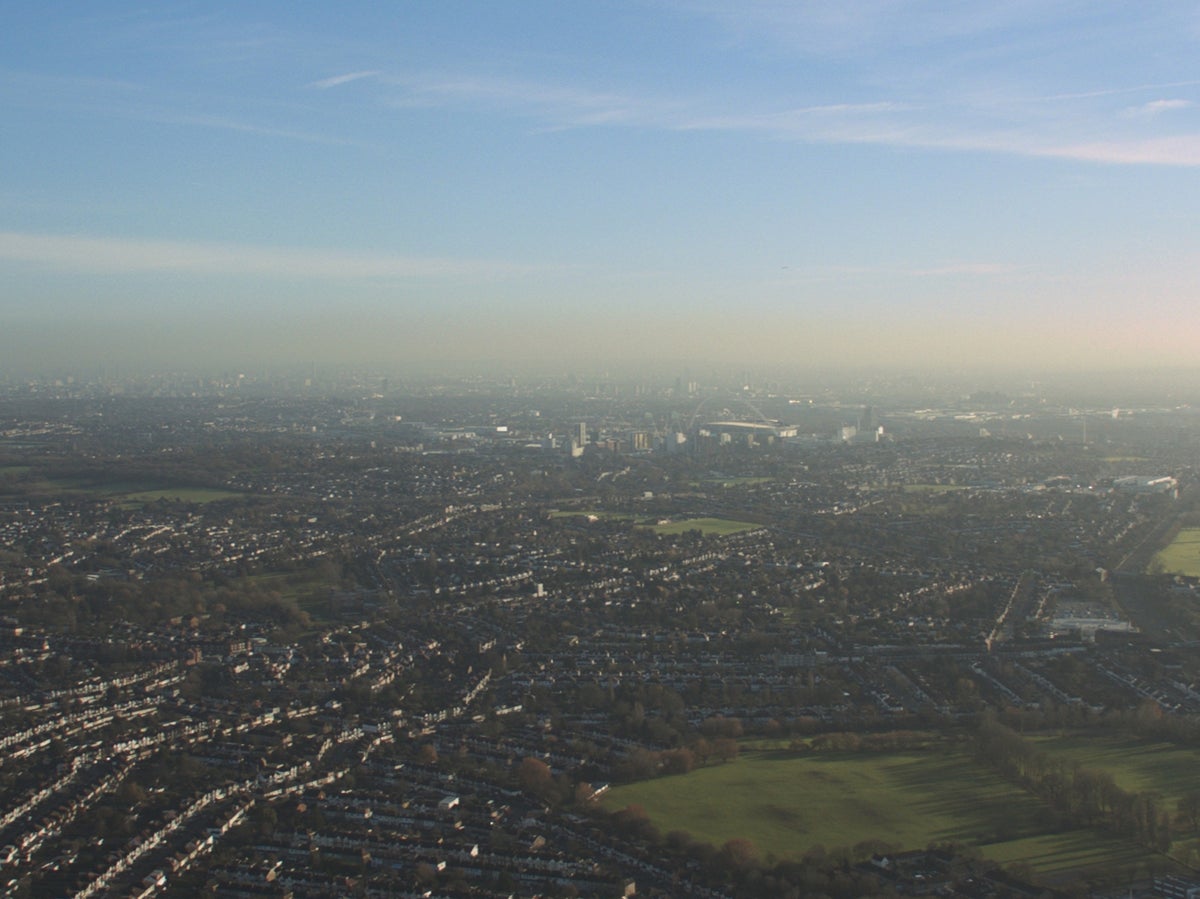
A black screen and fragments of birdsong give way to blue sky, and the watery light of a low sun over fields, trees and the snaking streets of suburban sprawl. The camera moves – reeling towards a white arch reaching into the sky. Wembley Stadium comes into focus as London’s skyline swims at the horizon; a polluted mirage. Occasional sirens. The screech of trains. Then, tower blocks start to punctuate the landscape. Four are concrete grey, but the one in the centre – the one the camera keeps moving closer and closer to – is black. Charred. A burnt-out husk that steadily fills the screen, as the city soundscape rises to a fever pitch, before abruptly dropping into silence. The remains of Grenfell Tower confront you: stark, shattered and excruciating.
This is Grenfell – one unedited shot, 24 minutes and 2 seconds long – filmed by the artist Steve McQueen and showing at London’s Serpentine South Gallery in Kensington Gardens, just outside the boundary line of the Royal Borough of Kensington and Chelsea, where Grenfell Tower’s fire-ravaged reproach still stands to this day. “I feared once the tower was covered up it would only be a matter of time before it faded from the public’s memory,” McQueen writes of his decision to film the tower, six months after the devastating fire that claimed the lives of 72 Grenfell residents, leaving hundreds more injured and bereaved. “In fact, I imagine there were people who were counting on that being the case.”