Zack Polanski has urged Keir Starmer to impose 'robust sanctions' on Israel, calling on the Labour government to scrap the UK‑Israel trade agreement and ban US forces from using British airspace after Israeli strikes on Lebanon. The Green Party deputy leader made the intervention on Friday at the launch of his party's local election campaign in London, accusing Israel of 'behaving in a completely uncontrolled way' and insisting Britain could no longer claim to be a bystander in the region's spiralling violence.
The news came after days of mounting international alarm over the widening conflict, with Israel's bombardment of Lebanon adding to the already devastating war in Gaza and raising fears of a broader regional clash. In Westminster, Starmer has so far resisted calls from some backbench MPs and campaign groups for sanctions, instead stressing Israel's right to self-defence within international law, while the UK continues to maintain defence and trade links with Tel Aviv.
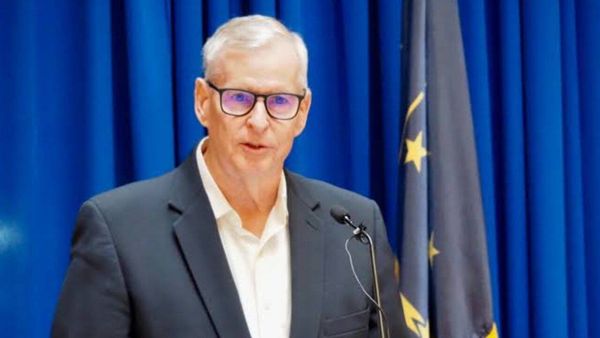
Green Party leader Zack Polanski calls for the UK to withdraw their trade agreement with Israel:
— Pop Base (@PopBase) April 10, 2026
“As a Green party, we are calling on this government to make much more robust sanctions, to withdraw the UK-Israel trade agreement and to end the genocide.” pic.twitter.com/ieqaF59dIN
Zack Polanski Targets Trade Deal And UK Role In US Operations
Polanski's central demand is blunt. 'What is it going to take for this government to actually put robust sanctions on Israel?' he asked, standing in front of Green Party banners in the capital. 'It is outrageous that Israel is still enjoying diplomatic and trade privileges from the international community. As a Green Party, we are calling on this government to make much more robust sanctions, to withdraw the UK‑Israel trade agreement and to end the genocide.'
He went further, disputing Starmer's assertion that the UK is 'not involved' in recent US‑Iran hostilities. According to Polanski, that line is 'not entirely truthful,' arguing that American operations rely on access to British bases and infrastructure. 'What we need to do is disentangle the UK military and the US military, ban the US from using our airspaces,' he said.
Asked whether tearing up the UK‑Israel trade deal would damage the British economy, Polanski was unapologetic. He said the country should refuse to 'put a cost on people's lives,' making clear he sees economic pain as an acceptable price for what he frames as a moral stance.
Zack Polanski Uses Foreign Policy To Attack Labour At Home
The Green politician did not confine himself to foreign policy. In a deliberately wide‑ranging attack, Zack Polanski also turned his fire on Labour's domestic record, particularly on housing, arguing that Starmer's party has become too close to large developers and too timid on affordability.
Labour has promised to deliver 1.5 million new homes in England by the end of the decade, an eye‑catching figure that has already drawn scepticism from the building industry. Developers have suggested the target is over‑optimistic, and Steve Reed, the housing secretary, has conceded housebuilding would have to rise steeply to come close. Polanski argued that the numbers game misses the real crisis.
'We do have a housing crisis, but what we also have is an affordability crisis,' he said. 'And actually it's about making sure we build the right homes at the right price at the right place. And what we see far too often with Labour councils is that building of luxury, unaffordable buildings that no one's ever going to live in.'
Labour hit back quickly. The party accused Green councillors of trying to block 42,000 homes across the country since 2018 and claimed Greens had failed to deliver social rented housing in areas where they share or hold power. Reed was scathing. 'There is nothing progressive about keeping London families in temporary accommodation. If you're not willing to build the homes Londoners need, you are choosing to keep them there,' he said.
Polanski described the 42,000‑homes figure as 'an absolute nonsense,' but did not shy away from the idea that Greens are willing to obstruct schemes they dislike. 'If a development is being blocked because it's an unaffordable luxury development, then I'm proud of any Green Party council that does that,' he told reporters.
The debate over rents and welfare spending gave him another opportunity to draw a contrast. Zoë Garbett, the Green Party's candidate for Hackney mayor, vowed to press London mayor Sadiq Khan to introduce rent controls across the capital. The snag is that local authorities do not have the power to impose rent caps under current law.
Polanski insisted the idea was neither impossible nor extreme. It was not, he said, 'some radical, wild policy,' arguing that the status quo is the real outlier. 'What's wild is that we've spent over £70bn in the last five years on welfare, which has been money going straight from the government into the pockets of private landlords, as opposed to building social, social homes or council homes that could be rent‑capped or rent‑controlled straight away.'
He even reached across the Atlantic to make his case, branding Donald Trump an 'increasingly unpredictable and dangerous man' and claiming recent events had 'vindicated' his long‑held concerns about the former US president. 'Just a couple of days ago, he said he was willing to wipe out a civilisation,' Polanski noted, using Trump's rhetoric to underline his pitch for a clean break between British and American military decisions.
Whether any of this shifts Labour's carefully managed position is far from clear. Nothing in Polanski's agenda has been adopted by the government, and many of his claims rest on contested interpretations rather than hard, public evidence.