When design ignores the environment, communities pay the price. Rising temperatures, flooding, and the loss of green spaces are just a few of the consequences of poor design and decision-making.
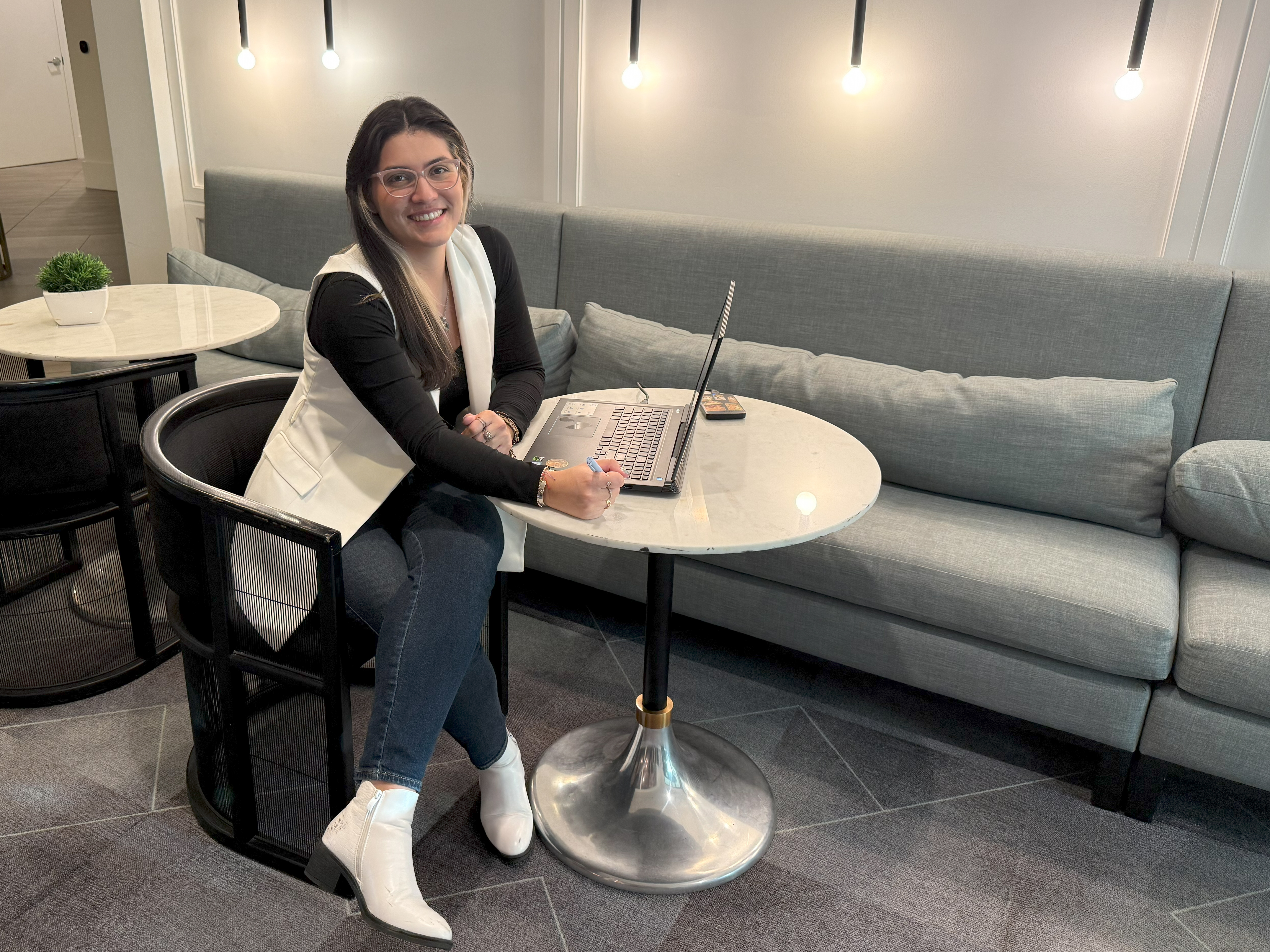
This reality is the foundation for the works of Paula Díaz, a recognized architect and urban planner: "My goal is to enhance and innovate traditional architecture and development by introducing new ideas, designs, and patterns that better serve both people and the environment,” she shares.
Known for her work in eco-centric planning and neuroarchitecture-guided design principles, Paula has become a well-regarded figure in conversations around sustainable community development. Her contributions to the field are not simply a matter of well-executed individual projects. With more than a decade of practice, she has developed and documented a coherent, replicable methodology for eco-centric urban design — one that integrates architecture, industrial design, graphic communication, and business operations into a single, unified framework with measurable outcomes.
Her work is increasingly referenced in professional and academic discussions focused on how built environments influence human behavior, environmental resilience, and long-term community well-being.
A Deliberately Constructed Foundation
Paula’s career trajectory reflects a multi-disciplinary preparation that distinguishes her from practitioners trained within a single design tradition.
Her academic foundation began in Bogotá, where a curiosity about the relationship between space and human behavior led her to pursue dual degrees — Industrial Design in 2013 and Architecture in 2014 — at Fundación Universidad de Bogotá Jorge Tadeo Lozano.
This curiosity, she recalls, began early in childhood: “Since I was a little girl, I was always interested in building things and understanding how objects are made. I loved working with crafts and creating things.”
Upon relocating to the United States, Paula continued her studies at Valencia College in Orlando, where she completed an Associate in Science in Graphic and Interactive Design. On top of her degree, this sought-after architect has numerous technical certificates, among them are Graphic Design Production and Interactive Design Support. Between 2022 and 2023, she formalized her knowledge of organizational systems through certifications in Business Management, Business Operations, Business Specialist, and Operations Support and Services.
This combination of visual communication expertise and architectural training allows her to translate complex planning concepts into clear visual strategies for stakeholders, investors, and municipal partners—an often overlooked but critical skill in the implementation of large-scale urban developments.
She explains that communicating design ideas clearly is essential when working with non-architect clients: “Most of the people we present to are not architects or designers. You have to show the project in a way that anyone can understand immediately.”
In practice, this means she can move fluidly between conceptual master planning, technical documentation, and stakeholder coordination—ensuring that sustainability principles remain intact throughout the development process.
This adaptability is one of professional strengths: “I’ve learned how to move between different types of projects. One day I work on planning, the next day on architecture, creating drawings, presentations, or renderings depending on what the project needs,” she shares.
Paula also has numerous hands-on work experiences that complements the theoretical training she has.
At Concrecentro, a construction company specializing in residential and school buildings, she gained direct exposure to construction management and the practical constraints that shape whether sustainable design intentions survive contact with the building process. This experience gave her firsthand insight into site logistics, material coordination, and project sequencing—knowledge that later enabled her to design communities that remain both visionary and constructible.
Her work with prefabricated systems introduced her to innovative construction methods that minimize waste, speed up building timelines, and cut costs—principles that continue to shape her advocacy for modular and environmentally responsible housing.
According to Judas Germán Medina Muñoz, Legal Representative at Medina Prefabricados, Construcción Arquitectura y Diseño S.A.S, Díaz has both the technical ability and professional mindset. He says that she consistently demonstrated “tireless dedication and remarkable impact in the field of architecture and quickly grasped new concepts and applied her knowledge with enthusiasm and precision.”
He also commends her versatility and leadership: “Paula is involved in all aspects of our work, from design development to administrative coordination, and she does it willingly. She was proactive, reliable, and someone I frequently relied on to lead tasks and initiatives. Her collaborative spirit and ability to deliver results consistently exceeded expectations.”
Through this experience, Díaz not only strengthened her technical expertise but also developed the leadership and problem-solving skills that continue to define her professional practice today.
Paula’s work is already of major significance in the field, as her application of New Urbanism principles and sustainable building strategies has influenced the design of mixed-use and residential communities in both Colombia and the United States.
Her interdisciplinary thinking is not limited to her work — it is a methodology she has actively developed and documented. In her paper Bridging Architecture and Urban Systems: An Interdisciplinary Approach to Built Environments, she maps out how integrating multiple disciplines leads to more resilient and human-centered built environments.
The Eco-Centric Vision of Paula Díaz
Paula doesn't just design for the sake of it: "I put my heart and soul in my designs knowing that it can affect someone's life. I get motivated knowing that, that's why designing for me is so personal," she explains.
Knowing that her work influences someone else is the reason why whether she’s working on a sprawling 2,000-acre development or a small 5-acre site, she brings the same level of precision and care to each project.
This also inspires her to design spaces where families can play, friends can meet, and communities can grow, without compromising the environment.
Equally meaningful for her is observing how people interact with spaces she helped create: “When you see people walking through a place you designed, or kids playing in a park you imagined, it really touches you. You realize that what started as an idea is now part of someone’s everyday life.”
Armed with advanced tools such as AutoCAD, Revit, and Lumion, she models eco-friendly layouts that prioritize efficient land use and low-impact development.
In her journal, The Role of BIM and CAD Technologies in Transforming Architectural Design Efficiency, Paula explores how BIM and CAD tools enhance how architects design, visualize, and implement sustainable projects. Her hands-on experience with these technologies gives her insights real-world credibility.
Aside from her technical mastery, Paula also has the skill of clearly communicating her thoughts.
Thanks to her background in graphic design, she can craft easy-to-understand presentations that help clients and stakeholders see the long-term benefits of green communities: “Graphic design helped me explain projects better. When you present a building or a master plan, you have to make sure people immediately understand what they are seeing,” Paula explains.
This communication skill is crucial in gaining approval for environmentally progressive planning strategies that might otherwise face resistance in traditional development contexts.
Moreover, living between Colombia and the United States sharpened her global perspective and taught her to design with both cultural sensitivity and climate awareness. Being bilingual also allows her to collaborate seamlessly with diverse teams. This is a significant advantage when it comes to incorporating diverse ideas and perspectives: “Designing for people in New York is not the same as designing for people in Florida. Each place has its own rhythm, its own needs, its own heartbeat,” she explains.
Hence, this sought-after planner sees every project as an opportunity to minimize ecological footprints without compromising well-being. Her integrated solutions such as rainwater harvesting, solar energy, and native landscaping are tailored to the unique characteristics of each environment.
For her, sustainability is not a one-size-fits-all formula; instead, it is a dialogue between people, culture, and place.
Her commitment to sustainability also addresses one of today’s greatest global challenges: affordable housing. Paula envisions accessible, sustainable and inclusive housing. Her designs emphasize modular construction, energy-efficient materials, and smart land-use strategies that lower costs while protecting the environment. In this way, she reimagines housing as a foundation for fair and resilient cities—places where sustainability benefits everyone, not just a select few: “Everyone deserves a place they can call home—not just a roof, but an environment that supports their life with dignity,” she shares.
Weaving Sustainability Into Urban Planning
Paula’s wide array of experiences in incorporating sustainability in building laid the foundation for the eco-focused approach which she would later apply and refine in the United States.
At the core of her philosophy is the idea that architecture should support people while protecting the environment. She explains that successful planning requires thinking beyond the client to the people who will ultimately live in the space: “Sometimes the client is not the only user of the project. That’s why as designers, we have to imagine what the future residents will also need.”
Her work on Sweetbay, Panama City, Florida, has been acknowledged within the field as a model for applying sustainable community design principles at a scale that is rarely achieved without compromising ecological integrity: “I’ve seen how behavior changes when you create inviting spaces to walk, bike, or play. Communities become healthier because the environment makes it easy to choose those habits.”
Built on the grounds of a former airport, Paula and her team designed walkable neighborhoods, playgrounds made from recycled materials, and energy-efficient homes. The project required thorough environmental planning, which included managing stormwater, adding green infrastructure, and designing streets that are safe and comfortable for pedestrians.
In Lake Nona's Laureate Park in Orlando, Díaz applied the same systems logic to a different typological challenge. Pedestrian-friendly streetscapes, rear alley configurations, and green corridor "mews" replaced conventional traffic infrastructure with networks oriented toward human connection. The project illustrates a principle well-established in the urban design literature — that the physical structure of streets and shared spaces directly determines the quality and frequency of civic life. This is another proof of Paula's ability to translate that principle into built outcomes at a community-wide scale.
Moreover, her “Jewelbox” project helped Paula refine her skills about solving one of modern cities’ toughest issues—housing affordability. The design used smaller lot configurations to preserve shared green areas while still providing comfortable homes. The project demonstrated that communities can be both dense and environmentally responsible. As Paula says, “It’s never just about building a house. The goal is to make sure people live in places that feel dignified, sustainable, and supportive of their lives.”
Her academic work also supports this approach. In her paper Mixed-Use Urban Planning Strategies for Enhancing Livability in Rapidly Growing Cities, she outlines research-based strategies for designing compact and inclusive urban spaces that improve quality of life while protecting the environment—the same ideas reflected in the Jewelbox project.
Paula’s work has had a wider impact in the field by showing that compact, pedestrian-oriented urban design is not only viable but highly beneficial for community cohesion. Such projects influenced developers and urban planners across multiple U.S. states.
Marc Newman, Principal at PLACE Alliance, echoes this: “Paula has the skills and attitude needed to resolve complex urban design challenges, from downtown revitalizations to large-scale expansions. What most differentiates her is her passion for placemaking. With her dedication, training, and natural talent, Paula is among the finest urban designers I have had the opportunity to work with.”
Newman also commends Paula’s collaborative approach: "She balances analytical skills with openness to different viewpoints. Upon listening to other's perspectives, she quickly tests these ideas and translates the collective visions into actionable plans. Whether the project involves community redevelopment, transit-oriented developments, or sustainable mixed-use districts, her contributions help improve the final outcome," Newman shares.
Shaping the Future Together: Collaborative Approaches to Green Urban Design
Paula believes for an urban design to be successful, there should be collaboration between the planners and the people who actually use the space. Collaboration, innovation, and care for human-wellbeing and environment are the non-negotiables. She also stresses that design is never just about buildings. The goal is to create spaces where communities can thrive: “Open communication, mutual respect, and listening to different perspectives is the key to achieving great results,” she explains.
This commitment to collaboration and knowledge-sharing is why Paula mentors others, teaching digital tools and U.S. design standards while guiding colleagues and young designers toward sustainable practices. Combined with her strong project management skills, she ensures that visions of green communities don’t remain on paper—they become real, well-organized, timely, and impactful projects.
Her leadership skills are not limited to individual projects. Within professional networks and planning organizations, Paula is recognized as leading environmentally responsible design. Moreover, her participation in groups such as the Congress for the New Urbanism, the American Planning Association, the Urban Land Institute, and the Sociedad Colombiana de Arquitectos demonstrates her dedication to advancing sustainable urbanism as both a practice and a shared professional discipline.
Paula envisions a future city where environmental architecture is the norm, not the exception—places where every design decision supports a healthier planet: “I want to be remembered as an architect who made people’s lives better,” she says.
With a growing body of scholarly work, real-world projects across two continents, and a philosophy rooted in human dignity and ecological care, Paula is actively changing urban design towards an eco-centric approach.
Her unique vision reminds us that the future of cities depends on the choices we make today, and that every street, park, and home is an opportunity to design, not as a conquest over nature, but as responsible stewardship—where thriving communities and healthy ecosystems grow side by side. As she puts it: “Design should always have a purpose. More than finishing a project, you are creating something that will be part of people’s lives for many years.”