
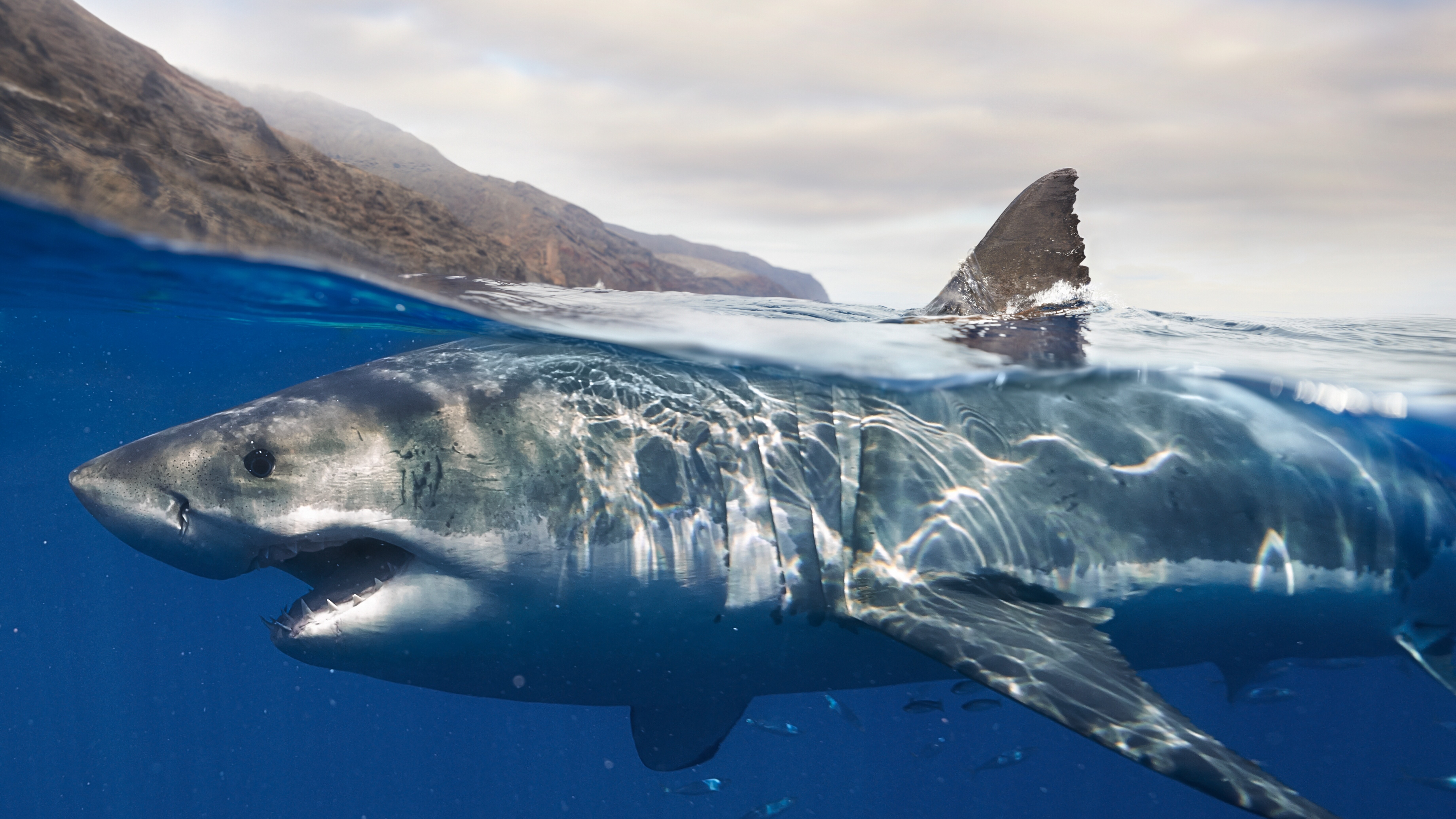
Great white sharks split into three distinct groups about 100,000 to 200,000 years ago and seldom mingled, a new study shows. The findings suggest that if one of these populations goes extinct, it cannot be replaced, the study authors said.
In the study, published July 23 in the journal Current Biology, scientists sequenced the genomes of 89 great white sharks (Carcharodon carcharias) sampled worldwide. Their results pointed to three distinct groups that diverged over time and did not interbreed. These groups are found in three locations: the North Atlantic/Mediterranean, Indo-Pacific and North Pacific oceans.