Get all your news in one place.
100's of premium titles.
One app.
Start reading
Capital & Main
Capital & Main
Audrey Carleton

Gov. Shapiro Walks a Fine Line on Climate; His Opponent Just Wants to Drill.

A hydraulic fracturing site in Springville, Pennsylvania. Photo: Spencer Platt/Getty Images.

When Pennsylvania Republican gubernatorial candidate Stacy Garrity took the stage at the annual conference for a powerful fossil fuel trade group in April, it didn’t take long for her to reference her affinity for the commonwealth’s rich shale deposits.

Just weeks before the May 19 primary election when Garrity glided unopposed to victory, she told the room that her support for the state’s oil and gas industry was “not a boilerplate political statement.”
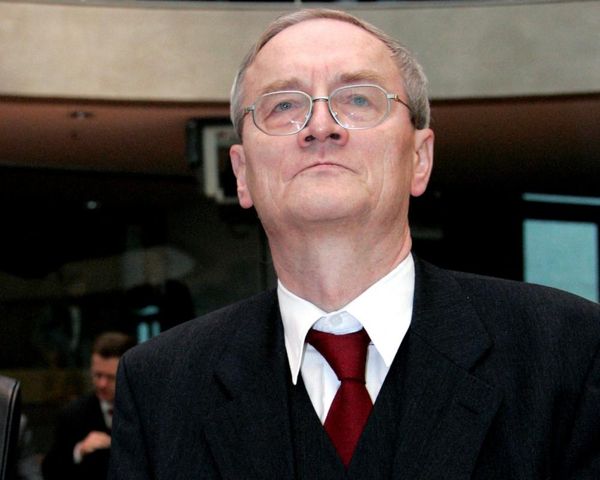
“I understand how your work sustains rural communities, because that is my community,” she said. “I know the impact oil and gas jobs have on families, because those families are my neighbors.”

Unsaid was that this work has also helped sustain her own bottom line. Garrity has, for years, leased the mineral rights beneath one of her north central Pennsylvania properties to the fracking industry, earning at least $15,600 since 2020.

According to public property records and statements of financial interest Garrity filed as Pennsylvania state treasurer, the Republican nominee has earned income from two fracking wells located less than a mile from a 17.5-acre property she owns in Sayre, Pennsylvania. Fracking wells carve an L-shaped path underground that often penetrate thousands of feet below the Earth’s surface before turning and tunneling horizontally for miles. In Garrity’s case, the wells were drilled on a neighbor’s property before snaking beneath her own.

She first signed her mineral rights away in 2011 to fracking company Chesapeake, now Expand Energy, which split them with Norwegian energy firm Statoil, now Equinor, in 2012. Since taking office in 2021, Garrity has reported making at least $1,300 from both Chesapeake and Equinor every year.

Garrity is vying to unseat incumbent Josh Shapiro, who, as governor, has long walked a fine line on energy issues. He has supported bolstering both jobs and renewable energy and led the state’s push to cap abandoned oil and gas wells, while also drawing ire for inaction on climate change, playing into the hands of industry and withdrawing the state from a regional cap-and-trade program for planet-warming carbon emissions. More recently, he’s attempted to rein in the impacts of power-hungry data centers, though he’s also been accused of being “incredibly cozy” with the industry.

Garrity’s approach is more direct. She has promised to “on day one … lift the ban on new drilling sites,” and “call a Special Session on Energy to fast-track permits for natural gas production, pipelines, and power plants.” (As of now, there is no ban in Pennsylvania on new drilling sites, save for a years-old interstate agreement limiting it within the Delaware River Watershed.) As treasurer, she once threatened to withdraw billions of dollars in state funds from banks that dump fossil fuel lendees.

She has long supported President Donald Trump, and has, on several occasions, appeared to sow doubt about the results of the 2020 presidential election, which her campaign later said she accepts. Though she disavowed the Jan. 6, 2021, attack on the U.S. Capitol, Trump endorsed her gubernatorial run and lauded her plans to “Champion American Energy DOMINANCE.”

Neither Garrity nor her campaign responded to Capital & Main’s request for comment by publication time.

Garrity signed over the mineral rights beneath her north central Pennsylvania property, which is just shy of the New York border, close to a decade before she took office in 2021. Nonetheless, ethics experts say the situation raises concerns.

“What began as a private financial decision has, over time, become a continuous and ongoing source of income that she has maintained throughout her tenure as a public official,” said Davina Hurt, director of government ethics at the Markkula Center for Applied Ethics at Santa Clara University in Northern California.

Whether Garrity’s personal income from fracking directly impacted her positioning on energy policy is “difficult to fully disentangle,” Hurt said. But, she added, it could erode public trust.

Rabbi Michael Pollack, executive director of March on Harrisburg, a nonprofit that advocates against government corruption, echoes the concern.

“When public officials can personally profit from the industries they oversee, it creates a direct conflict between serving the people and serving themselves,” he said. “We deserve to know that policy decisions about health care, energy, housing, banking or any other major industry are being made based on what is best for the public.”

In Pennsylvania, it is common for a property’s surface rights — everything above ground — to be legally separate from the rights to its minerals under the ground. This allows landowners to continue living in their homes while earning royalties on the hydrocarbons mined under their property.

Many Pennsylvania landowners have taken advantage of this. By 2013, years after the fracking boom began,119,000 residents were earning royalties from their oil and gas mineral rights, according to the National Association of Royalty Owners. How much they earn is usually determined by a landowner’s acreage and the productivity of the wells surrounding it. Some landowners — disproportionately, those with larger tracts — have made life-changing sums; others have been left with puny royalty checks, polluted water wells or plummeting property values.

It’s difficult to determine how much Garrity has collected from her mineral rights in all. Elected and appointed officials as well as public employees are required to report income from extracurricular endeavors that earn at least $1,300 per year, but are not required to report the specific amount.

“The public is not told how much exactly the lawmaker is getting paid, or even what kind of specific work they are doing,” Pollack said. “We advocate for a ban on side jobs and any outside income that conflicts with the public interest that public officials are supposed to serve.”

Garrity is far from the only lawmaker in Harrisburg to have cashed in on Pennsylvania’s rich reserves of energy, even while serving as a decisionmaker on matters of energy and environmental policy.

Sen. Eugene Yaw, a Republican from north central Pennsylvania who has chaired the Environmental Resources & Energy Committee for more than a decade, has long leased minerals underneath land he owns for natural gas development. Yaw denies the lease poses a conflict of interest. “I vote on what we’re going to set speed limits at,” he told local broadcaster WNEP in 2013. “I don’t like it, but they apply to me.”

State Rep. Joe Hamm, a Republican from north central Pennsylvania who sits on the House Energy Committee, has listed income from natural gas driller Seneca Resources on his statements of financial interests since 2022. According to his financial statements, Rep. Jamie Barton, a Republican from northeastern Pennsylvania, draws income from Jack Rich Inc., a family-owned fuel oil delivery company where he has worked as vice president for more than 30 years.

All of these representatives are following the law in disclosing their financial ties. But, disclosure alone, said Santa Clara University’s Hurt, “for an office of [Garrity’s] magnitude, it is not sufficient.” She recommends that politicians put their personal assets into blind trusts while governing to separate their policymaking decisions from their own bottom line.

If elected to the state’s highest office, Garrity would have unique oversight over the Department of Environmental Protection, which inspects fracking wells and writes regulations that govern the industry. Currently, the agency is mulling over a proposal from environmentalists that would require new fracking wells to be built 3,281 feet from buildings and water wells, and a mile from hospitals, schools and day care centers. While attorney general in 2020, Shapiro issued a grand jury report endorsing the setback concept.

Garrity’s campaign website vows that as governor she will “lift the ban on new drilling sites that is holding Pennsylvania back.”

While there is no such ban currently, Garrity has criticized the proposed setbacks as an attack on fracking. The increased setbacks are designed to minimize residents’ exposures to known carcinogens and other health hazards emitted by natural gas wells. The state’s current setback requirement is 500 feet, which advocates have long argued puts the industry too close to residents. The setback proposal would not affect existing wells — but could cut into profits for mineral rights owners like Garrity.

Beyond Garrity’s personal income from fracking, industry groups have also bolstered her campaign — including Expand Energy Corp. Employee PAC, the political action committee affiliated with the company that absorbed Garrity’s mineral rights. The group donated $500 to Garrity in March, as did the Pennsylvania Coal PAC. The same month, the Pennsylvania Grade Crude Oil Coalition, a trade group for oil developers in the state, gave her campaign $4,000.

Garrity recently faced criticism for attending a gala for a firm from which she invested $45 million in taxpayer dollars in Israel Bonds, which support that country’s economic development. She paid for her own ticket using funds from her campaign, blurring lines between her campaign and her official duty as treasurer, ethics experts told Spotlight PA, which broke the news at the time.

Shapiro, who is widely expected to contend in the 2028 presidential election, has not reported any additional income from any industry, beyond a 2025 payment from HarperCollins, the publisher of Where We Keep the Light: Stories From a Life of Service, an autobiography released in January. He came under fire in 2024 for accepting thousands of dollars in travel and sports tickets from the Team Pennsylvania Foundation, a private-public partnership responsible for building out an early vision for a controversial energy hub in the state that would have been powered by hydrogen.

Shapiro’s reelection campaign has broken Pennsylvania fundraising records and in 2025 he had outpaced Garrity by more than 15-to-1. He also has accepted tens of thousands in donations from utilities, $10,000 from the CEO of a coal company that recently received permits to operate; and $100,000 from a political action committee tied to businessman Louis DeNaples, who has been connected to data center development in the state. While campaign finance records are still rolling in as the election nears, OpenSecrets data from Shapiro’s first gubernatorial run shows that building trade unions, a powerful pro-fossil fuel lobbying force in Pennsylvania, represented his seventh largest donor class.

These donations are likely just the beginning of a flood of funds that could pour into the state: Shapiro and Garrity both ran unopposed for their party nomination, making the primary largely a symbolic event.

Sign up to read this article
Read news from 100's of titles, curated specifically for you.
Already a member? Sign in here
Related Stories
Top stories on inkl right now
One subscription that gives you access to news from hundreds of sites
Already a member? Sign in here
Our Picks
Fourteen days free
Download the app
One app. One membership.
100+ trusted global sources.