Get all your news in one place.
100's of premium titles.
One app.
Start reading
Ballotpedia
Ballotpedia
Lifestyle
Ballotpedia staff

Gov. Gavin Newsom signs bill overhauling California’s public school governance

Welcome to the Monday, July 20, 2026, Brew.

By: Briana Ryan

Here’s what’s in store for you as you start your day:

  1. Gov. Gavin Newsom signs bill overhauling California’s public school governance
  2. Federal district judges issue conflicting rulings on states' use of expanded SAVE citizenship database for voting purposes
  3. Seven candidates, including a DCCC-backed candidate, are running in the Aug. 4 Democratic primary for Virginia’s 1st Congressional District

Gov. Gavin Newsom signs bill overhauling California’s public school governance

In November, California voters will elect a new Superintendent of Public Instruction. Historically, that role, the state’s chief school officer, has overseen the California Department of Education. But because of a bill Gov. Gavin Newsom (D) signed on July 10, the role will look considerably different when the eventual winner of the election takes office in 2027.

Since 1912, California has divided responsibility for managing its K-12 public education system between a governor-appointed State Board of Education (SBOE), which devises the regulations and policies to which schools and districts must adhere, and an elected Superintendent of Public Instruction, who manages the California Department of Education and enforces the SBOE’s directives.

AB 181 moves day-to-day control of the Department of Education from the Superintendent of Public Instruction to a new governor-appointed education commissioner. The Superintendent of Public Instruction will assume a more evaluative role, monitoring education programs on behalf of voters and serving as a liaison to lawmakers. The Superintendent, which will remain an elected nonpartisan position, will be responsible for monitoring programs, serving as a legislative liaison, and having a vote on the state board of education.

According to the Education Commission of the States (ECS), an education policy and research nonprofit, California is one of nine states where voters elect the chief state school officer while the governor appoints the state board of education. That will change in January, when AB 181 goes into effect. California is the only one of the nine states with a Democratic trifecta. Six states have Republican trifectas, and two have divided governments.

Here’s what the K-12 public school governance models look like in the other 41 states:

  • In 11 states, the governor appoints both the state board of education and the state superintendent.
  • In 12 states, the governor appoints the state board of education, which in turn appoints the state superintendent.
  • In six states, voters elect the state board of education members, who then appoint the state superintendent.
  • Twelve states use a combination of the different governance models. In six of those states, voters elect at least some members of the state board of education or the state superintendent.

AB 181 also expands the SBOE from 11 to 13 members, with the Superintendent of Public Instruction taking one of the existing seats. Additionally, the president pro tempore of the California Senate and the speaker of the California Assembly will each appoint a member to the board. The governor, with the advice and consent of the Senate, will appoint 10 of the members (including a student representative).

The California Senate passed the bill 21-4, with 21 Democrats supporting it and one Democrat joining three Republicans in opposing it. The California Assembly passed the bill 52-5, with eight Republicans joining 44 Democrats in supporting it and five Republicans opposing it.

According to Newsom, "For too long, our state's education governance structure has divided responsibility for setting policy from responsibility for implementing it. AB 181 creates a more effective system that will help us deliver better results for students while ensuring greater accountability for the investments Californians make in public education."

The Superintendent of Public Instruction is up for election this year and both candidates running in the Nov. 3 general election, Richard Barrera and Sonja Shaw, oppose AB 181.

Shaw, a Republican, said, "Newsom couldn't win at the ballot box, so he changed the rules. He just rammed through one of the biggest power grabs in California history. This isn't education reform. California's children deserve leaders who answer to the voters."

Barrera, a Democrat, said, "Proponents of this measure claimed their goal was to align everyone around a common set of goal [sic] for student achievement. Unfortunately, the rushed, behind-the-door process has done precisely the opposite."

A version of this story appeared in the July 15 Hall Pass, our weekly newsletter designed to keep you plugged into the conversations driving school board politics and education policy. Click here to get a roundup of commentary and research from across the political spectrum on education sent straight to your inbox.

Federal district judges issue conflicting rulings on states' use of expanded SAVE citizenship database for voting purposes

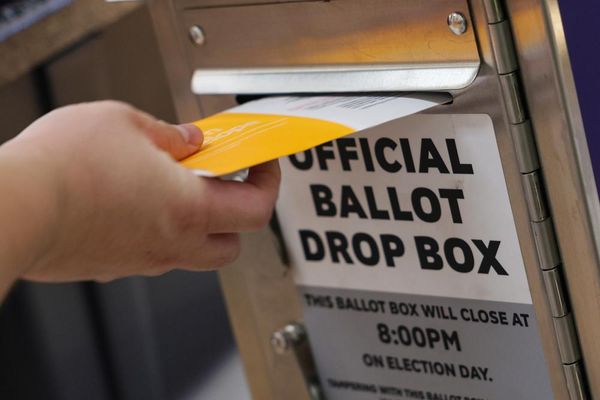
Federal district judges in two jurisdictions have issued conflicting rulings in recent weeks on whether the Department of Homeland Security (DHS) may give states access to an expanded version of the Systematic Alien Verification for Entitlements (SAVE) database — which provides information about individuals' immigration and citizenship status — for voter registration and list maintenance purposes.

U.S. Citizenship and Immigration Services (USCIS), which runs SAVE, describes the database as providing "point in time immigration status and U.S. citizenship information to federal, state, local, territorial, and tribal agencies. SAVE is fast, secure, and reliable, and enables registered user agencies to make accurate decisions for applicants seeking benefits and licenses." USCIS is a division of DHS.

Nationally, 28 states have registered with the federal government to use SAVE for voter list maintenance or voter registration.

Some states have statutes requiring SAVE to be used to regularly check the citizenship status of registered voters or of individuals registering to vote for the first time. As of July 2026, 27 states have statutes that require or authorize election officials to obtain citizenship data from state or federal agencies as part of the voter list maintenance process.

In 2025, President Donald Trump (R) issued an executive order requiring DHS to make free access to "appropriate systems for verifying the citizenship or immigration status of individuals registering to vote or who are already registered" available to state and local election officials.

In response, USCIS made changes to SAVE, including pulling Social Security Administration records into the database and allowing states to conduct bulk searches.

In September 2025, the League of Women Voters sued, alleging the changes to the database violated federal law. "These dramatic changes far exceed the SAVE system’s limited authorized scope and functionality, which previously did not allow bulk searches or queries of U.S.-born citizens. ... [T]he Privacy Act explicitly prohibits interagency national data banks. ... And the other provisions of the Privacy Act establish specific prerequisites to creating any system of records—which Defendants have defied," the organization's lawyers wrote.

On June 22, Judge Sparkle Sooknanan of the U.S. District Court for the District of Columbia, who President Joe Biden (D) nominated to the court, blocked DHS from allowing states to access the expanded version of SAVE.

In her opinion, Sooknanan said that the changes violated federal data privacy laws and statutes governing administrative rules and regulations.

"All in all, the federal government has knowingly trampled on the privacy rights of American citizens in a manner that threatens the sacred right to vote," Sooknanan wrote. "This Court cannot stand idly by while that happens."

After Sooknanan's ruling, DHS disabled the bulk-search feature of SAVE, as well as the ability to search for Social Security numbers. In response, four states — Florida, Iowa, Indiana, and Ohio — asked a federal judge in Florida to allow them to continue to use the expanded SAVE system to comply with a settlement agreement they reached with the federal government last year.

On July 7, Judge T. Kent Wetherell, who Trump nominated to the court, ruled that the four states were being negatively affected by the inability to use the expanded version of SAVE and disagreed with Sooknanan's rationale for blocking the changes.

"The Court understands that this puts Defendants in a bind because they are subject to two contradictory orders—one from this Court requiring them to include certain features in the SAVE system and one from Judge Sooknanan prohibiting them from doing so,” Wetherell wrote. "This Court is not bound by Judge Sooknanan's order, and with all due respect, the Court disagrees with the conclusions in that order."

Wetherell ordered DHS to "immediately comply with the court-approved settlement agreement in this case by reinstating Plaintiffs’ access to the bulk-upload and SSN-search features in the SAVE system."

Following Sooknanan's June 22 ruling, DHS appealed to the U.S. Court of Appeals for the District of Columbia Circuit and asked Sooknanan to stay her ruling while the case was appealed.

On July 8, Sooknanan denied that request, writing, "Somewhat audaciously, the Federal Defendants ... argue that they are irreparably harmed based on their belief that complying with the Court’s Order 'brings [the Federal] Defendants out of compliance with a' consent decree 'entered in the Northern District of Florida' during the course of this litigation. ... The Federal Defendants thus knew that this suit had the potential to implicate the permissible 'terms' under that agreement and their statutory 'authority' to make certain concessions in a consent decree. ... The Defendants choose to ignore those considerations, making any injury arising from that decision self-inflicted."

On July 9, lawyers for the federal government notified Sooknanan that DHS was in the process of restoring expanded SAVE access to the four states party to the settlement agreement, writing, "The Department of Justice has been informed by the Department of Homeland Security that those [bulk-upload and SSN-search] features of SAVE remain disabled with respect to all users in States other than Florida, Ohio, Iowa, and Indiana. Defendants believe that this approach allows the United States to comply with all outstanding court orders—i.e., this Court’s order of vacatur, and the Florida court’s injunction—to the greatest extent possible."

On July 11, Sooknanan ordered the parties in the D.C. lawsuit to prepare for a hearing on July 20 if they could not reach a resolution out of court by July 13.

Click here to read more about state laws on citizenship checks during voter list maintenance.

Seven candidates, including a DCCC-backed candidate, are running in the Aug. 4 Democratic primary for Virginia’s 1st Congressional District

In the July 15 Daily Brew, we covered how the Aug. 4 Democratic primary in Virginia's 2nd Congressional District has become part of a debate over the Democratic Congressional Campaign Committee's (DCCC) role in contested primaries. Today, July 20, we're looking at a similar issue in Virginia's 1st Congressional District.

Among the seven candidates running in the Democratic primary, three lead in endorsements and fundraising: Salaam Bhatti (D), Jason Knapp (D), and Shannon Taylor (D).

The DCCC named Taylor to its Red to Blue program, which, according to the organization's website, "arms top-tier candidates with organizational and fundraising support to help them continue to develop strong campaigns." Taylor is one of 17 candidates whom the DCCC added to the list before their contested primaries occurred. Eight of those candidates won their primaries, two lost theirs, and seven are running in primaries that have not yet taken place.

In response to the DCCC's decision, four candidates — Bhatti, Knapp, Elizabeth Beggs (D), and Melvin Tull (D) — sent a letter to the Virginia Democratic Party Chair Lamont Bagby asking the party to "publicly reaffirm its neutrality in the VA-01 primary and its expectation that party institutions at every level remain neutral until the voters have spoken."

The group also asked two other candidates — Tim Cywinski (D) and Ericka Kopp (D) — to sign the letter, but they were unable to do so in time. They did not ask Taylor to sign the letter.

Here's a closer look at the three leading candidates:

The winner will face incumbent Rep. Rob Wittman (R) in the general election. As of July 14, three major election forecasters rated the general election as Lean Republican.

Click here to read more about the Democratic primary for Virginia's 1st Congressional District. Also, if you're a Virginia voter, check out our Sample Ballot Lookup here to prepare for Election Day.

Sign up to read this article
Read news from 100's of titles, curated specifically for you.
Already a member? Sign in here
Related Stories
Top stories on inkl right now
Our Picks
Fourteen days free
Download the app
One app. One membership.
100+ trusted global sources.