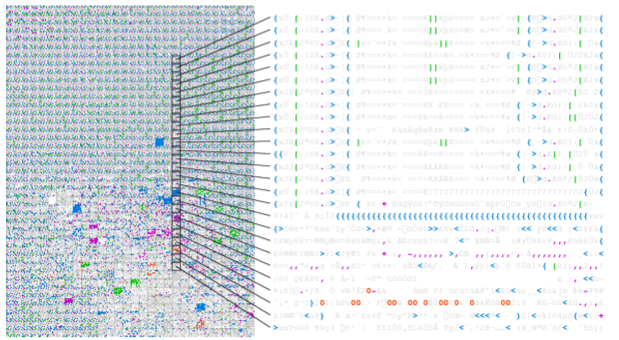
Google researchers claim that, in an experiment simulating what happens when you leave a bunch of code strings alone for millions of generations, they've observed the emergence of "self-replicators" from what began as non self-replicating code chunks. New Scientist rather implausibly claims this "could mirror—or at least shed light on—the emergence of actual biological life."
Hm. This is one of those studies where the experiment and findings definitely feel consequential, but at the same time need some heavy caveating. Google has not somehow simulated the emergence of life as it happened on Earth. What its researchers may have possibly done is suggest a new theory for how non-living molecules could come together to form living molecules, ie, how biological life ever began at all.