Get all your news in one place.
100’s of premium titles.
One app.
Start reading
Euronews
Euronews
Alain Chandelier

Gold in Iran: From a safe haven to a bastion of political protest

Gold prices in Iran have emerged as a barometer of political conditions in the country as anti-government protests intensify.

Angered by the state of the economy, demonstrators have taken to the streets in the majority of Iran's provinces — and violent clashes don't appear to be slowing the pace of protests.
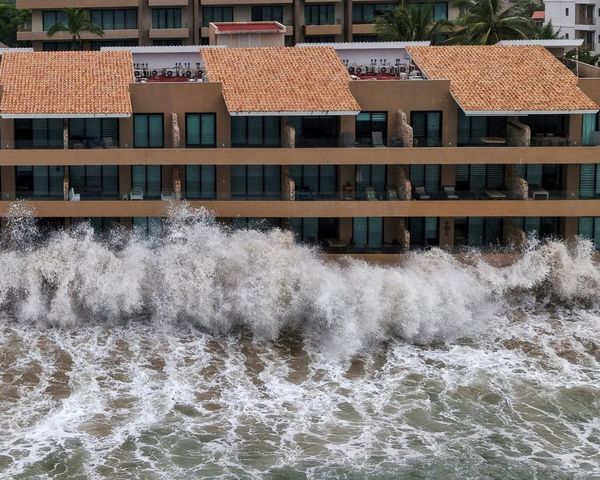
In Iranian culture, gold has long functioned as a form of "social security", especially for housewives.

The metal notably provides a rare sense of autonomy, whether collected through small savings culled from household budgets, or gained as dower. This is when money is pledged by a groom to his bride, acting as a financial safeguard in the event of divorce. In Iran, the groom’s purchase of elaborate gold jewellery for his future wife remains one of the most significant expenditures of the wedding ritual.

While gold is considered a safe-haven asset for investors around the world, the metal is a cornerstone of long-term family planning in Iran, viewed as the primary vehicle for hedging against financial crises or saving for a future home. This is linked to cultural factors but also the unstable value of Iran's currency, the rial.

The great collapse: A 94% loss in purchasing power

In recent years, the collapse of the rial against the dollar and the onset of hyperinflation have fundamentally altered the landscape.

Official data from the Central Bank of Iran reveals that the economy has faced an average annual inflation rate of 43% over the past eight years. Cumulatively, this means the average price of goods and services has surged more than 17-fold, effectively eroding 94% of the population's purchasing power.

The numbers are staggering. On 6 January 2018, the US Dollar stood at 42,990 rials in Tehran’s open market. By 6 January 2026, it had reached 1,470,000 Rials, a jump of 3,319%.

In Iran, there is an artificial rate, as well as a higher, free market exchange rate. After the reimposition of US sanctions in 2018, the state set the artificial rate for essential imports — but it is now mainly accessed by those close to the government rather than ordinary people.

The "twin-engine" surge

While the global price of gold rose by a notable 230% from 2018 to 2026, the price of 18-karat gold — the most popular purity in Iran, skyrocketed from 1,387,000 rials to 160,550,000 rials per gram. This represents an 11,475% leap, multiplying the price more than 115 times.

Had the global price of gold remained stagnant, gold in Iran would have "only" followed the dollar's increase. However, because the price of gold jumped globally, this intensified the financial trauma.

The human cost of the maths is devastating. Eight years ago, a worker on minimum wage (approximately 10 million rials) could purchase over 6.8 grams of 18-karat gold. Today, in 2026, despite the minimum wage rising ten-fold to 100 million rials, that same worker can afford a mere 0.6 grams.

From Ornament to Economic Weapon

Experts argue that when gold prices outpace wage growth at such a violent rate, gold ceases to be a traditional investment or a middle-class hedge. Instead, acquiring it becomes a desperate attempt to avoid falling into absolute poverty.

The shift is visible in the market's behaviour. Iranians, who once bought gold as jewellery for both beauty and savings, have been priced out by high craftsmanship fees. They have turned instead to second-hand gold, scrap gold, and tiny 1-gram bullion bars. The rise of "instalment-based gold buying" signals that the metal has transitioned from a cultural luxury to an "economic weapon". What was once a dowry for a bride or a college fund for a child is now the final trench in the battle against starvation.

A Global Anomaly: The paradox of wealth and poverty

According to the World Gold Council, Iran ranked as the 5th largest gold consumer globally in the first nine months of 2025, trailing only China, India, the US, and Turkey.

This creates a startling paradox. World Bank data shows Iran’s GDP per capita, at approximately $5,190 in 2024, places it in the lower-middle tier of global economies, ranking 119th out of 197 nations.

Yet, in the gold market, it is a global titan. This discrepancy proves that Iranians are diverting a significantly larger portion of their income into gold than citizens of stable economies like Germany or the UAE. In a healthy economy, surplus income flows into stocks, bonds, or banks. In Iran, gold is the only trusted refuge.

The Ultimate "Vote of No Confidence"

The massive gap between Iran's 119th rank in per-capita income and its 5th rank in gold demand is not just a statistic. For the protester shouting in the streets of Tehran or Isfahan, the 160-million-rial price tag of a single gram of gold is a testament to a broken system.

This rush to gold is the ultimate "vote of no confidence" in the government's economic policies. While state media urges citizens to invest in the stock market or deposit their savings in banks, the long queues in front of gold shops and currency exchanges tell a different story. They represent a deep-seated distrust that has become one of the primary fuels for the fire of street protests.

Beyond Value: The price of fear

The price of 18-karat gold in Iran has surged by roughly 14% since street protests erupted across various Iranian cities in late December. According to market insiders, this disproportionate jump is driven by a 'panic bubble'.

Fearing an escalation of the protests and a further collapse of the national economy, Iranians are desperately converting their rials into gold, an asset prized for its high liquidity and ease of transport during crises.

Yet, this rush has created a new paradox: the very asset meant to provide financial security has added the burden of physical security, as families now face the heightened risk of safeguarding gold in an increasingly volatile environment.

Sign up to read this article
Read news from 100’s of titles, curated specifically for you.
Already a member? Sign in here
Related Stories
Top stories on inkl right now
Our Picks
Fourteen days free
Download the app
One app. One membership.
100+ trusted global sources.