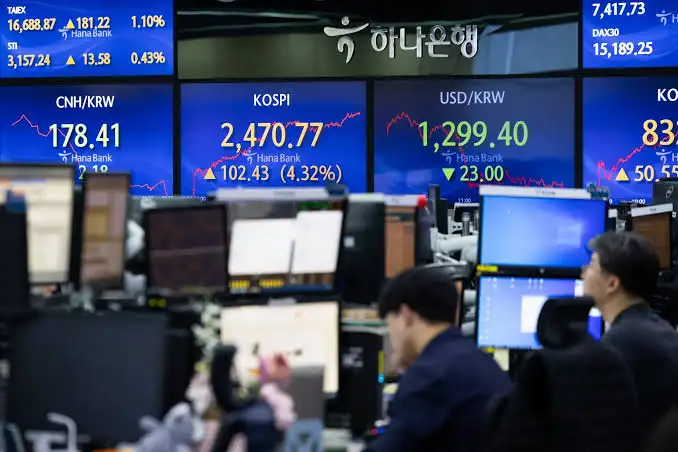
South Korea is set to usher in a new era for its foreign exchange market by introducing 24-hour trading in the Korean won from July 6, marking one of the country's most significant financial market reforms in decades. According to Reuters, local banks have begun trialling the new system ahead of its official rollout, preparing for a shift in trading operations.
The move represents a departure from the tightly controlled currency regime established after the 1997 Asian Financial Crisis. The extended trading hours are expected to improve access for global investors, although they will also require financial institutions to maintain continuous market coverage through expanded staffing and overnight operations.

The reform comes as South Korea seeks to strengthen its appeal among international investors and improve its chances of securing developed market status from global index provider MSCI. A freely accessible and continuously traded currency is considered an important factor in enhancing market accessibility.
However, the transition is not without risks. The won has remained under pressure, hovering near multi-year lows against the US dollar, making it vulnerable to heightened volatility during periods of thin overnight liquidity. According to Reuters, even modest trading volumes during off-peak hours could result in larger-than-usual price swings.
South Korea's booming equity market has also contributed to weakness in the currency. The benchmark KOSPI index has surged to record highs this year, prompting foreign investors to lock in profits and repatriate funds. At the same time, South Korean investors have continued to invest heavily in US equities, increasing demand for dollars.
To support the transition, authorities have introduced several measures aimed at ensuring sufficient market liquidity. Reuters reported that offshore investors will now be allowed to hold and settle transactions directly in Korean won through a new offshore settlement system, while additional safeguards such as overdraft facilities have also been introduced.
The liberalisation addresses a longstanding concern among global investors. Previously, restrictions on holding the won overnight forced foreign institutions to rely on derivatives to manage currency exposure, making trading more complex and expensive. South Korea had only recently extended trading hours to 2 a.m. to overlap with the London market, where a significant share of offshore won trading already takes place.
Market participants believe the shift to 24-hour trading could further improve liquidity by allowing investors to transact more efficiently across global time zones.
Despite these reforms, South Korea's efforts to gain developed market classification still face hurdles. Reuters reported that MSCI this week retained the country in its emerging markets index, citing concerns over market accessibility and insufficient onshore foreign exchange liquidity. The next review is scheduled for next year.
Banks are now adjusting their operations to accommodate the around-the-clock market. Reuters reported that major lenders, including Hana Bank, Woori Bank, Shinhan Bank and KB Kookmin Bank, are expanding staffing both in South Korea and overseas, particularly in London, to ensure continuous trading coverage.
The operational changes reflect the growing demands of a globalised currency market, where sudden international developments can trigger significant trading activity at any hour. According to Reuters, dealers are preparing for increased workloads as South Korea's foreign exchange market enters a new phase of global integration.