Get all your news in one place.
100's of premium titles.
One app.
Start reading
The Economic Times
The Economic Times
Anupam Nagar

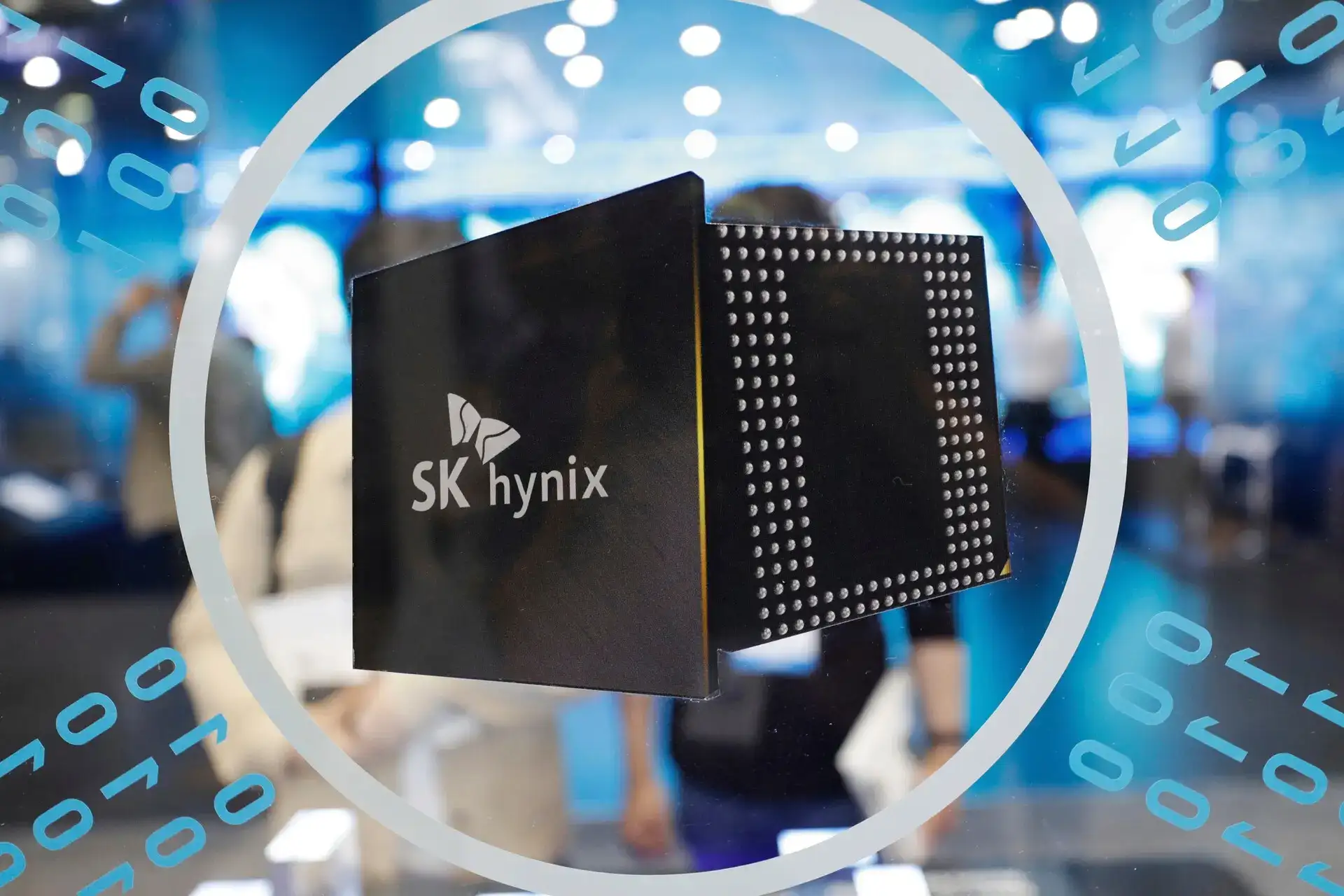
Global Market: SK Hynix warns of historic memory chip shortage by 2027 as AI demand soars

SK Hynix expects the global memory chip industry to face its most severe supply shortage in 2027, with demand continuing to outstrip production capacity well into the next decade, according to comments by Chief Executive Kwak Noh-jung reported by Reuters.

Speaking following the company's Nasdaq debut, Kwak said customer demand for memory chips continues to grow faster than the industry's ability to expand manufacturing capacity. Despite aggressive investment in new facilities, the company expects supply constraints to persist beyond 2030 as demand for artificial intelligence (AI) infrastructure accelerates.
The warning underscores the structural imbalance emerging in the semiconductor industry, where AI-related applications are driving unprecedented demand for advanced memory products, particularly high-bandwidth memory (HBM).

AI boom fuels SK Hynix's growth

SK Hynix has emerged as one of the biggest beneficiaries of the AI revolution, establishing itself as a leading supplier of HBM chips used in Nvidia's AI accelerators. The South Korean chipmaker has gained a strategic position in the AI supply chain, helping power the rapid expansion of generative AI and cloud computing infrastructure.

US among potential locations for future chip manufacturing

Reuters reported that Kwak said the United States remains under consideration for a future wafer fabrication facility, although the company has yet to make a final investment decision.

According to him, SK Hynix will prioritize regions that offer adequate land, reliable electricity and water supplies, a skilled workforce and competitive manufacturing costs. Besides the U.S., Japan and Southeast Asia are also being evaluated as potential locations for future expansion.

Currently, the company operates major manufacturing facilities in Icheon and Cheongju in South Korea and is constructing a large semiconductor complex in Yongin.

South Korea expands semiconductor manufacturing

SK Hynix and Samsung Electronics are participating in South Korea's ambitious plan to significantly expand domestic memory chip production over the next five years.

The government-backed initiative involves investments of approximately 400 trillion won ($266 billion) each in new semiconductor production facilities in the country's southwest. While the plan is designed to strengthen South Korea's leadership in memory chips, some investors have expressed concerns that such large-scale capacity expansion could expose manufacturers to cyclical downturns.

In the United States, SK Hynix is already investing around $4 billion to build an advanced chip packaging plant in Indiana. Reuters also reported that the company plans to invest another $10 billion in developing AI-focused businesses in the U.S. to support future growth.

AI investment concerns remain under scrutiny

Although semiconductor stocks have recently come under pressure amid concerns that AI infrastructure spending may be nearing a peak, industry executives remain optimistic about long-term demand.

Reports suggesting Apple is diversifying parts of its semiconductor supply chain and Meta is seeking to commercialize excess AI computing capacity have raised questions about the sustainability of AI-related investment.

However, Reuters noted that Nvidia CEO Jensen Huang recently said shortages of AI memory are likely to continue for several years because demand remains exceptionally strong. He also indicated that SK Hynix is expected to remain Nvidia's largest memory supplier.

UBS similarly forecasts that the global DRAM market will remain undersupplied until at least the second quarter of 2028.

Wall Street remains bullish on AI infrastructure spending

Bank of America also maintains a positive outlook on AI investment, estimating that global hyperscaler capital expenditure will reach about $851 billion this year before climbing to roughly $1.15 trillion next year.

According to Reuters, the bank believes strong cloud demand, improving returns on AI investments and rising demand for compute-intensive AI applications will continue to support infrastructure spending. It also said that the approximately $244 billion raised by major hyperscalers this year reflects balance-sheet optimization rather than funding constraints.

The positive outlook received another boost after Micron announced plans to increase its U.S. investment commitment to more than $250 billion through 2035, up from its previous $200 billion target, citing surging AI-driven demand for memory chips.

Record profits highlight AI leadership

The AI boom has transformed SK Hynix's financial performance. The company reported a record operating profit of 47 trillion won ($31 billion) in 2025, more than double the previous year's earnings and a dramatic turnaround from its operating loss in 2023.

Analysts expect the momentum to continue. Reuters reported that LSEG SmartEstimate projects operating profit of approximately 65.5 trillion won for the April-June quarter.

Despite an 18% decline in the company's share price over the past two weeks amid broader concerns about AI-related valuations, SK Hynix shares have surged more than sevenfold over the past year, reflecting investor confidence in its leadership in the rapidly expanding AI memory market.

Sign up to read this article
Read news from 100's of titles, curated specifically for you.
Already a member? Sign in here
Related Stories
Top stories on inkl right now
One subscription that gives you access to news from hundreds of sites
Already a member? Sign in here
Our Picks
Fourteen days free
Download the app
One app. One membership.
100+ trusted global sources.