
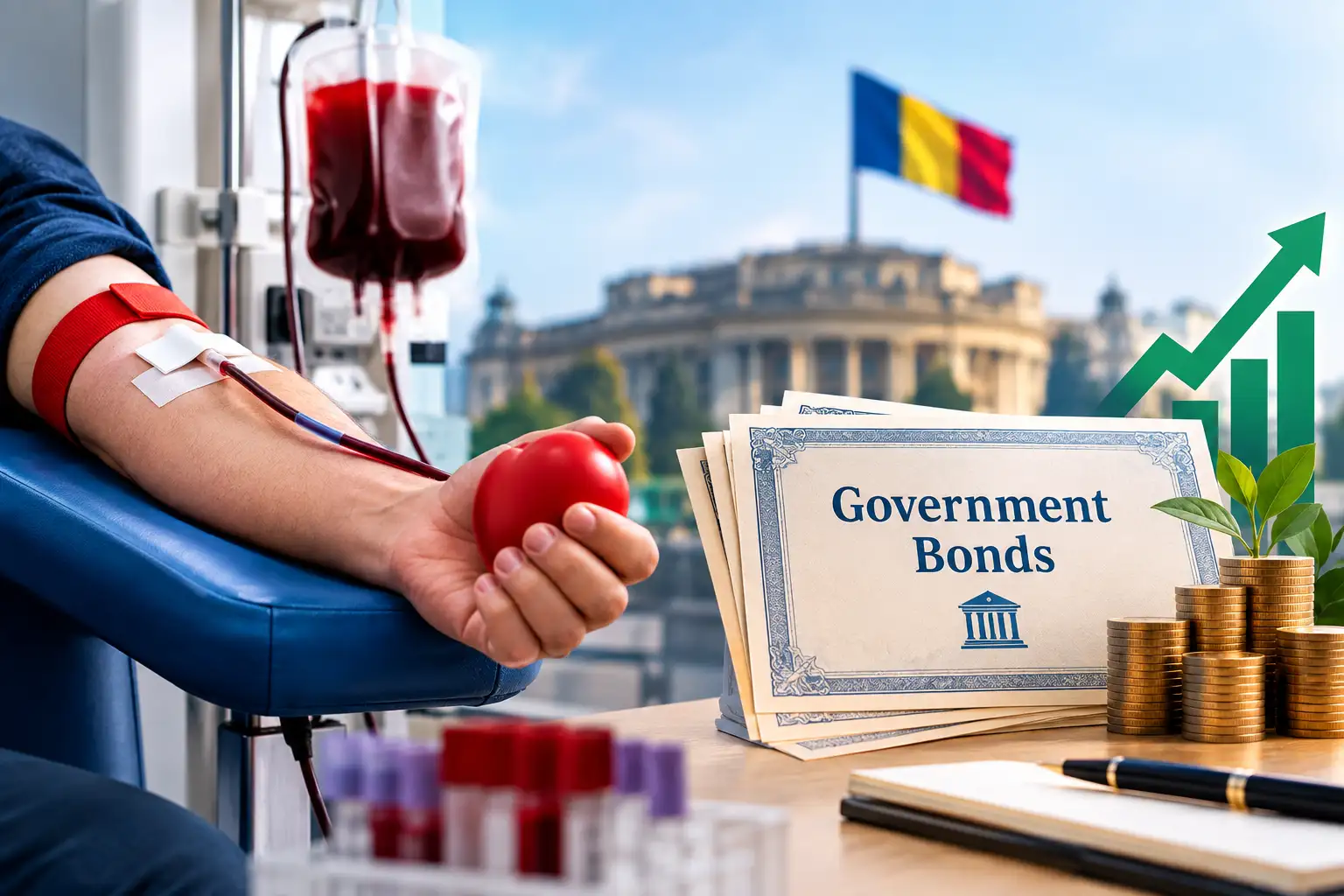
When Ionut Nedelea donates blood, he likes knowing he’s helping out a fellow Romanian in need. He also likes pocketing a little extra cash.
So a few times each year, Nedelea, a 46-year-old project manager, waits patiently in line for hours at a run-down facility in downtown Bucharest for a nurse to prick his arm. Later, he logs onto his brokerage account and uploads a blood-donor’s certificate to retrieve his financial reward: a chance to buy Romanian government bonds offering souped-up interest rates of over 7%. That’s a full percentage point above the going rate available to most retail investors.

“You may lose half of a day for the actual donation,” Nedelea said, “but it’s clearly worth it.”
The blood-for-bonds program is one of the world’s most unusual debt-financing campaigns. For Romania, though, it’s working — managing to both ease the country’s chronic blood shortage and secure much-needed cash to help cover its substantial budget deficit. It’s raised roughly 2.8 billion lei ($604 million) since the start of 2025, from tens of thousands of individual investors.
The country is part of a global push by policymakers to convince everyday citizens to help fund public spending. From Italy to Japan to Brazil, officials are experimenting with novel ways to entice plumbers and mechanics and teachers to buy bonds. With government debt having soared across much of the world in recent years, the urgency has grown. In Romania today, the retail investor program, when including the blood-for-bonds swap, provides close to a fifth of the government’s entire borrowing needs.
“Every little bit helps,” said Moritz Kraemer, chief economist at German lender Landesbank Baden-Wuerttemberg, and former chief ratings officer at S&P Global. “Governments are trying to mop up any credit that they can get.”
Part of the attraction has to do with how retail investors behave. For the most part, they tend to buy and hold, unlike hedge funds and foreign institutions that can race for the exit during times of turmoil. At the same time, higher interest rates have made the bonds more attractive to ordinary savers.







