- Price: £294.99 / €329.99 / $349.95
- Weight as measured: 280g claimed 288g/10.16oz actual
- Colours: Eight
- Sizes: Small, Medium, and Large
- MIPS: Yes, Spherical MIPS
- VTR Score: N/A

The Giro Eclipse has been the aero helmet of choice for Giro sponsored teams since its unveiling in March 2021 and release in early 2022. Four years on, and already gracing the heads of Tour de France Femmes and Vuelta España winners throughout 2025, the Giro Eclipse Pro is here.
It promises the usual watts saved, lighter weight, same comfort and safety as any new helmet release comes with. However, a key development point has been to make a helmet that performs across multiple head positions.
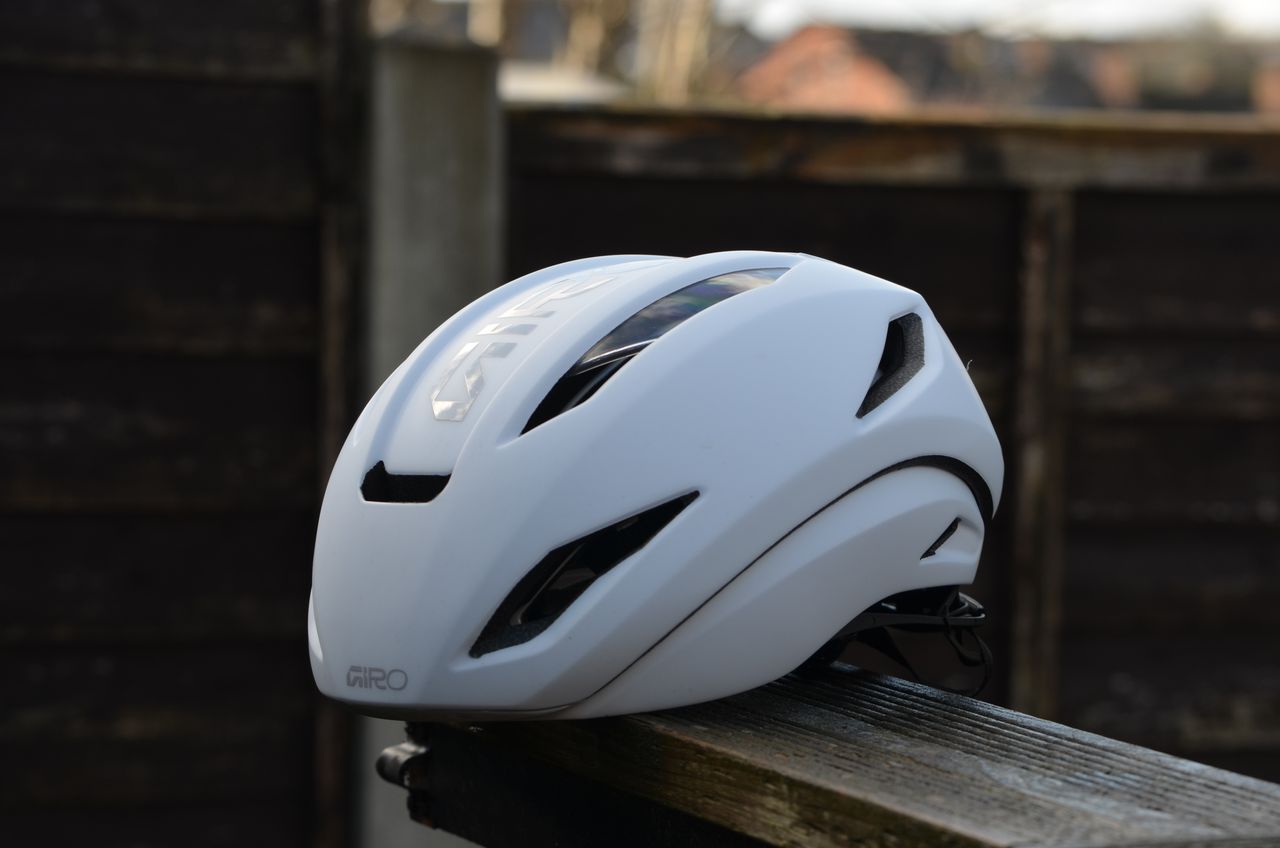
The old Giro Eclipse was a solid performer in our aero testing roundup, and the new one maintains a similar look, but with a sleeker and smoother design, complimented by a new ‘wing’. In practice, the ventilation claims certainly appear to live up to expectations, while the weight is impressively low. Without wind tunnel verification, I can’t comment on the aero performance, but in every tangible aspect this helmet is a step above the previous version and many competitors, so should put it among the best aero helmets on the market.

Design and Aesthetics
Giro invited me to a talk on the development of this helmet, so I can tell you exactly what the company’s aim was. Key focus points were, of course, aerodynamics but also ventilation. Low weight was another component, but more of a secondary one.
In the design process, Giro had two prospective models. One with the smaller profile and rounded off design similar to the old Eclipse, and one with a longer tail similar to the likes of the Trek Ballista, Oakley Velo Mach, and other longer profiled helmets. Throughout the design process, it was found that the longer version was fairly similar in performance to the rounded off design, but it struggled in different head positions. That is a key element of this helmet; it has been designed to be fast with the rider looking ahead or with their head down, where longer helmets become more draggy. Thus the far more rounded designed Eclipse Pro was settled upon, looking similar to older generation aero helmets rather than the new breed of extended aerofoil designs of recent years.
The helmet was designed using both wind tunnel testing, and CFD (Computational Fluid Dynamics) so as to settle on this design and shape. An interesting feature of the helmet is the little ‘wing’ at the rear of the helmet, a happy stumble apparently that had the effect of increasing the length of the virtual aerofoil (how the air flows off the back of the helmet to give it the effect of a teardrop style helmet) and reducing turbulence off the back of the helmet in testing, without the downsides of impaired aero performance with the head down.
Giro claims that the new helmet is 17% less draggy than the old Eclipse in isolation, while as a system (rider and head included) the Eclipse Pro was 1.1% faster with a 5w saving at 0˚ yaw (angle of the wind to the rider) at 50kph, a now common WorldTour race speed.

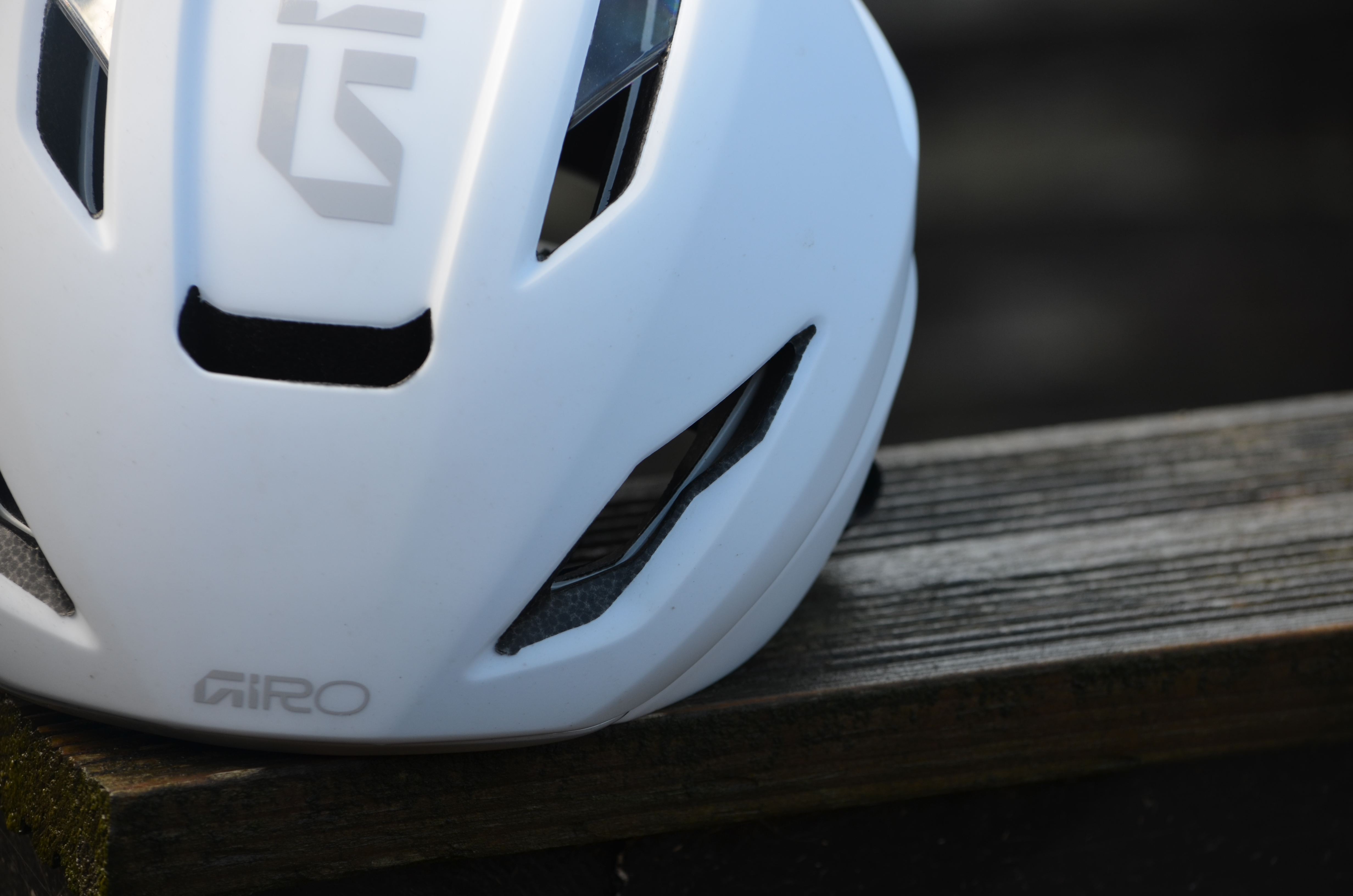
Of course ventilation was another key goal, and the Eclipse Pro ended up being the primary helmet of choice for all professional sponsored teams even in the height of summer on mountain stages. This helmet actually has more vents than the old Eclipse but fewer total openings in terms of area. It is also not as open and airy as the Aries helmet. However, the vent placement and channelling is very clever. The vent just above the forehead is a dual purpose one.
While looking forwards, it aims to help draw hot air from the front of the head out and over the helmet, while with the head down internal splitters direct airflow around the forehead as well as the sides to improve airflow for aero purposes as well. DryCore padding is also used to prevent sweat from dripping down into your eyes. This incorporates a silicone bead inside the padding to direct sweat to the outside of your face, rather than down into your eyes.
Safety is another priority for helmet design, and Giro has stuck with the Spherical MIPS design which puts the helmet in two halves that can move over each other to improve protection against rotational impacts. This worked well in previous helmets to achieve high Virginia Tech safety scores. It impressively has also resulted in a very low weight for a full aero helmet of just over the advertised 280g at 288g actual.
For comfort and retention, the standard Giro Roc Loc Air fit system with a single dial for adjustments and then strap length and splitter height adjustments. At release there will be 8 colour options, and sizes from Small to Large.
Performance
Starting things off with the design from a practical point, I like that Giro has taken the decision to use the polycarbonate shell all the way around the helmet so that no foam can be dented when placing the helmet on surfaces. It’s a good longevity design addition.
Fit is another solid area for this helmet. The Roc Loc Air fit system allows for micro adjustments with the rear dial, while the cradle is height adjustable. For the webbing there are adjusters to raise or lower them, while the chin-strap has a neat tab for keeping excess strap from flailing. But this is where my first gripe comes, and that is the front strap section of the webbing. It can move around on the side of my head and can, in rare cases, rub against my ear, which is a mild annoyance more than anything.
Obviously, this is an aero helmet, so aero performance is really where it aims to excel. I can’t really comment on that without proper testing, but the previous Eclipse was 7w slower than the Oakley Velo Mach test winner (247w v 240w). Giro claims the new Eclipse Pro is 5w faster at 50kph than the previous Eclipse. But that means that the saving at 40kph might be lower, which would make it potentially slower relative to the Oakley, on our test model anyway. But, if it is less sensitive to position changes, then it may be faster over the duration of a ride. We can’t say without testing, while different helmets work differently at different speeds.
What I will say is that there weren’t any occasions where I put my head down and could feel the tell-tail billowing feel that I have experienced from longer tailed helmets such as the Abus GameChanger 2.0 and Trek Ballista.
The Giro Eclipse Pro also feels fairly lightweight. Interestingly it’s about 10g heavier than the old Eclipse, but it is not noticeable on the head. It compares favourably with many other high-end aero helmets within the same sort of market.

My favourite aspect of this helmet though has been the ventilation and head cooling in several different forms. First off, the ventilation itself is impressively good, with a similar number of vents as the old Eclipse, but a far more closed off design to the helmet. Helmets like the POC Procen Air are impressively vented, but only at higher speeds. The large openings on the front of the helmet in high pressure areas allow airflow in, while a venturi effect channels this at high speed through the helmet leading to great ventilation, but it is best when travelling at higher speeds. Slow down, and this performance drops off massively.
This is where, frankly, the Eclipse Pro has been an oddity and exceptional. At the front there are only really the two side brow vents that face the front and the oncoming air. These allow a solid amount of air through while the rear exhausts let it out. Where things get clever is the top vent. This is marginally visible front on, but mostly when the head points down. It appears to have the effect of taking air that hits your forehead, channelling it up through this vent, and over the helmet onto the rear ‘wing’. This wing then helps accelerate airflow off the back of the helmet and enhance that venturi effect to accelerate airflow through the helmet. But the clever part is when you tilt your head down and this front exhaust becomes an inlet which helps channel air through the helmet and out of the back. It enhances cooling, but this is also part of how Giro has supposedly made this helmet fast in multiple head positions.
The other temperature regulation element I love is not a new one, but the DryCore padding that started with the Giro Aries. This uses a silicone bead within the pad and prevents sweat from dripping down onto your face. I hate that sensation, and it plays a big part in making me feel warmer than I really am and causing discomfort. The DryCore padding does away with this, so the helmet feels like it better regulates my temperature than even highly vented helmets.
One other gripe I do have with this helmet is the glasses storage. It’s not the best at keeping them in place, depending on the model. POC Propel glasses struggled to stay in, Oakley Velo Kato are a bit too wide, but the AlbaOptics Jumbo fit quite well. However, following on from the previous point about sweat, the fact it doesn’t drip into my eyes means I don’t need to remove my glasses when riding anymore. The need to store glasses becomes somewhat superfluous, while storing them in vents also ruins aero performance, so again, glasses storage is even more superfluous on an aero helmet.

Value
Coming in at £294.99/$349.99, this is quite the jump up in price from the previous non-Pro Eclipse, which was a relatively good value aero helmet. This new Giro Eclipse Pro is now firmly above the likes of the Specialized S-Works Evade 3 (£250/$299.99), Oakley Velo Mach (£255/$340), Met Manta (£229.99/$349.95) and incredibly good value Van Rysel FCR (£99.99/$100). It does undercut some offerings such as the POC Procen Air (£370/$400), Kask Nirvana (£320/$400) and Ekoi Aero R (£315/$335).
There are a few considerations though. The Giro is lighter than many of these offerings, while the ventilation at a broader range of speeds, not just high airflow, is better and not by a small margin. The only helmet I haven’t tested out of those mentioned is the Van Rysel, but the rest are all significantly warmer at speeds under 35kph. Safety is another consideration, as Giro and the Spherical MIPS tech has often proven very high scoring when it comes to independent safety tests.
Adjustability and comfort are also impressive. Only glasses storage is a let-down, but quite frankly putting glasses in your vents ruins the benefits of an aero helmet and often compromises ventilation. The DryCore padding prevents sweat dripping down and limits the need to remove glasses in the first place.
I can’t comment on aero performance, but this helmet has almost become the go-to option for sponsored teams, even on hot mountain stages where the more vented Aries model would often be preferred. That choice is not being made for anything other than performance both in aero and cooling balance.
I’d argue to an extent that the POC Procen Air might still be my favourite aero race helmet, and the inclusion of visors softens the financial blow. Ear covers and visor can be removed for UCI events too, but for most riding, the Giro Eclipse does offer a reasonable total value all things considered.
Only one helmet truly beats it for me in overall value/performance for money, which is the Scott Cadence Plus. The rear light, MIPS, fitting, and performance are all superb and the cost is £229.99. The padding is not as good for sweat management, but that’s it.

Verdict
When it comes to overall performance, the Giro Eclipse Pro has well and truly won me over. I can’t comment on the actual aero performance, but the modest improvement claims give me hope in their credibility, rather than outlandish double figure watt savings. Meanwhile the weight is objectively light (no need to quibble that) while the comfort is impressive overall.
The DryCore padding is my favourite thing Giro has ever invented, while the ventilation on such a closed-off helmet is exceptional. Even up mountains in the Spanish sun, the Eclipse Pro has never felt stuffy which is an achievement for any helmet let alone an aero one. It isn’t cheap, but you certainly get what you pay for, and it has become my favourite helmet for almost every use.
Attributes |
Notes |
Rating |
|---|---|---|
Design and aesthetics |
I personally like the helmet, even if the top sits weirdly flat, but this is matched by a non-mushroom shaped helmet thanks to the narrow sides. A wide range of colours is also great with a mix of classic, bold, and more earthy on-trend tones. |
8/10 |
Ventilation |
I’m judging that slightly on ‘for an aero helmet’, but doing max efforts at low speeds on Spanish climbs in 23˚C sun, the helmet has actually kept my head impressively cool. At higher speeds it is very airy, even more than the old Eclipse. |
9/10 |
Performance |
Extrapolating the data and applying it to our wind tunnel test, the Eclipse Pro might be one of the faster helmets, but not the fastest. It’s hard to gauge, and even then testing of one head position is not able to give broad data. Promising is that this helmet was designed to be fast in multiple head positions for real world riding. |
8/10 |
Comfort |
10 The retention system is great, while the padding is superb, that DryCore is my favourite feature on any helmet as it was on the Aires. The straps can move, especially the ones in front of the ear, but that is the only comfort niggle that I have. |
8/10 |
Value |
It’s not cheap by any means, as many aero helmets move towards, or breach, the £300 mark. But it is my favourite all-round helmet for aero, weight, comfort, and ventilation, and would be the race helmet that I would buy. It is still expensive though. |
8/10 |
Overall |
82% |