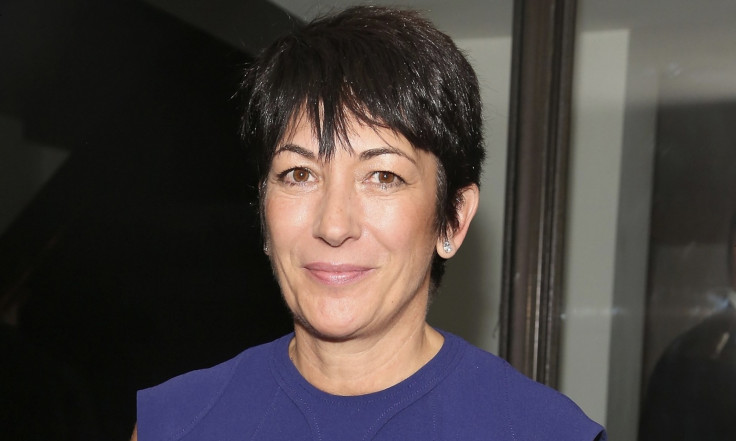
Look, the woman is serving 20 years for sex trafficking and she is still, from inside a prison camp in Texas, trying to keep documents hidden. That tells you something about what might be in them.
Ghislaine Maxwell's lawyers filed papers in Manhattan federal court on Friday night — late Friday, which is when you file things you would rather people did not notice over the weekend — seeking to block the release of roughly 90,000 pages tied to Jeffrey Epstein. The material comes from a civil defamation case brought more than a decade ago by Virginia Giuffre, one of Epstein's most prominent accusers, who took her own life in 2025.
The legal argument is a constitutional one. Maxwell's team says the Epstein Files Transparency Act, signed into law on 19 November 2025, violates the separation of powers by stripping federal judges of authority over their own sealed records. 'Congress cannot, by statute, strip this Court of the power or relieve it of the responsibility to protect its files from misuse,' her lawyers Laura Menninger and Jeffrey Pagliuca wrote, as the Associated Press reported.
Whether that argument has legs is genuinely unclear. On paper, it is a serious separation-of-powers question — the kind of thing law professors will write about for years. In practice, a convicted trafficker invoking judicial independence to keep Epstein files hidden is not, to put it delicately, a sympathetic look.
Maxwell Is Playing Every Card She Has
The sealed-files challenge is not the only thing she has been doing. She was moved from a federal prison in Florida to the Texas camp last summer after sitting through two days of interviews with Deputy Attorney General Todd Blanche. A couple of weeks before the filing, she declined to answer questions from House Oversight Committee lawmakers during a video deposition from prison — but her lawyer put out a statement saying she was 'prepared to speak fully and honestly' if granted clemency.
Nobody appears to be offering clemency. Both parties have treated the idea as politically radioactive. But Maxwell keeps floating it, which suggests her team believes the leverage is worth maintaining even if the payoff never arrives.
She has also asked a Manhattan judge to set aside her 2021 conviction on the basis of what her lawyers call 'substantial new evidence.' Prosecutors have until March to respond. Mind you, post-conviction motions like these rarely succeed — the legal bar is deliberately high — but filing one keeps the case alive and the name in the news, which may be the actual objective.
Strip it back and the strategy is legible: challenge the transparency law, challenge the conviction, dangle cooperation, and wait for someone in Washington to blink. Whether any of it works is a separate question. But for a 64-year-old woman in a federal prison camp, Maxwell is running a remarkably active legal operation.
What the Documents Could Reveal — and What Has Already Gone Wrong
Here is the uncomfortable backdrop to this legal fight. The government has already shown it cannot be trusted to handle these files competently.
The January 2026 release was a debacle. The Justice Department published unredacted nude images of young women with their faces visible. A Wall Street Journal review found at least 43 victims' full names exposed in the files, including more than two dozen who were minors when they were abused. Some names appeared over 100 times; home addresses were searchable by keyword.
Victims' attorneys Brad Edwards and Brittany Henderson had provided the DOJ with a list of 350 names in early December to ensure they would be redacted. The department, they said, failed to perform even a basic keyword search. Edwards described 'literally thousands of mistakes.'
Meanwhile, the names of alleged abusers were blacked out. Victims identified; abusers shielded. That is the phrase that keeps recurring in legal filings and congressional speeches, and it is the reason pressure for further disclosure has not eased despite the scale of what has already been released.
The 90,000 pages Maxwell is fighting to suppress include deposition transcripts from the Giuffre case that have never been published. Giuffre alleged that Epstein trafficked her to powerful men, including Prince Andrew — an allegation he denied and later settled financially in 2022. What else sits in those pages is unknown; that is rather the point of the fight.
The Judge Decides
A federal judge in Manhattan will now rule on whether the Transparency Act applies to these specific documents. If the court sides with Maxwell, the 90,000 pages stay sealed — or at minimum get subjected to a slower, court-controlled review that could take months. If not, they come out.
The DOJ did not respond to a request for comment.
For the families still waiting — some of them since before Epstein died in that cell in August 2019 — the constitutional arguments about separation of powers and judicial prerogative are abstract.
Ninety thousand pages. A dead accuser. A convicted trafficker fighting from a prison cell to keep them sealed. The judge has the last word now.