
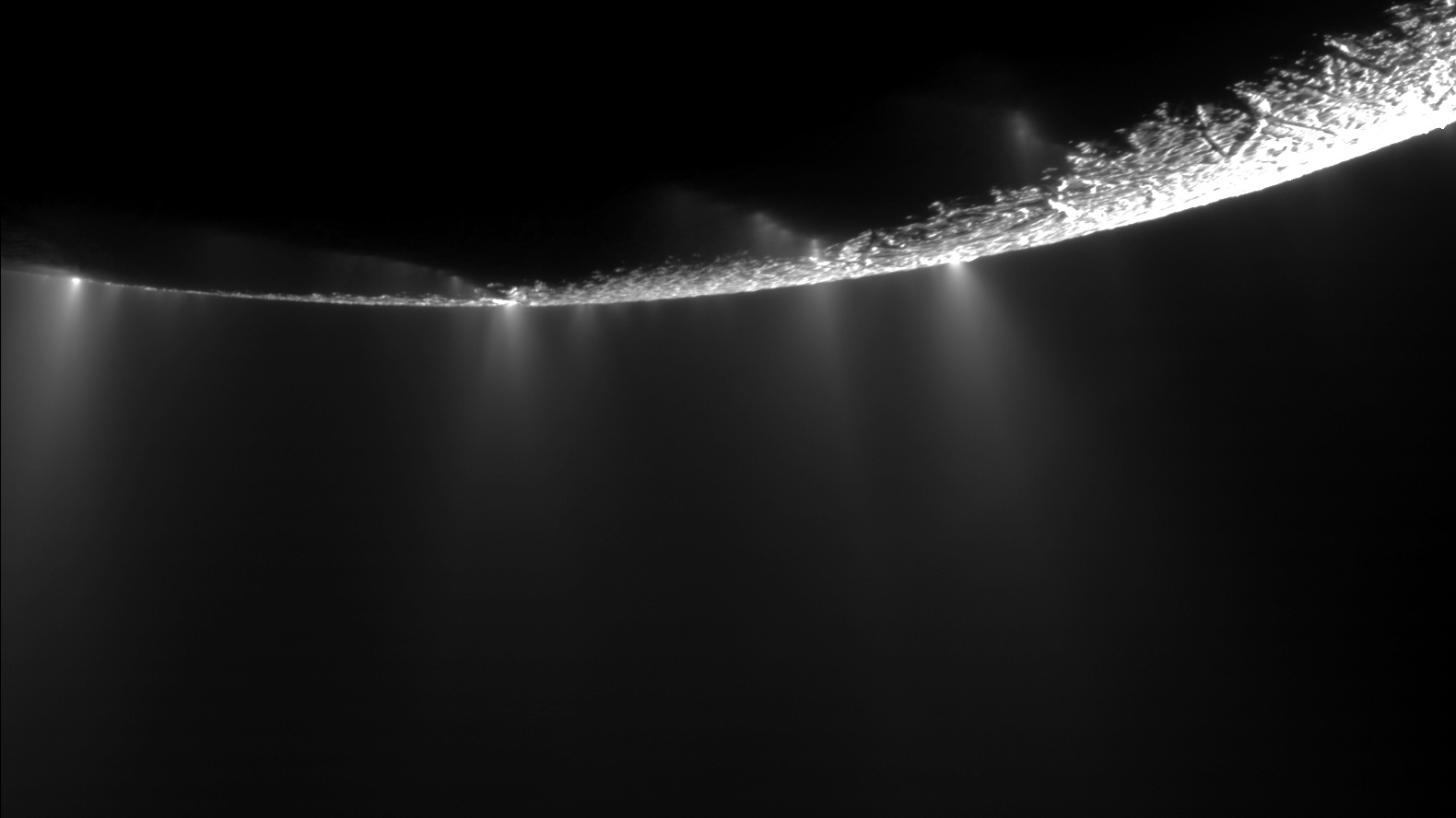
Saturn's icy moon Enceladus has long been considered a potential home for life in our solar system. In 2005, NASA's Cassini spacecraft first discovered towering plumes of water vapor erupting from the moon's frozen surface, for instance, and it was later theorized that these geysers come from a vast — potentially habitable — underground ocean. Liquid from the ocean, scientists believed, could be escaping through cracks in the moon's icy crust.
Researchers at Dartmouth College set out to understand exactly how these geysers form, and ultimately found themselves suggesting that the observed plumes might not come from a hidden ocean under the moon's surface at all. Instead, the team suggests the water in the geysers could originate from melted surface ice on the Saturnian moon, challenging the idea that the eruptions are directly linked to the deep subsurface ocean — and, ultimately, that Enceladus could support life (as we know it, at least).













