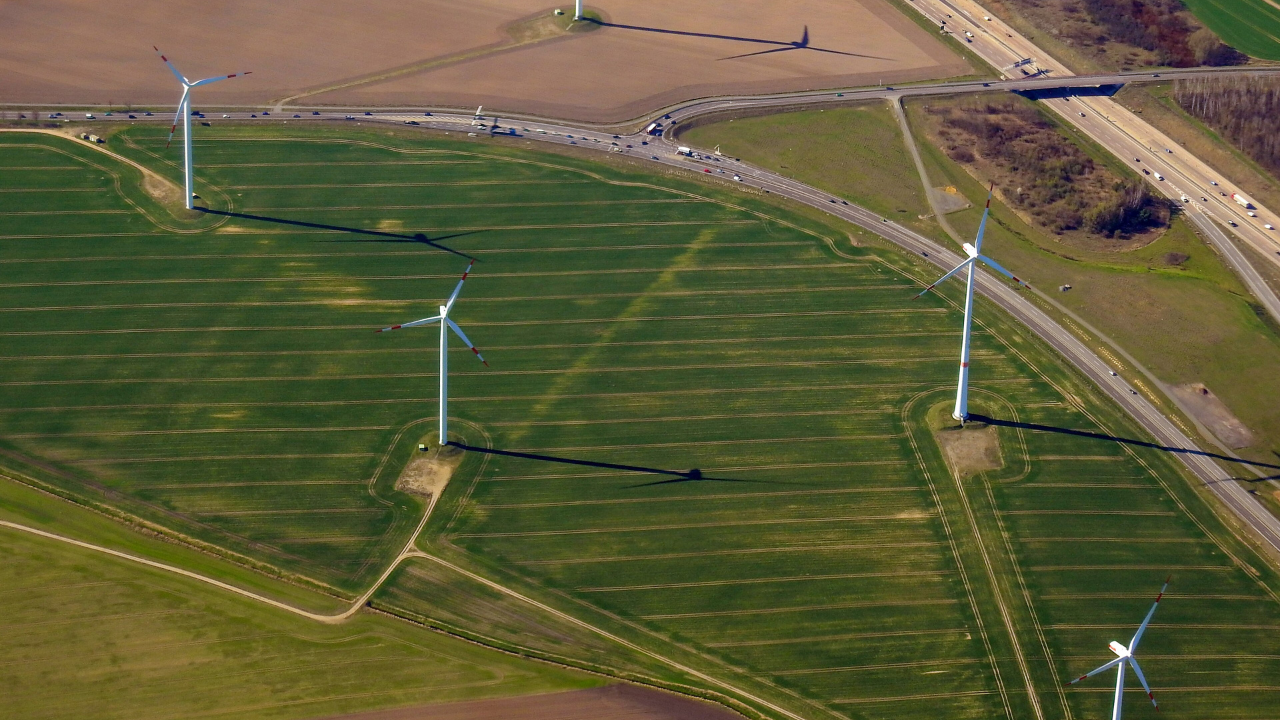
For years, Germany’s ambitious shift away from fossil fuels has been praised, criticized, and repeatedly tested by energy crises, political opposition, and the phase-out of nuclear power. Now it has crossed a milestone that once seemed far from certain. In 2025, wind and solar farms generated 225 terawatt-hours (TWh) of electricity, edging past fossil fuels, which produced 217 TWh, making renewable energy the country’s largest source of electricity for the first time. The achievement marks a defining moment in Germany’s decades-long Energiewende , or energy transition, and offers a glimpse of how one of Europe’s largest economies is reshaping the way it powers homes, industries, and businesses.
Get breaking news anytime, anywhere. Download the TOI app now!

A symbolic victory after two decades of change
The milestone is significant not simply because renewables overtook fossil fuels by a narrow margin, but because it reflects more than 20 years of sustained investment in wind and solar power. Together, the two technologies accounted for 44% of Germany’s electricity generation in 2025, compared with 43% from fossil fuels, according to Carbon Brief’s analysis of Energy Institute data . What began as a long-term policy experiment has gradually transformed Germany’s electricity system into one where renewable energy has become the dominant source of power. According to the Energy Institute Statistical Review of World Energy 2026, cited by Carbon Brief, wind and solar have grown steadily while fossil-fuel generation has fallen sharply over the past decade.
Germany’s transition has been unusually complex because it has pursued two major changes at once. Alongside reducing its dependence on coal, the country also decided to phase out nuclear power following years of public opposition. That meant renewable energy had to fill a much larger gap than in countries that retained large nuclear fleets. France, for example, continues to rely heavily on nuclear electricity, while the UK combines renewables with both nuclear and natural gas. Germany instead placed much of its long-term strategy on expanding wind and solar generation, making this year’s milestone particularly symbolic.
The transition still faces political and technical hurdles
Reaching this point has not ended the debate over Germany’s energy future. Renewable energy expansion has increasingly become a political issue, with the far-right Alternative for Germany (AfD) opposing aspects of the country’s climate policies. At the same time, Chancellor Friedrich Merz’s government has backed plans to expand gas-fired power plants to provide reliable electricity when wind and solar output fluctuates. The government’s long-term strategy is for these facilities to eventually operate using green hydrogen as Germany works toward economy-wide climate neutrality by 2045. According to Germany’s climate targets referenced in the Carbon Brief analysis , the country also aims to raise renewables’ share of electricity consumption to 80% by 2030, build a largely climate-neutral power system by 2035, and complete its coal phaseout no later than 2038.
Infrastructure remains another challenge. Germany approved a record 20.8 gigawatts of new onshore wind capacity in 2025, yet expanding renewable generation is only part of the equation. Electricity grids must also be upgraded to move power efficiently across the country, particularly as solar generation reaches new highs during summer months. Proposed reforms to grid connections have already drawn criticism from renewable energy developers, who argue that changes could slow future investment by increasing financial risks for new projects.
Why the milestone matters beyond Germany
Germany’s achievement extends beyond national borders because it reflects a broader shift taking place across Europe. The Carbon Brief analysis notes that the European Union as a whole also saw wind and solar generate more electricity than fossil fuels for the first time in 2025, suggesting that the transition is no longer confined to individual countries. Yet Germany’s experience also illustrates that replacing fossil fuels is not a straight path. Political disagreements, grid expansion, energy security concerns, and the challenge of balancing intermittent renewable generation with reliable electricity supplies remain central questions.
Even so, the numbers tell a story that would have seemed unlikely just two decades ago. A country once powered largely by coal now generates more electricity from wind and sunlight than from fossil fuels. Germany’s energy transition is far from complete, but 2025 may be remembered as the year its biggest gamble produced its clearest result.