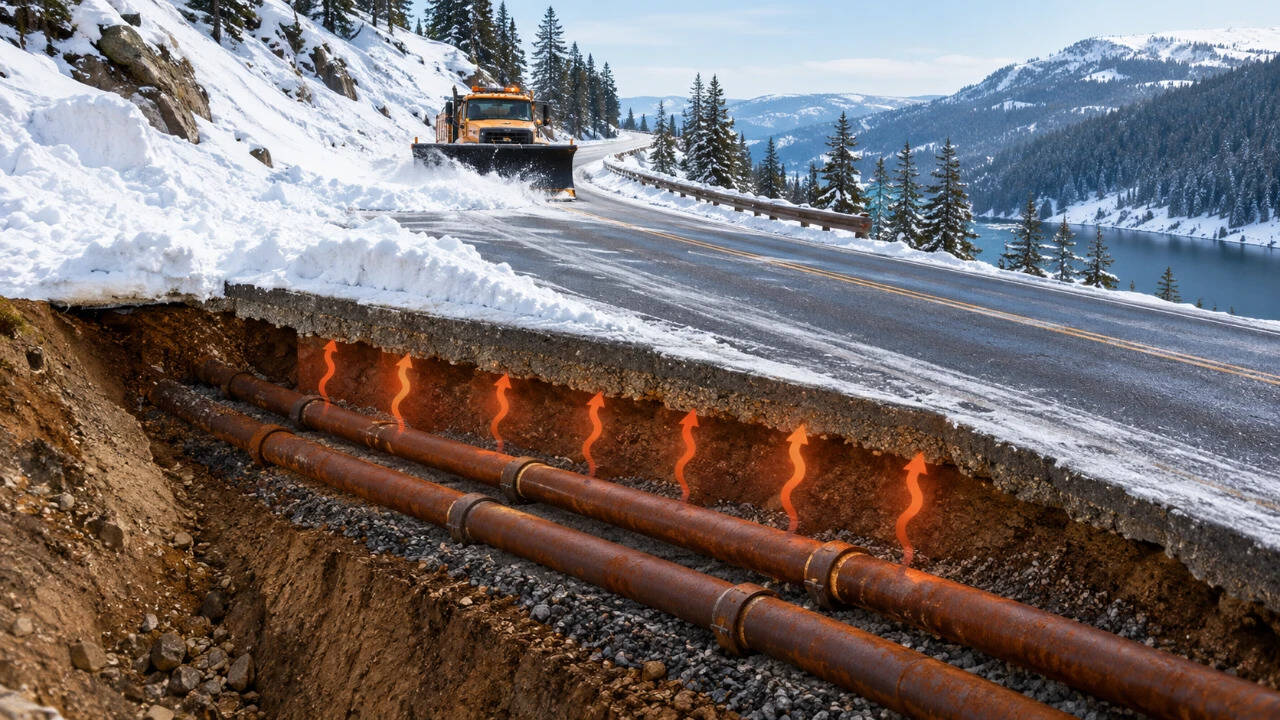
In the winter of 1948, a steep stretch of road in Klamath Falls, Oregon, became a test site for geothermal energy. Instead of relying on ploughs, salt or other conventional methods, engineers embedded a network of metal pipes beneath the pavement and used underground heat to warm the road. According to the Geo-Heat Centre Quarterly Bulletin , when US 97 was rerouted through downtown Klamath Falls in 1948, the new road included an adverse 8% grade approaching a traffic signal, where winter conditions created traction problems for vehicles. The Oregon Highway Department incorporated a geothermal pavement de-icing experiment into the project. A 419-foot geothermal well transferred heat through a downhole heat exchanger to a 50:50 mixture of ethylene glycol and water, which circulated through a grid of ¾-inch iron pipes installed three inches below the concrete surface and spaced 18 inches apart.
Get breaking news anytime, anywhere. Download the TOI app now!