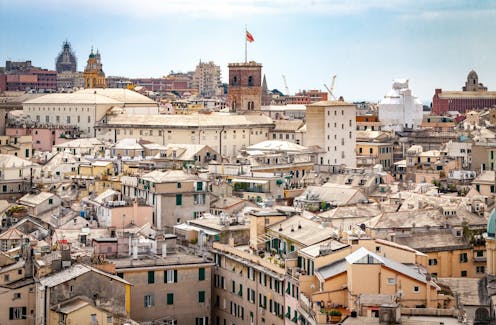
Urban planning has a long history, stretching back to Ancient Greece and even Mesopotamia. Many centuries later, Europe finally caught up with the idea when Genoa developed the Strade Nuove and the Palazzi dei Rolli – the “new streets” and “Rolli palaces” – in the late 1500s.
At the time, the city was an important centre of power, culture and finance, and the projects represented one of the first urban frameworks established by a public authority. The “palaces” were a system of public lodgings in private residences, and over time they and the strade nuove became fully integrated into the city’s fabric. An outstanding early example of an urban ensemble, they were added to the UNESCO World Heritage list in 2006.