Get all your news in one place.
100’s of premium titles.
One app.
Start reading
The Times of India
The Times of India
National
TNN

‘Generate solar energy today for cleaner environment tomorrow’

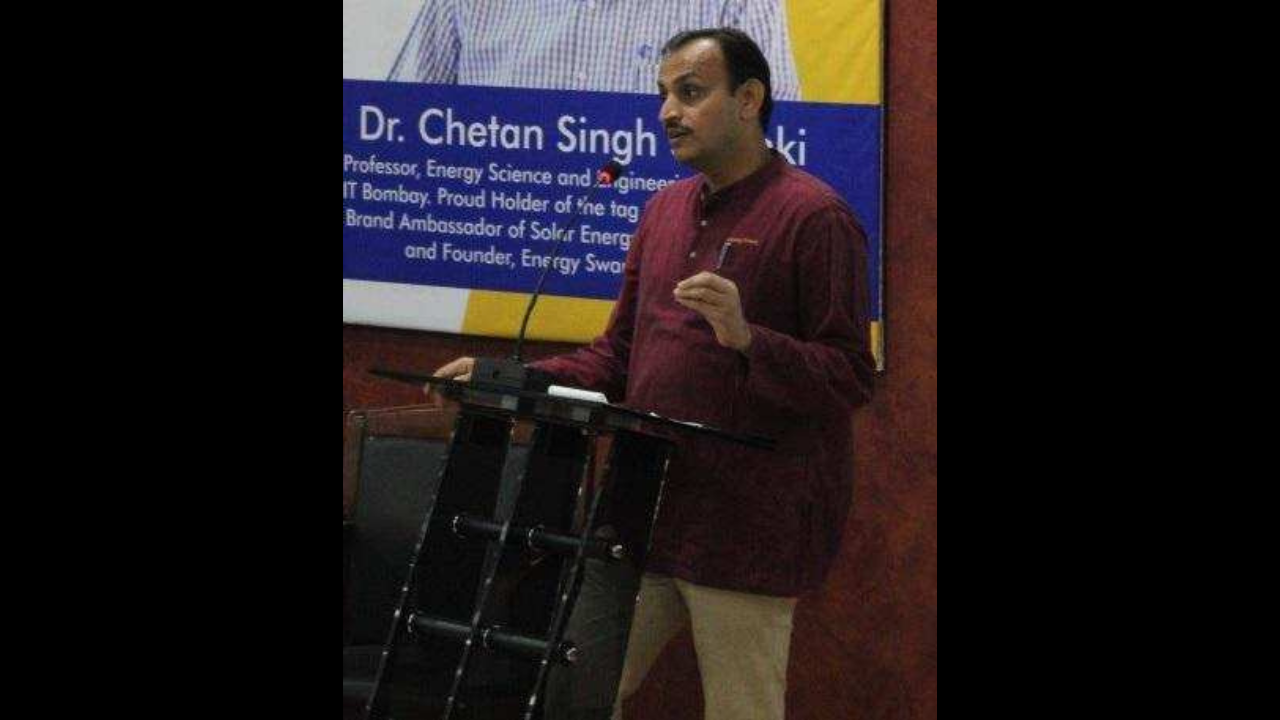
NAGPUR: In order to ensure a better natural environment for our future generations, three principles must be followed – avoid electricity generated from conventional means, minimize power consumption and self-generate electricity for individual needs using solar energy,” said Chetan Singh Solanki, famously known as ‘Solar Man of India’ here today.

He was speaking on the topic ‘Energy climate change and Energy Swaraj’ during a talk organized by department of electrical engineering of St Vincent Pallotti College of Engineering.

A professor in the department of energy science and engineering, IIT Bombay, Solanki is also the brand ambassador of solar energy for the Madhya Pradesh Government and founder of Energy Swaraj Foundation.

While speaking on the initiative of Energy Swaraj, Solanki said, “The aim is to make India independent and locally sufficient in terms of energy. It is based on Gandhi’s ideology of Gram Swaraj which promoted the idea of being locally sufficient in terms of food, clothing and other amenities.”

He added, “Every person uses electricity and hence, is responsible for the subsequent undesirable climate change. While thinking of possible solutions, a public movement for revolution in the energy industry seemed like something Gandhiji would do, had he been alive today.”

With an intent to propagate the call to action of Energy Swaraj, Solanki has been travelling across the country since November 2020 in a specially designed bus that works entirely on solar energy, thus reducing the carbon footprints. “I have vowed to travel in the bus for 11 years without going home and plan to educate almost 10 crore people about solar energy in that timespan,” he said. His travel will continue till 2030.

Suggesting measures to switch to solar energy, Solanki said, “The use of solar energy should start in urban areas. For example, students in urban areas should start studying under solar lamps which are available for around a thousand rupees, which is reasonably affordable. This will increase the demand and subsequently, increase the availability of solar lamps in rural areas.”

He added, “30-40% of the population of India can afford to switch to solar energy. With increased usage, there will be a reduction in price, increase in maintenance and repair facilities, thus making solar energy a household concept.”

Director Fr Paul Chandranakunel, principal Surendra Gol, Fr James Thomas, Rajendra Govardhan and Nitin Dhote were also present in the event. The programme was coordinated by Dinesh Wankhede and hosted by Shraddha Banode.

(Reporting by Sahil Pawar)

Sign up to read this article
Read news from 100’s of titles, curated specifically for you.
Already a member? Sign in here
Related Stories
Top stories on inkl right now
One subscription that gives you access to news from hundreds of sites
Already a member? Sign in here
Our Picks
Fourteen days free
Download the app
One app. One membership.
100+ trusted global sources.