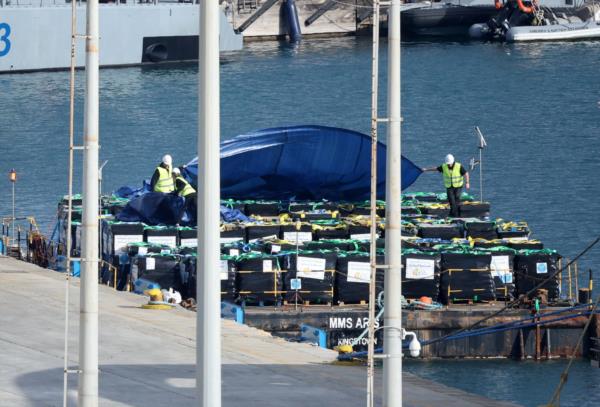
The first aid ship carrying 200 tons of food has successfully delivered its much-needed cargo to Gaza, marking a significant step in addressing the dire humanitarian crisis in the region. Efforts are underway to prepare a second boat loaded with 240 tonnes of humanitarian food aid, as reported by nonprofit World Central Kitchen (WCK).
However, the challenges facing humanitarian aid shipments to Gaza are multifaceted. The lack of functioning ports in Gaza poses a significant obstacle, with reports indicating that the enclave's main port has been severely damaged. Workers had to construct a makeshift jetty to facilitate the offloading of the recent aid shipment, underscoring the logistical hurdles involved.
While there are plans to establish a separate port in Gaza to receive larger aid shipments, the timeline for its completion remains uncertain. The proposed floating pier could take up to two months and require the deployment of approximately 1,000 US military personnel, according to the Pentagon.


In addition to infrastructure challenges, aid shipments are subject to Israeli inspections, which have been criticized by aid agencies for impeding access without valid reasons. The need for consistent and unimpeded aid delivery is crucial to address the looming famine in Gaza.
It is worth noting that the 200-ton aid shipment, while significant, falls short of the daily average of approximately 94.5 trucks carrying 20 tons of aid each that cross into Gaza via land routes. The United Nations estimates that around 500 trucks per day are necessary to alleviate the suffering of Gazans, highlighting the scale of the humanitarian crisis.