Get all your news in one place.
100's of premium titles.
One app.
Start reading
Bangkok Post
Bangkok Post
Business

Gasohol E20 gets another lease on life

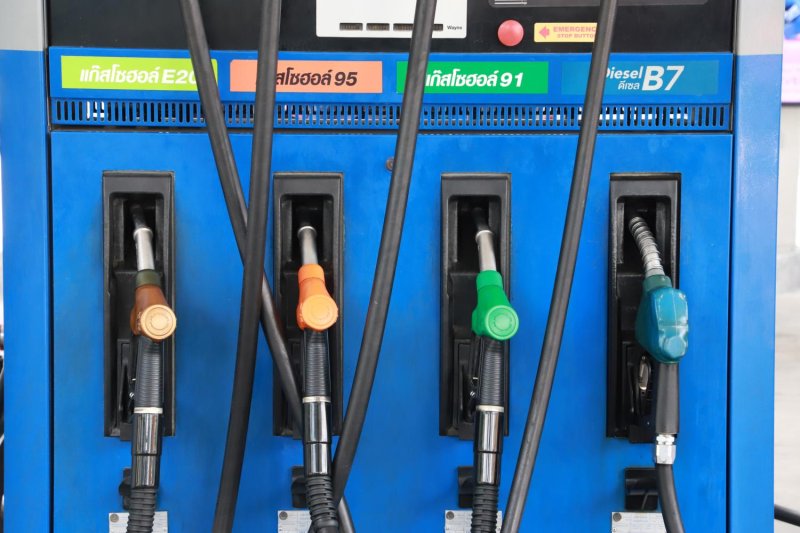
E20 is sold alongside other gasohol blends, but remains far less popular. (Photo: Somchai Poomlard)

Energy authorities in Thailand are preparing to relaunch and remarket gasohol E20 in the third quarter of this year, in what officials describe as a more determined effort to reduce the country's heavy reliance on imported oil.

Gasohol E20, a blend of 20% ethanol and 80% gasoline, has long struggled to gain popularity among motorists, who continue to favour gasohol E10, a fuel mixed with 10% ethanol.

NEW CAMPAIGN

Sarawut Keawtathip, director-general of the Department of Energy Business, said officials are drafting new measures aimed at persuading motorists to switch from gasohol E10 to E20.

He acknowledged that simply setting E20 at a lower price and designating it as a primary fuel has not been enough to change consumer behaviour.

E20 is currently priced 5 baht per litre cheaper than gasohol 95, a type of E10.

Despite this price advantage, many car owners remain hesitant, fearing potential damage to their engines. Auto mechanics have also been reluctant to recommend E20, further discouraging adoption.

Thailand's average daily demand for gasoline and gasohol stands at 32-33 million litres. Of this amount, E20 accounts for only 6-7 million litres per day, while the remaining 26-27 million litres are consumed as gasohol E10 and traditional gasoline, according to the department.

Mr Sarawut said the goal of the new campaign is to raise E20 usage to more than 10 million litres daily.

However, he admitted the campaign faces significant challenges, particularly budget constraints.

The Energy Ministry may have to replicate the limited budget approach used in promoting biodiesel B20, a blend of diesel and 20% palm oil-derived methyl ester.

The B20 campaign relied on cooperation from car manufacturers, Thai and foreign energy companies, oil traders, the Energy Ministry and state universities to build motorists' confidence and encourage a shift from B7, which contains lower methyl ester content.

An energy official who requested anonymity said that if demand for E20 rises significantly, new regulations may be required to ensure sufficient supplies of raw materials such as molasses and cassava, which are used to produce ethanol.

Thailand produces roughly 7 million litres of ethanol per day from 28 producers, up from 6.8 million litres in 2024. Of this amount, only 4 million litres are used in gasohol production, up from 3.5 million litres last year.

ECONOMIC BENEFITS

The Federation of Thai Industries' Renewable Energy Industry Club said Thailand's shift towards gasohol E20 should not only serve as a primary fuel, but also as a driver of long-term economic benefits.

Seksan Phrommanich, vice-chairman of the club, said E20 usage could leverage Thailand's abundant agricultural resources to reduce costly energy imports and stimulate the domestic farming economy.

Thailand's economy remains vulnerable to global energy price fluctuations, sluggish business growth and rising living costs.

The country imports up to 92% of its crude oil consumption, with total import costs exceeding 1.33 trillion baht.

Mr Seksan said stakeholders must collectively elevate E20 as a more environmentally friendly fuel that can build a sustainable economy and ease the financial burden on the public.

"Our transition towards biofuel self-reliance can follow successful international efforts, including those in Brazil and India," he said, pointing to global examples where ethanol-based fuels have helped reduce dependence on imported oil while supporting local agriculture.

UNSUCCESSFUL EFFORTS

Thailand launched E20 for commercial sale on Jan 1, 2008, but promotion has faced roadblocks.

The government worked closely with domestic car producers to ensure vehicles were compatible with E20, while oil companies, the Energy Ministry and state universities endorsed its use.

To encourage adoption, the state Oil Fuel Fund subsidised the retail price of E20.

However, the campaign was short-lived. The global financial crisis of 2008-09 drove down oil prices, making gasoline significantly cheaper than ethanol, placing a heavy burden on the Oil Fuel Fund, which struggled to maintain subsidies.

Meanwhile, the number of vehicles compatible with E20 was limited, and the campaign lacked continuity. Fake news also discouraged motorists with claims that E20 damaged engines or evaporated quickly when cars were parked in hot conditions, according to the department.

More recently, the energy price crisis triggered by the Israel-US conflict with Iran has disrupted supplies of oil, natural gas and petrochemicals.

This has led to a surge in petroleum prices. In response, the government has reintroduced biofuel policies for both B20 diesel and E20 gasohol, hoping to stabilise energy costs and strengthen energy security.

According to business leaders in the energy industry, Thailand's renewed push to promote gasohol E20 reflects both economic necessity and environmental ambitions.

While past efforts faltered due to global oil price fluctuations, limited vehicle compatibility, and public scepticism, the current energy crisis has underscored the urgency of reducing dependence on imported oil.

By leveraging domestic agricultural resources, E20 offers a pathway towards greater energy security, economic resilience and sustainability.

Success, however, will depend on overcoming consumer doubts, securing sufficient raw materials, and ensuring consistent government support.

If Thailand can achieve these goals, E20 could finally fulfil its promise as a cornerstone of the nation's energy future.

Sign up to read this article
Read news from 100's of titles, curated specifically for you.
Already a member? Sign in here
Related Stories
Top stories on inkl right now
One subscription that gives you access to news from hundreds of sites
Already a member? Sign in here
Our Picks
Fourteen days free
Download the app
One app. One membership.
100+ trusted global sources.